By playing, you agree to uListen's Terms and Privacy Policy and YouTube's Terms of Service.
Summaries, chapters, transcripts, and FAQs on this page are made by uListen, not YouTube.
At a glance
WHAT IT’S REALLY ABOUT
Cleo Abram on optimism, explainers, YouTube, and responsible curiosity today
- Cleo Abram explains her three-part “Huge If True” standard—genuinely good explanation, genuine optimism, and visual beauty—as a safeguard against clickbait incentives and cynicism.
- The conversation contrasts knee-jerk pessimism with curiosity-driven storytelling, arguing that pessimism plus helplessness creates nihilism and shuts down meaningful participation in shaping the future.
- Cleo describes her origin story—from a childhood around lawyers and death-penalty cases emphasizing simple, clear explanation—to Vox/Netflix work and ultimately leaving to build an independent YouTube show.
- They explore how to engage “conspiracy-adjacent” interests (aliens, CERN fears) by translating the underlying curiosity into rigorous science, sometimes using clearly-labeled sci‑fi framing to explore realistic scenarios.
- The episode broadens into a media analysis: YouTube’s platform model is “eating television,” more creators are going independent, and audience fatigue with negative news creates demand for constructive, accountable, mission-led content.
IDEAS WORTH REMEMBERING
5 ideasSet explicit quality constraints to resist “the click cycle.”
Cleo’s three pillars (good explainer, optimistic arc, visual excellence) function as a decision filter that reduces temptation to chase short-term spikes that degrade trust or mission—similar to how comedic “rules” guide stand-up choices.
Assume a technology can work to unlock the real conversation.
Her airplane example argues that dismissive pessimism ends discourse early; by temporarily granting feasibility, you can discuss second-order impacts, risks, and governance in a richer, more actionable way.
Pessimism without agency produces disengagement.
The show’s aim is to counter “pessimism + helplessness” by showing who is working on problems and how solutions might emerge, so viewers feel invited into early-stage conversations rather than locked out until it’s too late.
Be the audience’s proxy, not the omniscient expert.
Cleo frames her on-camera role as translation and recontextualization—asking the questions viewers would ask—so experts stay central while the audience remains oriented and emotionally engaged.
Mobile voting isn’t just ‘banking but for ballots.’
Banks tolerate some fraud and reimburse losses to reduce user friction, but elections can’t accept comparable risk—especially in close races—and they face uniquely intense nation-state adversaries with incentives beyond money.
WORDS WORTH SAVING
5 quotesI really saw as a young kid how if you can explain something complicated in a way that 12 normal people can understand, you can actually save someone's life, like in a real way.
— Cleo Abram
Pessimism coupled with helplessness: a terrible recipe.
— Trevor Noah
I believe that having more people understand complicated issues means that more people will participate in making sure that they go right.
— Cleo Abram
It's not me. It's the show.
— Cleo Abram
If you're living on an island, someone gets on a boat and says, "I'm sailing somewhere else that we cannot see," you'll be shocked at how it makes the people on that island angry and uncomfortable.
— Trevor Noah
SPEAKERS
Trevor Noah
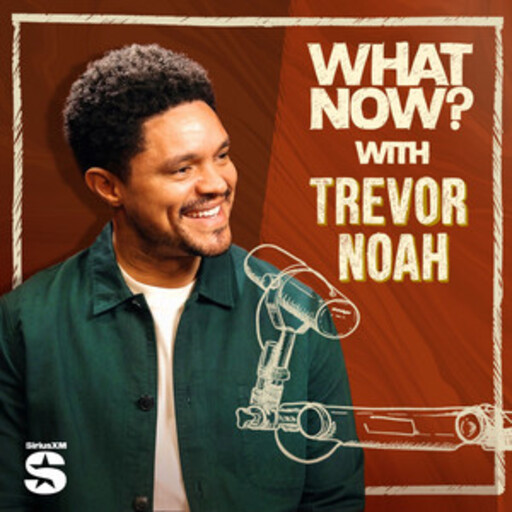
hostComedian and TV host, known for hosting The Daily Show and the podcast What Now?.
Eugene
hostCo-host on What Now? With Trevor Noah.
Cleo Abram
guestIndependent journalist and YouTube creator behind optimistic explainer videos about technology and the future.
High quality AI-generated summary created from speaker-labeled transcript.


