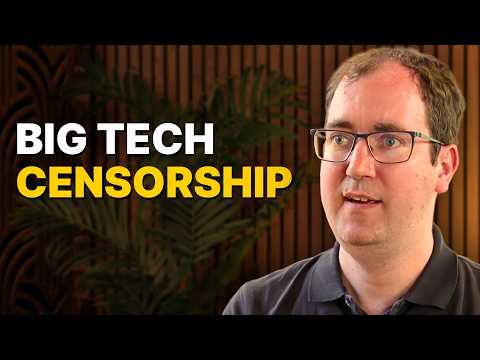
Patrick McKenzie — Money laundering, big tech censorship, SBF & Japan
Patrick McKenzie (guest), Dwarkesh Patel (host), Narrator, Narrator
In this episode of Dwarkesh Podcast, featuring Patrick McKenzie and Dwarkesh Patel, Patrick McKenzie — Money laundering, big tech censorship, SBF & Japan explores discord volunteers outperformed governments in America’s chaotic vaccine rollout Patrick McKenzie recounts how a handful of tech volunteers on Discord created VaccinateCA, an ad‑hoc vaccine‑finder that effectively became the U.S. clearinghouse for COVID vaccine locations, exposing severe failures in public health logistics and software capacity.
Discord volunteers outperformed governments in America’s chaotic vaccine rollout
Patrick McKenzie recounts how a handful of tech volunteers on Discord created VaccinateCA, an ad‑hoc vaccine‑finder that effectively became the U.S. clearinghouse for COVID vaccine locations, exposing severe failures in public health logistics and software capacity.
He argues that federal, state, and local institutions all dodged responsibility for core software and logistics problems, while political incentives—equity fights, fear of blame, and hostility toward Big Tech—made competent action less likely.
McKenzie and Dwarkesh Patel then broaden the discussion to tech–government relations, big‑tech censorship during COVID, financial plumbing, crypto’s underwhelming real‑world impact, and the mechanics of money laundering and fraud detection.
Across topics, McKenzie emphasizes incentives, institutional decay, and the need for more serious, technically competent engagement between tech, government, and civil society before the next large‑scale crisis.
Key Takeaways
Crucial public‑health software was built by volunteers because no institution truly owned the responsibility.
VaccinateCA emerged from a late‑night Discord hackathon and ended up powering Google’s “vaccine near me” answers, because federal, state, and local actors all assumed “someone else” would solve the logistics and information problem.
Get the full analysis with uListen AI
Political incentives warped vaccine rollout priorities away from saving the most lives.
Complex tiering schemes and equity politics in states like California and New York led to byzantine eligibility rules, 57‑page forms for 75‑year‑olds, and threats against pharmacists—resulting in doses thrown away and only ~25% of California’s allocation reaching arms early on.
Get the full analysis with uListen AI
Fear of political backlash kept big tech from openly solving obvious COVID logistics problems.
After January 6, internal policy and comms teams at major platforms told product and health teams to avoid visibility; companies correctly feared that outperforming government on vaccines would trigger punishment and expanded regulation.
Get the full analysis with uListen AI
Current AML/KYC regimes have quietly created a financial panopticon with huge hidden costs.
Banks now employ intelligence‑agency‑scale analyst teams to generate reports most of which are never read, effectively turning finance into a policy arm of the state while imposing tens of billions in compliance cost and enabling future large‑scale LLM‑driven surveillance.
Get the full analysis with uListen AI
Crypto has consumed enormous real resources without commensurate mainstream utility so far.
McKenzie estimates tens to hundreds of billions spent on mining, infra, and talent; aside from niche uses like USDC remittances, he argues the sector has not delivered benefits proportional to its cost and repeatedly sells “you’re still early” narratives.
Get the full analysis with uListen AI
Many founders and knowledge workers underinvest in real levers (users, pricing, negotiation) and overinvest in status and distraction.
He notes people obsess over conferences, parties, and playing CEO while neglecting user conversations, A/B tests, or salary/price negotiation—behaviors he’s tried to counter with popular writing on negotiation and focus.
Get the full analysis with uListen AI
Future crises demand blameless but brutally honest postmortems and deeper tech–government integration.
McKenzie advocates rigorous, low‑ego after‑action reviews focused on what happened and how to fix it, plus a willingness to “put colonel’s uniforms” on top tech operators instead of treating them as enemies when state capacity is lacking.
Get the full analysis with uListen AI
Notable Quotes
“California had the most desirable object in the history of the world, and rather than adopting any sensible strategy for getting it into people's arms, was bickering over who should get it first.”
— Patrick McKenzie
“The successful project plan was made by a bunch of rank amateurs at this topic on Discord in the course of a couple of hours. Society should not rely on us as plan A.”
— Patrick McKenzie
“Unfortunately, software is eating the world and delivering competence in the modern world requires being competent at software. The United States federal government has abdicated software as a core responsibility of the government.”
— Patrick McKenzie
“We have an intelligence community‑sized operation running in banks to write memos that no one ever reads.”
— Patrick McKenzie
“We can't simply sit out here and gripe about this on podcasts… The default case is that the ball will be dropped, and goodness, those of us who were involved with VaccinateCA kind of dread what we called the bat signal.”
— Patrick McKenzie
Questions Answered in This Episode
If government incentives so reliably prevent owning critical software problems, what concrete governance or procurement changes would actually shift that behavior before the next crisis?
Patrick McKenzie recounts how a handful of tech volunteers on Discord created VaccinateCA, an ad‑hoc vaccine‑finder that effectively became the U. ...
Get the full analysis with uListen AI
How can tech companies balance legitimate fear of political retaliation with the moral obligation to use their capabilities in life‑and‑death situations?
He argues that federal, state, and local institutions all dodged responsibility for core software and logistics problems, while political incentives—equity fights, fear of blame, and hostility toward Big Tech—made competent action less likely.
Get the full analysis with uListen AI
What is the right trade‑off between anti‑money‑laundering enforcement and civil‑liberties protections in a world where LLMs can analyze every financial transaction?
McKenzie and Dwarkesh Patel then broaden the discussion to tech–government relations, big‑tech censorship during COVID, financial plumbing, crypto’s underwhelming real‑world impact, and the mechanics of money laundering and fraud detection.
Get the full analysis with uListen AI
Under what conditions, if any, would the resource burn of crypto look retrospectively justified—and how would we know it’s time to declare the experiment a failure if those conditions don’t materialize?
Across topics, McKenzie emphasizes incentives, institutional decay, and the need for more serious, technically competent engagement between tech, government, and civil society before the next large‑scale crisis.
Get the full analysis with uListen AI
What would a serious, nationwide, blameless postmortem of the COVID response look like in practice, and who could credibly lead it so that it actually informs institutional change?
Get the full analysis with uListen AI
Transcript Preview
California had the most desirable object in the history of the world-
Yeah.
... and rather than adopting any sensible strategy for getting it into people's arms, was bickering over who should get it first. We should be outraged about this and we're mostly not. If you Googled, "Vaccine near me," before a certain day there was no answer. After that day, there was an answer and that answer came from us. The successful (laughs) project plan was made by a bunch of rank amateurs at this topic on Discord in the course of a couple of hours. Society (laughs) should not rely on-
(laughs)
... on us as plan A. (laughs) How did this happen?
(laughs)
It is enormously to the United States' credit that we have a extremely functional, extremely capable tech industry. Maybe we shouldn't treat it like the enemy.
Today I'm chatting with Patrick McKenzie. He is known for many things on the internet. He's known as Patio11. Most recently, he ran Vaccinate CA, which probably saved on the order of high four figure number of lives during COVID. He also writes an excellent newsletter called Bits About Money. Patrick, welcome to the podcast.
Thanks very much for having me.
So what was Vaccinate CA?
Uh, in early 2021, we were quite concerned that, uh, people were making 20, 40, 60 phone calls to try to find a pharmacy that actually had a dose of the, uh, COVID vaccine in stock and could successfully deliver it to them. Uh, I tweeted out randomly, you know, "It's insane that, uh, every person or every caregiver is attempting to contact every medical provider in the state of California to find doses as a vaccine. California clearly has at least one person capable of building a website where we can centralize that information and send everybody to the website. If you build that website, uh, I'll pay for the server bill," or whatever. And, uh, Carl Yang took up the gauntlet and invited 10 of his best friends and said basically, "All right. Get in, guys. We're gonna o- open source the availability of, uh, the vaccine in California by tomorrow morning." This is at, like, 10:00 PM at night California time and so I looked on into the Discord where, of course, all medical infrastructure is built-
(laughs)
... and, uh, gave a few pointers on, you know, making scaled calling operations. And then one thing led to another and I ended up, uh, becoming this- the CEO of this initiative. At the start, it was just, like, this hackathon project of a bunch of random tech people who thought, "Hey, we can build a website, make some phone calls, uh, maybe help, uh, some people find the vaccine at the margin," and, uh, it grew a little bit from there. We ended up becoming essentially the public-private partnership, uh, which was the clearinghouse for vaccine location information-
Install uListen to search the full transcript and get AI-powered insights
Get Full TranscriptGet more from every podcast
AI summaries, searchable transcripts, and fact-checking. Free forever.
Add to Chrome