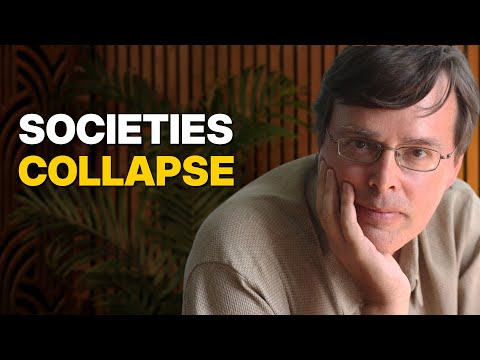
Charles C. Mann - Americas Before Columbus & Scientific Wizardry
Charles C. Mann (guest), Dwarkesh Patel (host)
In this episode of Dwarkesh Podcast, featuring Charles C. Mann and Dwarkesh Patel, Charles C. Mann - Americas Before Columbus & Scientific Wizardry explores charles C. Mann on Contingent History, Collapse, and Technological Salvation Charles C. Mann discusses how much of the post‑1492 world was historically “baked in” versus contingent, emphasizing disease disparities, political fragility, and elite collaboration between colonizers and local powers.
Charles C. Mann on Contingent History, Collapse, and Technological Salvation
Charles C. Mann discusses how much of the post‑1492 world was historically “baked in” versus contingent, emphasizing disease disparities, political fragility, and elite collaboration between colonizers and local powers.
He revisits themes from 1491, 1493, and The Wizard and the Prophet: why Native American empires fell or transformed, how slavery rapidly went from universal to morally abhorrent, and how global silver and crop exchanges reshaped China and the modern economy.
Mann contrasts “wizard” faith in technological escape from environmental limits with “prophet” attention to carrying capacities and planetary boundaries, applying this to agriculture, nuclear power, geoengineering, and regulation.
He previews his forthcoming book on the American West, arguing that understanding its past through climate, energy, and Indigenous sovereignty requires starting from the West’s likely future rather than from frontier myths.
Key Takeaways
History’s big structures are partly inevitable, but outcomes are highly contingent.
Contact between Eurasia and the Americas and the resulting disease shock were almost certain, but specific outcomes—mass slavery, particular conquests, institutional paths—depended on chance, internal civil wars, religious debates, and individual choices.
Get the full analysis with uListen AI
Empires are fragile, and colonizers often succeed by exploiting internal conflicts.
Cortés and Pizarro prevailed not as small bands against unified empires, but by aligning with Indigenous factions in ongoing civil wars and building hybrid elite orders, similar to how British power in India depended on Mughal elites and tiny numbers of officials per millions of subjects.
Get the full analysis with uListen AI
Elites across cultures frequently ally with each other at the expense of common people.
From Tlaxcalan nobles and Spanish conquistadors to Bengali elites and the East India Company, Mann stresses a recurring pattern: ruling groups “recognize” one another, form mutually beneficial bargains, and jointly exploit the broader population.
Get the full analysis with uListen AI
Slavery’s abolition is historically shocking and cannot be explained by economics alone.
Slavery was a near‑universal, millennia‑old institution yet disappeared legally within about 150 years; explanations include industrial shifts, declining agricultural centrality, colonial disruption, and powerful moral movements (e. ...
Get the full analysis with uListen AI
Collapse is often overstated; many societies transform rather than disappear.
Mann argues that “Maya collapse” is misleading when tens of millions of Maya still live, speak their languages, and resist the state; epidemics and environmental stress caused trauma, but also political revolutions and more egalitarian reconfigurations rather than simple endings.
Get the full analysis with uListen AI
Technological “wizards” and environmental “prophets” both diagnose real issues but diverge on solutions.
Wizards bet on science and innovation (e. ...
Get the full analysis with uListen AI
Regulatory systems face a deep tradeoff between preventing edge‑case disasters and throttling innovation.
From the FDA’s origins in drug scandals to nuclear power’s uniquely stringent standards and stalled GM trees or salmon, Mann sees governments oscillating between under‑ and over‑regulation, with COVID vaccines as a rare example of rapid, high‑stakes approval working well.
Get the full analysis with uListen AI
Notable Quotes
“Often the elites kind of recognize each other and they join up in arrangements that increase both of their power and exploit the poor schmucks down below.”
— Charles C. Mann
“In 1800… if you were to put red on a world map for places where slavery was not legal and socially accepted, there would be no red anywhere.”
— Charles C. Mann
“Science and technology properly applied can allow you to produce your way out of these environmental dilemmas… The prophets say no, that natural systems are governed by laws and there’s an inherent carrying capacity or planetary boundaries.”
— Charles C. Mann
“It’s not really a mystery if you have a society that’s epidemiologically naive and smallpox sweeps in and kills 30% of you… What’s actually amazing is the number of nations that survived.”
— Charles C. Mann
“You have this constant problem in government: either you let through really bad things done by occasional people or you screw up everything for everybody else.”
— Charles C. Mann
Questions Answered in This Episode
If the Columbian encounter was inevitable, what concrete decisions could realistically have led to a less catastrophic outcome for Indigenous peoples?
Charles C. ...
Get the full analysis with uListen AI
How should historians balance acknowledging Indigenous agency and resilience with the scale of demographic collapse from Old World diseases?
He revisits themes from 1491, 1493, and The Wizard and the Prophet: why Native American empires fell or transformed, how slavery rapidly went from universal to morally abhorrent, and how global silver and crop exchanges reshaped China and the modern economy.
Get the full analysis with uListen AI
Given the speed of slavery’s abolition after millennia of acceptance, what lessons does that hold for changing today’s entrenched institutions (e.g., fossil fuels)?
Mann contrasts “wizard” faith in technological escape from environmental limits with “prophet” attention to carrying capacities and planetary boundaries, applying this to agriculture, nuclear power, geoengineering, and regulation.
Get the full analysis with uListen AI
In practice, how can policymakers integrate both wizard‑style technological optimism and prophet‑style concern for limits without paralyzing action?
He previews his forthcoming book on the American West, arguing that understanding its past through climate, energy, and Indigenous sovereignty requires starting from the West’s likely future rather than from frontier myths.
Get the full analysis with uListen AI
What research priorities in agriculture and energy today are being neglected in the same way potatoes, cassava, or agroforestry once were—and what might that cost us?
Get the full analysis with uListen AI
Transcript Preview
One of the weird things is that, um, about podcasts, is that as far as I can tell, the average podcast interviewer, uh, is far more knowledgeable and, uh, thoughtful than the average sort of mainstreamed, uh, journalist (laughs) um, interview they had. I just find that amazing. I don't under- I don't understand it, so I think you guys should be hired by the, uh, you know, they should switch roles or something. (laughs) Yes, there's this thing that I think is not stressed enough in history, which is that often the elites kind of recognize each other and, uh, they- they- (laughs) they join up, um, in arrangements that increase both of their power and, you know, exploit the, uh, the- the poor schmucks down below. And that's exactly what happened in- with the East India Company and it's exactly what happened with- with- with Spain. Science and technology properly applied can allow you to produce your way out of these environmental dilemmas. You turn on the science machine essentially and we can, you know, we can escape these kind of, um, dilemmas. And the prophets say no. There's- there's- there's- There- that natural systems are governed by, um, laws, um, and there's an inherent carrying capacity or limits or planetary boundaries.
Okay. (laughs) Today, I have the pleasure of speaking with Charles Mann, who is the author of three of my favorite books, including 1491: New Revelations of America Before Columbus; 1493: Uncovering the New World Columbus Created; and The Wizard and The Prophet: Two Remarkable Scientists and Their Dueling Vision to Shape Tomorrow's World. Charles, welcome to The Lunar Society.
It's a pleasure to be here.
My first question is, how much of the new world was basically baked into the cake? So at some point, people from Eurasia were going to travel to the New World and they were gonna bring their diseases, and o- uh, because of disparities in where they would survive, if the Acemoglu Theory that you cite is correct, then at s- some of these places were bound to be better, have good institutions, some of them were bound to have bad institutions. And all- uh, because of malaria, there were gonna be shortages in labor that people would try to fix with, um, African slaves. So, how much of this was just bound to happen? If s- if Columbus hadn't done it, maybe 50 years down the line, somebody from, you know, uh, Italy does it? What- like, what- what is the contingency here?
Well, I think some of it was baked into the cake. It's pretty clear that, you know, sometime people from Eurasia and, uh, people from the Western Hemisphere were going to come into contact with each other. I mean, how could that not happen, right? And there was a huge epi- epidemiological disparity between the two hemispheres, um, largely because, by a quirk of evolutionary history, there were many more domesticable animals, um, in Eurasia in the Eastern Hemisphere, and that led almost inevitably to the creation of zoonotic diseases, diseases that start off in animals and jump the species barrier and become human diseases. And most of the great killers, um, in human history are that kind of disease. So, they're gonna meet. There's gonna be those kinds of, um, diseases. But, you know, it's possible to, uh, imagine, you know, if you wanted to, some, you know, alternative histories. There's a wonderful, um, uh, book by Laurent Binet, uh, called Civilizations that in fact just does that. It's a great alternative history, uh, book, and he imagines that some of the Vikings came and they actually extended further into, um, North America than they did, and they brought the diseases so that by the time of Columbus and so forth, the- the epidemiological balance was different, um, and what happened was that they, uh, when Columbus and those guys came, these, uh, societies killed him, grabbed his boats, and went to-
Install uListen to search the full transcript and get AI-powered insights
Get Full TranscriptGet more from every podcast
AI summaries, searchable transcripts, and fact-checking. Free forever.
Add to Chrome