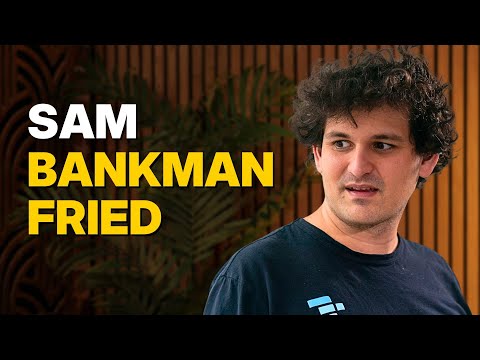
Sam Bankman-Fried - Crypto, FTX, Altruism, & Leadership
Sam Bankman-Fried (guest), Dwarkesh Patel (host), Narrator
In this episode of Dwarkesh Podcast, featuring Sam Bankman-Fried and Dwarkesh Patel, Sam Bankman-Fried - Crypto, FTX, Altruism, & Leadership explores sam Bankman-Fried on crypto, altruism, and the brutal founder grind Sam Bankman-Fried discusses how large market inefficiencies, especially in crypto, enabled the rapid success of Alameda and FTX, and why founder-type talent is the key bottleneck in both profit-seeking and altruistic projects. He reflects on effective altruism, arguing that EA sometimes gets too narrow and needs more robust, founder-led, risk-tolerant experimentation in philanthropy and policy, including his Future Fund. He outlines what makes an effective founder and team—embracing messy, low-status work, high context, and adaptability—while contrasting cultures at Jane Street and FTX. Finally, he explores the future of crypto in traditional finance, automated risk management, the role of regulation, and how his own “RAM‑skewed” mind shapes FTX’s culture and strategic flexibility.
Sam Bankman-Fried on crypto, altruism, and the brutal founder grind
Sam Bankman-Fried discusses how large market inefficiencies, especially in crypto, enabled the rapid success of Alameda and FTX, and why founder-type talent is the key bottleneck in both profit-seeking and altruistic projects. He reflects on effective altruism, arguing that EA sometimes gets too narrow and needs more robust, founder-led, risk-tolerant experimentation in philanthropy and policy, including his Future Fund. He outlines what makes an effective founder and team—embracing messy, low-status work, high context, and adaptability—while contrasting cultures at Jane Street and FTX. Finally, he explores the future of crypto in traditional finance, automated risk management, the role of regulation, and how his own “RAM‑skewed” mind shapes FTX’s culture and strategic flexibility.
Key Takeaways
Entrepreneurial success often comes from exploiting persistent, overlooked inefficiencies.
SBF frames Alameda and FTX’s success as evidence that the world contains many large, underexploited opportunities—especially in young markets like crypto—and that aggressive, founder-type behavior can capture them.
Get the full analysis with uListen AI
Founder talent and leadership are core bottlenecks in both business and altruistic projects.
He argues that many promising ideas—commercial and altruistic—never happen because there isn’t the right person or team willing and able to start and drive them.
Get the full analysis with uListen AI
Great founders embrace repetitive, bureaucratic, and ‘dumb’ work when it’s crucial.
The willingness to personally grind through tasks like bank setup and manual wires, rather than dismissing them as beneath a CEO, is described as a decisive trait that often separates successful startups from failures.
Get the full analysis with uListen AI
Effective altruism may underweight robustness and overemphasize narrow, brittle models.
Because of moral and physical uncertainty (e. ...
Get the full analysis with uListen AI
Decentralized or regranted philanthropy can uncover many small, high-upside projects.
Future Fund’s regranting program pushes decision-making to many expert regranters, enabling funding of thousands of small, early-stage projects that a central team could never vet individually.
Get the full analysis with uListen AI
Rapid organizational scaling can create negative marginal productivity of employees.
SBF notes that large, fast-growing organizations often become coordination nightmares where responsibility diffuses, critical proposals die in the org chart, and more headcount actually reduces output.
Get the full analysis with uListen AI
Crypto rails will likely become core settlement and collateral infrastructure for finance.
He predicts that stablecoins, tokenization, and blockchain-based settlement/clearing will increasingly be integrated into traditional finance, even if a fully decentralized ‘crypto maximalist’ future doesn’t fully materialize.
Get the full analysis with uListen AI
Notable Quotes
“When you start a company, there's enormous amounts of shit that looks like that… dumb or annoying or broken or unfair or not how the world should work. But it's how the world does work, and the only way to be successful is to do it, is to fight through that.”
— Sam Bankman-Fried
“It's kind of brutal starting something. It's sort of brutal being a founder.”
— Sam Bankman-Fried
“One of the biggest traits that I think is incredibly important for a founder… is being willing to do a ton of grunt work if that's what's important for the company right then.”
— Sam Bankman-Fried
“Most of the times that we see a company grow really fast, really quickly and get really big in terms of number of people, it becomes an absolute mess internally.”
— Sam Bankman-Fried
“I do think that sometimes EA gets too narrow-minded and specific… all of these things have some amount of uncertainty in them, and… some models behave somewhat robustly under jostling, and some of them completely fall apart.”
— Sam Bankman-Fried
Questions Answered in This Episode
How should an ambitious, altruistically minded person decide between a safe high-earning career and a risky founder path?
Sam Bankman-Fried discusses how large market inefficiencies, especially in crypto, enabled the rapid success of Alameda and FTX, and why founder-type talent is the key bottleneck in both profit-seeking and altruistic projects. ...
Get the full analysis with uListen AI
What practical mechanisms could EA communities build to better support founders who fail and reduce the personal downside of trying?
Get the full analysis with uListen AI
How robust, in practice, are Future Fund’s regranting and vetting systems to adverse selection or misaligned grantees?
Get the full analysis with uListen AI
If blockchain-based settlement becomes standard in TradFi, what new systemic risks might emerge that we don’t yet understand?
Get the full analysis with uListen AI
To what extent did SBF’s emphasis on brute-force problem-solving and growth create hidden vulnerabilities at FTX that only showed up later?
Get the full analysis with uListen AI
Transcript Preview
When you start a company, there's enormous amounts of shit that looks like that, things that are, like, dumb or annoying or broken or unfair or not how the world should work. But it's how the world does work, and the only way to be successful is to do it, is to fight through that. Most of the times that we see a company grow really fast, really quickly and get really big in terms of number of people, it becomes an absolute mess internally. I do think that sometimes EA gets too narrow-minded and specific. I think this is one of the reasons why that people end up sort of fixating on one particular understanding of the universe, of ethics, of how things are gonna progress. I think stablecoins becoming an important settlement mechanism is pretty likely, and I think blockchains in general becoming a settlement mechanism and, you know, collateral-clearing mechanism seems decently likely to me. (music)
Today on the Lunar Socie- Society Podcast, I have the pleasure of interviewing Sam Bankman-Fried, CEO of FTX. Thanks for coming on the Lunar Society.
Thanks for having me.
All right, first question. Does the consicutive- consecutive success of FTX and Alameda, does that suggest to you that the world has all kinds of low-hanging opportunities or was that a property of the inefficiencies of crypto markets at one particular point in history?
I think it's probably more of the former. I think there are probably just a lot of inefficiencies.
And so I guess, another part of this question is if you had to restart earning to give again, what are the odds you'd become a billionaire, but you couldn't do it in crypto?
I think, um, I mean, they're pretty decent. Like, I- I- I... A lot of it depends on what I end up choosing and how- how sort of, like, aggressive I end up deciding to be. You know, there are a lot of pretty safe and secure kind of career paths for, you know, before me that definitely would not have ended there. Um, but I think that if I'd sort of, you know, decided to really dedicate myself to starting up some businesses, there would have been a pretty decent chance of it.
So that leads to the next question, which is that you've cited Will MacAskill's lunch with you while you were at MIT as being very-
Yup.
... important in deciding your career. He suggests that you do earning to give at... by going to a quant firm, like, um, uh, Jane Street. In retrospect, given the success you've had as a founder, was that maybe bad advice, and maybe he should have advised you to start a startup or a nonprofit?
I mean, I don't think it was literally the best possible advice in that, like, you know, I mean, that was what? 2012 or something. Like, you know, "Think about starting a- a crypto exchange," would have maybe been a- a, you know... But- but I think it was definitely helpful advice, and I think that, you know, relative to not having gotten advice at all then, um, I think it- it probably helped quite a bit.
Install uListen to search the full transcript and get AI-powered insights
Get Full TranscriptGet more from every podcast
AI summaries, searchable transcripts, and fact-checking. Free forever.
Add to Chrome