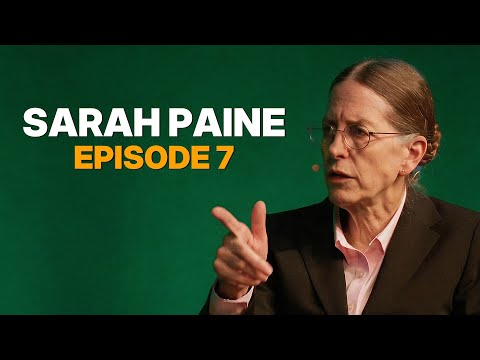
Sarah Paine – Why Russia Lost the Cold War
Narrator, Sarah Paine (guest), Dwarkesh Patel (host), Narrator, Narrator
In this episode of Dwarkesh Podcast, featuring Narrator and Sarah Paine, Sarah Paine – Why Russia Lost the Cold War explores why the Soviet Union Collapsed: Arms Races, Empires, and Economics Sarah Paine examines why the Soviet Union lost the Cold War, surveying both American-centric explanations (Reagan, presidential strategy, naval power) and internal Soviet weaknesses (empire management, nationalities, economic failure, bad leadership).
Why the Soviet Union Collapsed: Arms Races, Empires, and Economics
Sarah Paine examines why the Soviet Union lost the Cold War, surveying both American-centric explanations (Reagan, presidential strategy, naval power) and internal Soviet weaknesses (empire management, nationalities, economic failure, bad leadership).
She contrasts the popular “Reagan won the Cold War” thesis with cumulative U.S. policy from Nixon to Bush, the impact of human-rights diplomacy, the Sino-Soviet split, and decisive U.S. naval and nuclear advantages.
On the Soviet side, she emphasizes imperial overstretch, bankrupt third-world adventures, structural economic rot, nationalist revolts, and Gorbachev’s miscalculations about reform, allies, and the irreversibility of socialism.
Paine concludes that the Soviet collapse was overdetermined—requiring many factors plus skilled Western statecraft—to end on Western terms without a nuclear war, and she draws cautionary lessons for managing today’s “second Cold War.”
Key Takeaways
Cold War victory cannot be credited to a single U.S. leader.
Paine argues that while Reagan’s buildup mattered, U. ...
Get the full analysis with uListen AI
Human rights diplomacy helped hollow out belief in communism.
The Helsinki Accords and Carter’s human rights emphasis gave Eastern bloc dissidents a legal and moral vocabulary to challenge regimes, exposing the gap between communist promises and authoritarian reality.
Get the full analysis with uListen AI
Soviet imperial overstretch and nationalities problems were fatal.
Moscow subsidized weak third-world allies while facing simultaneous revolts across Eastern Europe and among its own nationalities, violating the basic “no two-front war” rule for land empires and overwhelming its coercive capacity.
Get the full analysis with uListen AI
Central planning produced compounding economic distortions that leadership could not see or fix.
Systemic lying about inputs, outputs, and inventories meant Soviet planners had no real sense of costs, productivity, or consumer needs; misallocation metastasized, worsened by oil-price collapses and a war-driven budget.
Get the full analysis with uListen AI
Gorbachev’s political reforms without prior economic and legal reform destabilized the system.
Opening politics (glasnost) and devolving power weakened party control before functioning markets and legal institutions existed, validating Tocqueville’s warning that the most dangerous moment for a bad government is when it begins to reform.
Get the full analysis with uListen AI
Nuclear and naval asymmetries pushed Moscow toward accepting defeat.
U. ...
Get the full analysis with uListen AI
Careful, non-triumphalist Western diplomacy was crucial to a peaceful end.
Bush and Kohl moved fast to reunify Germany inside NATO while avoiding humiliating Gorbachev, quietly trading substantial financial aid and security assurances to secure Soviet acquiescence without triggering a hardline backlash.
Get the full analysis with uListen AI
Notable Quotes
“Civilizations die from suicide, not by murder.”
— Arnold Toynbee (quoted by Sarah Paine to frame internal Soviet causes)
“We’re encircled not by invincible armies, but by superior economies.”
— Mikhail Gorbachev (as cited by Sarah Paine)
“The stupidity of our leaders caused the disintegration of the Soviet Union.”
— Georgi Arbatov (Soviet America expert, as quoted by Paine)
“The most dangerous moment for a bad government is when it begins to reform.”
— Alexis de Tocqueville (applied by Paine to Gorbachev’s reforms)
“If we blow through our good hand of cards, we become a cooperative adversary and the bozo putting a plastic bag on our own head.”
— Sarah Paine
Questions Answered in This Episode
If you had to weight the causes, how much of the Soviet collapse was due to economics versus ideology versus military pressure?
Sarah Paine examines why the Soviet Union lost the Cold War, surveying both American-centric explanations (Reagan, presidential strategy, naval power) and internal Soviet weaknesses (empire management, nationalities, economic failure, bad leadership).
Get the full analysis with uListen AI
Could a different Soviet leader—“a Gorbachev who was a Deng”—realistically have reformed the system without triggering collapse?
She contrasts the popular “Reagan won the Cold War” thesis with cumulative U. ...
Get the full analysis with uListen AI
Did Western support for anti-communist dictators in the Third World meaningfully change the Cold War outcome, or mainly shape local tragedies?
On the Soviet side, she emphasizes imperial overstretch, bankrupt third-world adventures, structural economic rot, nationalist revolts, and Gorbachev’s miscalculations about reform, allies, and the irreversibility of socialism.
Get the full analysis with uListen AI
What specific institutional or legal reforms would Russia have needed in the 1990s to avoid the chaos that followed communism’s fall?
Paine concludes that the Soviet collapse was overdetermined—requiring many factors plus skilled Western statecraft—to end on Western terms without a nuclear war, and she draws cautionary lessons for managing today’s “second Cold War.”
Get the full analysis with uListen AI
What concrete lessons from Bush and Kohl’s management of Cold War termination should guide U.S. and allied strategy in today’s tensions with Russia and China?
Get the full analysis with uListen AI
Transcript Preview
(applause)
Thank you for coming. It is, it's a treat to be with you and sharing all this stuff. Um, since we seem to be in a second Cold War, maybe it's a good time to revisit the last one, to see why it turned out the way it did and why the participants in it thought it turned out the way it did. So, I'm gonna pose the question: Why Russia lost the Cold War. And people have loads of different answers to that question, so this is gonna be a tour of the counterarguments. I'm gonna start with an answer that many Americans have, very simple one that's like, "Ronald Reagan single-handedly defeated the Soviet Union." So that's one possible answer. But then I'm gonna give you all kinds of counterarguments to that, and some of them are gonna be other external explanations of what others did to the Soviet Union, others are internal th- uh, ones of what the Soviet Union, the cards it didn't play particularly well, and then I've got some umbrella explanations. So that's my plan for this evening. The story that Ronald Reagan did it, well, here's a picture at the Reagan Ranch after the Cold War's over. You see the Gorbachevs and you see the Reagans, and they seem to be having a grand old time, which suggests there's something maybe off with that explanation. But anyway, the way, uh, that Ronald Reagan did at school is, Ronald Wreagan, uh, did a massive military buildup and that s- some would argue it bankrupted the Soviet Union. He was a man of words and deeds. He made really good speeches that were memorable. Here's one before Parliament where he says, "The regimes planted by totalitarianism have had more than 30 years to establish their legitimacy, but none, not one regime, has yet been able to risk free elections. Regimes planted by bayonets do not take root." And then here he is before the Brandenburg Gate. This is in Berlin, long a symbol of German greatness, but then it was a locked gate on the Berlin Wall. And here's Ronald Reagan: "General Secretary Gorbachev, if you seek peace, if you seek prosperity for the Soviet Union and Eastern Europe, if you seek liberalization, come to this gate. Mr. Gorbachev, open this gate. Tear down this wall." And who can forget the Evil Empire speech which he gave to the National Association of Evangelicals in Orlando, Florida, and they skipped Disneyland to hear it? All right, Reagan did a very significant military bu- uh, buildup that actually had started under Carter when the Soviets invaded Afghanistan. Big mistake, as we discovered. And, um, he also, uh, invested, deployed, uh, missiles in Europe. He was busy funding anti-communist insurgencies and also others who didn't like the Soviet Union all over the world, starts doing more aggressive military patrolling, patrolling, and b- by the time he's out of office, he's like half a dozen ships short of this 600-ship navy or whatever it is he was planning to make. And, uh, he also was trying to build a, a missile shield, this Strategic Defense Initiative. And the problem is the Soviets tried to match him on this. And if you add up the GNPs of the United States, NATO allies, and Japan, well, that would be seven times larger than the Soviet GNP, and you gotta be aware of symmetric strategy. So, the CIA thought during the Cold War that perhaps Russia was spending up to a 20% part of its GNP on defense. After the Cold War ended, when you're tr- get- getting more accurate statistics, it turns out it was at least 40 or 50%, and some people say it was up to a truly economy-busting 70% if you take in- to account all the infrastructure investments that were associated with military things. If you look during the Cold War, the United States was spending less than 8%, Germany less than 6%, Japan less than 2%, and Nazi Germany, which was no piker, 55%. So, uh, you look at all this and, uh, it was difficult. So I am gonna be quoting lots of Russians today because they have thought deeply about the fate of their country, how life as they, uh, knew it disappeared, the Soviet Union gone, the empire gone. They thought a lot about it. And here is a former ambass- Soviet ambassador to West Germany, Valentin Falin, and here's his take: "Following the American strategy of our exhaustion in the arms race, our crisis in public health and all the things that have to do with standard of living reached a new, uh, dimension of crisis." And then if you add to the arms race with the United States, the arms race that was going on with China on that border, the, uh, the arms race plunged the Soviet economy into a permanent crisis. And here you have Georgi Arbatov, who was the Soviet Union's, late Soviet Union's, uh, finest expert on the United States, or at least he's the most famous one. He's looking at, uh, the Soviet war in Afghanistan. He said, "It is quite clear that the Afghan war was most advantageous for the United States." And we got our Vietnam because the United States is busy funding the other side, and it's costly. And, uh, Gorbachev is looking at this as he's telling the Politburo a year after he came into power, he said, "Look, the Americans are b- uh, uh, betting precisely on the fact that the Soviet Union is scared about, of this, this SDI missile, the Strategic Defense ini- uh, initiatives, uh, missile defense. That's why they're putting pressure on us, to exhaust us." Correct. So some would argue that the US victory in the c- arms race guaranteed victory in the Cold War. It'd be, "Go Ronnie." That's one explanation. But I'm gonna give you a tour of the counterarguments and some other explanations, starting with Presidents Ford, Carter, and the Helsinki Declaration. So-After World War II, the Soviets had wanted to convene a conference of European states to confirm its expanded World War II borders. And for a long time, nobody was interested. And then the Western Europeans are sick of all the drama. The United States still doesn't wanna show, but we go along with our allies. And our allies insist on including human rights provisions, and we think this is crazy land because we know the Soviets are never gonna, um, enforce those things. But you get the, uh, the Helsinki, uh, uh, agreement, accords that have all sorts of human rights pres- provisions. Well, lo and behold, unbeknownst to anybody, dissidents across the Eastern bloc and human rights activists across the West start holding the communists to account for the agreements that they have signed, and start contrasting the liberation that communism promises versus the dictatorship actua- actually delivered. And this human rights, uh, movement took on, within the Soviet Bloc and abroad, it took on a life of its own. So here you have the former director of the CIA and former head of the Department of Defense Robert Gates saying, "The Soviets desperately wanted this big conference, and it laid the foundations for the end of their empire. We resisted it for years, only to discover years later that this conference had yielded benefits beyond our wildest imagination." Go figure. Uh, and here, uh, is Jimmy Carter with his human rights, uh, initiative, and it was Gorbachev's English language translator who said that actually Carter's, uh, emphasis on precisely the human rights that were denied to Soviets, uh, really resonated, and it made people think that they wanted a more democratic, open, liberal society. So here's, uh, Carter giving an address, graduation address at Notre Dame. He said, "We have refirmed, reaffirmed America's commitment to human rights as a fundamental tenet of our foreign policy. What draws us Americans together is a belief in human freedom. We want the world to know that our nation stands for more than just financial prosperity." We're bigger than that. Uh, and here is Eduard Shevardnadze, um, Gorbachev's foreign minister, echoing some of these sentiments. He said, "Look, the belief that we are a great country is deeply ingrained in me. But great in what? Uh, territory? Uh, uh, population? Quantity of arms? People's troubles? Uh, the individual's lack of rights? Uh, and what do we, who have ver- virtually the highest infant mortality, uh, rate in the world take pride?" It's not easy answering the questions, who are you? Who do you wish to be? A country which is feared or a country which is respected? A country of power or a country of kindness? And others, uh, agreed that communism was essential to the survival of the Soviet Union, and, but it's an unde- democratic ideology that fundamentally it's a, it's a foundation that can't, can't endure forever. And that's the take of Vitaly Ignatenko, who was a Russian journalist. And Oleg Granievsky, who was a Soviet career diplomat is saying, "Look, communist idol- di- ideology is associated above all with the Soviet Union. Its rejection created a vacuum, and it determined its ultimate fate." And then Boris Yeltsin, who was Gorbachev's successor said, "Look, no one wants a new Soviet Union." So some would argue this counterargument, that human rights clauses of the Helsinki Accords and Carter's subsequent human rights campaign destroyed communist belief in communism. Okay, another president, another counterargument. Uh, those who are, uh, fans of Richard Nixon would say, "No, no, no, no, no. It was Richard Nixon who played the China card so the United States and China could gang up on the Soviet Union and overextend it financially to wreck it militarily." I think the Chinese would beg to differ and say, "No, no, no, no, it was Mao who played the America card." (laughs) Because what's going on in 1969, there's a border war between China and, uh, the Soviet Union. China's gotten its nuclear bomb in '64, it no longer has to defer to the Soviet Union and starts, uh, uh, playing more tough on their border disagreements. And so the Soviets are really upset, and they come to, uh, the United States and ask us whether it would be okay to nuke these people, 'cause they think Americans don't like the Chinese. Well, we didn't, but we said, "No, it's not okay to nuke those people." (laughs) And so the Chinese figure it out, the one that wants to nuke you is your primary a- adversary, right? Up until then, think about it, China and Russia, for them, the United States was the primary adversary. Now they're primary adversaries with each other, freeing up the United States to decide which one it's gonna cozy up to. And the United States decides it's gonna cozy up to China. Why? Well, Chinese belligerency forces the Soviets not only... They've already got a big militarized border with Europe. Now they're gonna do the same thing on a very long border with China, and this is nuclear-armed, mechanized forces, very expensive. Imagine if this country had to have such borders with Canada and Mexico. It would be, it would be bankrupting, and we are far richer than the Soviet, uh, Union, uh, was then whenever. Uh, it was bankrupting. So, some would argue that US cooperation with China fatally overextended the Soviet Union. One could take all of these arguments...... starting with President, uh, Nixon all the way through Reagan to say, make an overarching argument that says, "Look, each president opened up opportunities for the others, who then leveraged them." So Nixon plays the China card, which others play with increasing dexterity. Ford comes in and begins dabbling in human rights. Carter then comes in and really goes for human rights and starts, uh, doing a military buildup, which then Ronald Reagan really does. So that by the time you get to Reagan, he is dealing f- in a position of both ideological and military strength vis-a-vis the Soviet Union. And for those who think that US foreign policy was not consistent during the Cold War, you're not looking at it at the strategic level. Uh, there were certain, uh, different, uh, strategies going on in how best to achieve it, but both parties agreed the- the goals were free trade, democracy, containment of comm- communism. Those were staples of US foreign policy, both parties for its duration. So, some would argue that Presidents Nixon through Reagan produced a cumulative presidential effects to defeat the Soviet Union. Okay. Others would say, "Forget this great man theory of history business. That's really passe." Uh, what really, uh, accounted for the outcome of the Cold War was this military platform. That's Pentagonese for large military systems. But anyway, it's a nuclear powered, nuclear armed submarine. They say that this is the- the- the item. The way deterrence, a theory worked during the Cold War and I believe now as well, is you, in order to deter the other side, you have to have a reliable second strike capability. So if they, um, thought of lobbing a nuke at you, they would be guaranteed that you would have the second strike to lob a nuke back. Therefore, they're never gonna lob the first nuke. Um, when Jimmy Carter became president, he was a graduate of Annapolis and also a submariner, the United States began a much more aggressive deployment of its fleet, and that's continued even more so under Reagan, where we're taking, um, our th- our submarines and we're targeting Soviet submarines in their home water bastions. So the Soviets are thinking that we're gonna be able to destroy their stricken strike capability on our first strike, and they're having a heart attack. So here you have Valery Boldon, a longtime aide to Gorbachev saying, "Look, the most powerful strength of the United States is the naval fleet, and we aren't gonna get one," or, "Our geography actually isn't set up to use one the way the United States can." And then you have Marshal, uh, Yazov saying, uh, "For the Americans, the main means of atomic attack is a fleet." So when you get Marshal Akhromeyev who's visiting the United States in 1987, at the end of the Cold War he will kill himself, but he's still around in '87. And he's telling his American hosts, "You know where our submarines are, but we don't know where yours are. Uh, it's destabilizing. You, you, the United States Navy are the problem." Go Navy. Uh, and here's his host, Admiral Troost who's going, "Yeah, the inability of the Soviet Union to maintain a strong defensive capability, uh, led to the demise of the Soviet Union and to the removal of the Soviets as a major threat to us." So, some... you could make a perfectly good c- uh, argument to say the Soviet Union could not counter technologically or financially the US submarine threat to its retaliatory nuclear forces, so war termination was the only thing it could do. All right. So, all of these preceding explanations are naval explanations, spelt with an E, as in staring at one's own. They're all about what the United States did or didn't do. So let's get beyond the half-tour- court tennis of Team America, and you need to look at the other side of the net. And this is where the g- the, uh, Western guru for things military, uh, Carl von Clausewitz emphasizes reciprocity in war a- and the interaction of both sides, that you're not gonna do well unless you consider what the other side is doing. So, um, I have given you, uh, some int- uh, external explanations, and I'm gonna do the internal ones. And here is Arnold Toynbee. He's one of the finest historians of the 20th century, wrote a big multi, multi-volume History of the West, uh, and which he se- uh, argues that civilizations die from suicide, not by murder. So I've discussed the murder, what the United States tried to do to the Soviet Union. Now I'm gonna talk about the suicide, what the Soviets did to themselves. And here is, yeah, counterargument number one, which the argument is, the Soviet Union was an empire, and when that collapsed, that meant they lost the Cold War. During the Cold War, the Korean War and the Vietnam War, there was much fear in the West of this domino theory. And the idea is one country fell to communism, and then the next, the next, the next, the next would fall to communism. Turns out, the domino theory did not apply to capitalism. It applied to communism, because once the democratic contagion hit one Warsaw Bloc country in Eastern Europe, it spread to the others until it was a seething mess and they fell like dominoes. So in 1988, '89, there were all kinds of demonstrations in the Eastern Bloc, the Soviet Union. In the Soviet Union, there for political freedoms. In the Eastern Bloc, they're for freedom from the Soviet Union. And Gorbachev may have not gotten that detail. But they're all about not only wanting political freedoms, but also they're about crumbling economies, of how to fix their miserable standards of living. And very uncharacteristically, uh, the Russians didn't send tanks. In fact, Gorbachev, uh, welcomed and encouraged reforms in the Eastern Bloc, both political and economic, just as he was doing in the Soviet Union. So his idea of glasnost, openness, and perestroika, rebuilding, they resonated at home and abroad. Uh-And these reforms began in Poland. Poland had been, um, a scene of much worker unrest many times in 1956, 1970, 1976 and '80 and '81. In '80 and '81, this is when Solidarity, the workers' movement, gets going and it gets a national and international reputation. The next set of strikes are happening in 1988 because in the preceding several years, the Polish standard of living had shrunk by over 3% and the government was out of cash and wanted to raise basic food prices and Poles hit the streets. And the government was in a panic because it was worried the economy would go into free fall. So the government cut a deal with Solidarity and said, "You call off the strikes and then we'll let you into political talks." And Solidary agreed. And there was a complicating factor on that, all of this. It's called the Roman Catholic Church, which is an institution of enormous credibility and legitimacy in Poland, which had a partiality for Solidarity and it had a Polish pope. Um, and, uh, so the Round Table discussions were these political talks. They occurred a year later in February 1989 and the Soviets encouraged them. In fact, here's one Soviet person there advising the Poles, "Look, you gotta find some quick solutions out of your economic and political mess. You're an itty-bitty country, so when you make mistakes, they'll be itty-bitty mistakes. But if we make them, they'll be big." They got that one right. The Polish Communist Party thought they had this one covered by the way they jiggered the election rules. Not quite. The day they held elections is exactly the same day that, uh, Deng Xiaoping turned the tanks on demonstrators in Beijing and you have the Tiananmen Massacre. Two solutions for, uh, the problem. So, uh, the way the elections worked out in Poland is Solidarity won every single seat for which it could compete but one and then only three people in the Communist-designated, uh, seats actually won. So who won all the rest of them? Uh, the box on the ballot called None of the Above. Yes, the Roman Catholic, uh, Church had ins- helped instruct people that that's the box you want. (laughs) And with that, uh, the legitimacy of the Communist Party to rule had just been wrecked and we're on to democracy in Poland. And this democratic contagion spread into East Germany four months later. This is about the 40th anniversary of the founding of East Germany. And 70,000 people demonstrate at Leipzig and within the week around, oh, like 1.4 million Germans are demonstrating and over 200 demonstrators. Typically, the East Germans, uh, would have sent tanks. That was what they would have done in the past. But Would-We-Tank Man, Erich Honecker, was already out of a job. Uh, his ruinous policies of living off debt since he came to power in 1971 had just about wrecked, uh, East Germany, so he was out. And then, uh, less than two weeks later, the Council of Ministers resigns and then on November 8th, the Politburo resigns. And then on the 9th, whatever's left of that government is issuing new travel regulations and you might wonder what's travel got to do with it. I'll get there. So, uh, in response to a question at a news conference, this guy, Guenter Schabowski who was one of the remaining Communists hel- helping run the show, uh, he gets asked a question, doesn't know the answer and so he wings it. And the question is, "When do these travel regulations go into effect?" And he goes, "Immediately." Well, crowds immediately started gathering at the six gates to the Berlin Wall and at one of them, the border guards decided that discretion was the better part of valor and they opened the gate. And East Germans poured into West, uh, Berlin and within the first week alone, over half of East German's, Germany's population visited the West. And within the month, 1% of the population emigrated to the West. And, um, like the Polish el- elections, this opening the gate was a pivotal decision. A pivotal decision, whatever it is, there's no going back to the way it was. And here's good old Guenter going, "Gosh, we hadn't a clue that opening the wall was the beginning of the end of East Germany." Okay. Uh, better luck next time. (laughs) And the Russians, uh, were shocked by, uh, how unpopular they were. They were thinking they were gonna get credit, Gorbachev for East German, uh, East Europe's liberation rather than blame for Eastern Europe's enserfment. And here you have Yuri Gromyko, a scientist and parliamentarian going, "All of our former satellites by compulsion cast off from us as fast and as far as possible." And Ana- Anatoly Kovleyov, who was a deputy foreign minister said, "Look, and we had no confidence whatsoever concerning whom the East Army, uh, East German Army's gonna shoot, the demonstrators or us." And the same thing for the Polish and Hungarian armies. Great. With allies like this, who needs enemies? The allies gotta cover it. So this argume- under this argument, unrest in the empire forced the U- Soviet Union to forfeit the Cold War. Okay, I got another counterargument. Says, "Nonsense. The real problem was the satellites were unhealthy. That's why the whole thing fell apart." So this map is 1960 and you see all those tempting green places? They're about to become independent and they are really sick of their Western European colonizers. Enter the Soviet Union with a program to put the West out of business. There were many takers.Okay, fast-forward to the late 1980s. Soviet Union is on a roll. Small hitch. In the late 1970s there was a big recession, and it continued into the '80s and it tanked commodity prices. So for some of the newfound, uh, newfound pals like Angola, South Yemen, Ethiopia, Nicaragua, uh, it wrecked their export earnings 'cause they're exporting commodities and these commodity prices are down. It, uh, in, in many cases, it, it halved them. The Soviet Union was really dependent on oil exports, still is. Oil an-, uh, oil prices tanked, and oil accounted for up to 55% of the Soviet budget. So here, Brezhnev has got a, a deep bench of non-performing pals at a time when he doesn't have the money to support all of them. And worse yet from the Soviet point of view, so it's dumped all this money in these third world friends. Meanwhile, it's got its own nationalities who are deeply unhappy and they want out of the empire. And most problematically, they all revolt at exactly the same time. And one of the rules for continental empire is no two-front wars. Uh, well Russia has so many fronts at this point, it can't even keep ca- keep count. And the, the unrest in the internal empire of nationalities started as soon as Gorbachev got in. There were student movements in Kazakhstan and Yakutia, opposite ends of things. By the time you get to 1990, I don't know, there are like 60, 76 seething ethnic re- rebellions in different parts of this. Uh, there was too much to go o- uh, for, for the Soviet Government to handle. So you could argue that the Soviet Union bankrupted itself on the third, on the third world while ignor- ignoring its own internal third world of nationalities whose simultaneous revolts brought down the Soviet Union.
Install uListen to search the full transcript and get AI-powered insights
Get Full TranscriptGet more from every podcast
AI summaries, searchable transcripts, and fact-checking. Free forever.
Add to Chrome