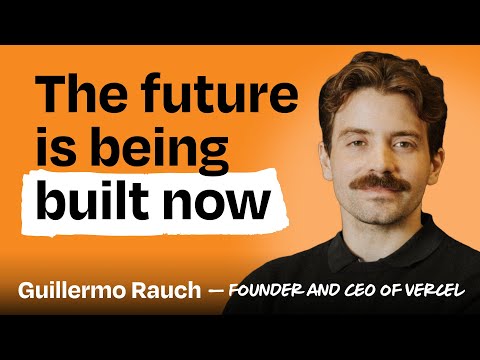
Everyone’s an engineer now: Inside v0’s mission to create 100 million builders | Guillermo Rauch
Guillermo Rauch (guest), Lenny Rachitsky (host), Narrator
In this episode of Lenny's Podcast, featuring Guillermo Rauch and Lenny Rachitsky, Everyone’s an engineer now: Inside v0’s mission to create 100 million builders | Guillermo Rauch explores aI turns everyone into builders: Vercel’s v0 redefines product creation Guillermo Rauch, founder and CEO of Vercel, explains how their AI product v0 lets non-engineers design, build, and ship production-grade web apps using natural language, screenshots, and existing designs. He argues that many programming tasks are really “translation” problems that AI can now handle, shifting the premium toward understanding systems, taste, and eloquent communication with models. Inside Vercel, v0 is already enabling designers, PMs, marketers, and sales engineers to ship real products, compressing weeks of work into hours and changing how teams collaborate. Guillermo outlines the future where AI becomes synonymous with software, and the most valuable skills become conceptual understanding, taste, exposure to real user behavior, and the courage to ship.
AI turns everyone into builders: Vercel’s v0 redefines product creation
Guillermo Rauch, founder and CEO of Vercel, explains how their AI product v0 lets non-engineers design, build, and ship production-grade web apps using natural language, screenshots, and existing designs. He argues that many programming tasks are really “translation” problems that AI can now handle, shifting the premium toward understanding systems, taste, and eloquent communication with models. Inside Vercel, v0 is already enabling designers, PMs, marketers, and sales engineers to ship real products, compressing weeks of work into hours and changing how teams collaborate. Guillermo outlines the future where AI becomes synonymous with software, and the most valuable skills become conceptual understanding, taste, exposure to real user behavior, and the courage to ship.
He also shares practical advice for individuals: how engineers should adapt, what skills he’s teaching his kids, how to develop taste, and how to get the most out of tools like v0. Throughout, he emphasizes that AI won’t eliminate engineering, but will massively expand who can build, speed up iteration, and raise the bar for product quality.
Key Takeaways
AI is turning software building into a natural-language, intent-first process.
With v0, you start by describing what you want (“intent”) and the AI generates the code, design, and interactions—essentially inverting the traditional process where engineers write code first and summarize later via git commits.
Get the full analysis with uListen AI
Many engineering tasks are “translation” work that AI can now automate.
Converting designs or screenshots into production-ready React/Tailwind/CSS used to be a specialist front-end role; v0 now does this extremely well, freeing humans to focus on higher-level product thinking, system design, and taste.
Get the full analysis with uListen AI
Conceptual understanding of how software works will matter more than deep specialization.
You may no longer need to memorize every CSS property, but knowing the key primitives (CSS, layout, databases, backends, etc. ...
Get the full analysis with uListen AI
Eloquence and precise language are becoming core “engineering” skills.
Your ability to choose the right words—design styles (“neo-brutalist,” “sepia”), interaction patterns, technical tokens—directly impacts what the model builds, making communication and vocabulary a new kind of power tool.
Get the full analysis with uListen AI
Taste is a trainable skill built through exposure and feedback, not magic.
Guillermo emphasizes deliberately increasing “exposure hours”: trying lots of products, watching people use your product, and repeatedly shipping, observing, and refining—this is how you sharpen your sense of what’s good.
Get the full analysis with uListen AI
AI is expanding who can ship, not just making engineers faster.
At Vercel, non-engineers (marketing, sales, PMs, designers) now build real, production experiences with v0, blurring traditional role boundaries and enabling one person to cover what used to be multiple specializations.
Get the full analysis with uListen AI
High product quality still demands ‘blood, sweat, and tears’ despite AI.
Tools like v0 compress build time dramatically (e. ...
Get the full analysis with uListen AI
Notable Quotes
“We need to stop talking about AI at some point. I just see a future where AI becomes synonymous with software.”
— Guillermo Rauch
“A lot of the programming jobs to be done that used to be specializations, I think are going away. They’re translation tasks.”
— Guillermo Rauch
“Taste… we think of as this inaccessible thing. I see it as a skill that you can develop.”
— Guillermo Rauch
“Our mission is to enable the world to build and ship the best products. If you can dream it, you can ship it.”
— Guillermo Rauch
“The secret to product quality is blood, sweat, and tears.”
— Guillermo Rauch (referenced by Lenny Rachitsky)
Questions Answered in This Episode
How should engineers strategically adapt their careers as more ‘translation’ coding tasks are automated by tools like v0?
Guillermo Rauch, founder and CEO of Vercel, explains how their AI product v0 lets non-engineers design, build, and ship production-grade web apps using natural language, screenshots, and existing designs. ...
Get the full analysis with uListen AI
What concrete practices can individual PMs and designers adopt to systematically increase their ‘exposure hours’ and improve taste?
He also shares practical advice for individuals: how engineers should adapt, what skills he’s teaching his kids, how to develop taste, and how to get the most out of tools like v0. ...
Get the full analysis with uListen AI
Where is the current breaking point for v0—what kinds of applications or codebases does it still struggle to handle well?
Get the full analysis with uListen AI
How should companies redesign org structures and responsibilities when non-engineers can directly build and ship production experiences?
Get the full analysis with uListen AI
As AI-generated UIs and patterns proliferate, how can teams avoid a homogenized web and cultivate genuinely original product design?
Get the full analysis with uListen AI
Transcript Preview
(calm music) One of our users yesterday submitted feedback. They were saying, "V0 is like a super genius, five-year-old PhD with ADHD." I'm not gonna oversell this as like, it knows everything about everything, but it has this sparks of brilliance.
How do you think things are gonna change for product managers, for product teams?
People could be more full stack. Imagine a designer that can ship a fully baked product, a product manager that can prototype and ship to production. We shouldn't put limits on ourselves and what we can build, and what we can ship, and what we can dream about making possible in these web services.
A lot of people are wondering, "What happens to engineers?" Should I learn how to code?
A lot of the programming jobs to be done that used to be specializations, I think are going away, in a way. They're translation tasks, but knowing how things work under the hood is gonna be very important for you, because you're gonna be able to influence the model and make it follow your intention a lot better.
We hear this word taste all the time. In terms of building taste, people are always like, "How the hell do I do that?"
Taste, sometimes, I think we think of as, like, this inaccessible thing that, "Oh, that person was born with taste." I see it as a skill that you can develop. I think it's extremely important to try lots of products. We have one of our sort of internal operating principles as increasing exposure hours. Try to quantify how much time you expose yourself to watching how people use your products. And you'll develop that muscle.
Wh- where do you think the biggest change is gonna happen?
We need to stop talking about AI at some point. I just see a future where AI becomes synonymous with software. We build software and we use software to build software.
Today, my guest is Guillermo Rauch. Guillermo is the founder and CEO of Vercel, which amongst other things, makes a product called V0, which has become one of the most popular AI website building tools in the world. He's also a legendary engineer and contributor to open source. He's created some of those popular JavaScript frameworks in the world, like Next.js and Socket.IO. He's both a builder and is building a product that's gonna change the way we all build products in the future. This episode is incredible. If you wanna really understand how product development is gonna change with the rise of AI and what skills you should be focusing on right now, I highly recommend you keep listening. If you enjoy this podcast, don't forget to subscribe and follow it in your favorite podcasting app or YouTube. Also, if you become a yearly subscriber of my newsletter, you get a year free of Linear, Notion, Superhuman, Perplexity Pro, and Granola. Check it out at lemmysnewsletter.com. With that, I bring you Guillermo Rauch. This episode is brought to you by WorkOS. If you're building a SaaS app, at some point, your customers will start asking for enterprise features, like SAML authentication and SCIM provisioning. That's where WorkOS comes in, making it fast and painless to add enterprise features to your app. Their APIs are easy to understand so that you can ship quickly and get back to building other features. Today, hundreds of companies are already powered by WorkOS, including ones you probably know, like Vercel, Webflow, and Loom. WorkOS also recently acquired Warrant, the fine-grained authorization service. Warrant's product is based on a groundbreaking authorization system called Zanzibar, which was originally designed for Google to power Google Docs and YouTube. This enables fast authorization checks at enormous scale while maintaining a flexible model that can be adapted to even the most complex use cases. If you're currently looking to build role-based access control or other enterprise features like single sign-on, SCIM, or user management, you should consider WorkOS. It's a drop-in replacement for Auth0 and supports up to one million monthly active users for free. Check it out at workos.com to learn more. That's workos.com. This episode is brought to you by Vanta. When it comes to ensuring your company has top-notch security practices, things get complicated fast. Now, you can assess risk, secure the trust of your customers, and automate compliance for SOC 2, ISO 27001, HIPAA, and more with a single platform, Vanta. Vanta's market-leading trust management platform helps you continuously monitor compliance alongside reporting and tracking risks. Plus, you can save hours by completing security questionnaires with Vanta AI. Join thousands of global companies that use Vanta to automate evidence collection, unify risk management, and streamline security reviews. Get $1,000 off Vanta when you go to vanta.com/lenny. That's V-A-N-T-A.com/lenny. Guillermo, thank you so much for being here, and welcome to the podcast.
Install uListen to search the full transcript and get AI-powered insights
Get Full TranscriptGet more from every podcast
AI summaries, searchable transcripts, and fact-checking. Free forever.
Add to Chrome