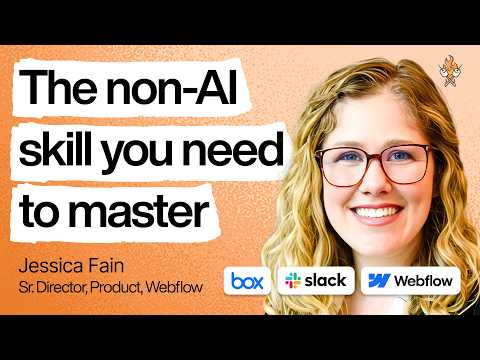
The art of influence: The single most important skill left that AI can’t replace | Jessica Fain
Jessica Fain (guest), Lenny Rachitsky (host)
In this episode of Lenny's Podcast, featuring Jessica Fain and Lenny Rachitsky, The art of influence: The single most important skill left that AI can’t replace | Jessica Fain explores how to influence executives with empathy, context, and fast follow-through Influence is framed as a core product-leadership skill because great ideas routinely die without executive context, buy-in, and momentum.
How to influence executives with empathy, context, and fast follow-through
Influence is framed as a core product-leadership skill because great ideas routinely die without executive context, buy-in, and momentum.
Executives operate under extreme context-switching and incentive pressure, so effective PMs set context quickly, tailor communication, and treat exec conversations like discovery rather than approval gates.
The strongest influence tactics include aligning to executive success criteria, co-creating instead of pitching, responding rapidly to subtle “breadcrumbs,” and shrinking big bets into low-risk experiments.
Trust is built through impact, disciplined prioritization (including killing work), and demonstrating senior ownership—thinking in company-wide terms, not just local team goals.
AI increases the premium on influence by commoditizing execution; it also enables new workflows like simulating exec feedback, red-teaming ideas, and accelerating iteration while making strategy clarity more critical than ever.
Key Takeaways
Treat executives like users: lead with empathy and curiosity.
PMs often forget their strongest skills when talking to leaders; using discovery-style questions (“What led you to believe that? ...
Get the full analysis with uListen AI
Assume execs have near-zero context; earn their attention fast.
Because exec calendars are “a strobe light,” start meetings with a tight reset: why we’re here, last decision, today’s goal, how we’ll run it—then stop talking.
Get the full analysis with uListen AI
Stop seeking approval; design the interaction to learn and build together.
Pitching for a rubber stamp triggers defensiveness and shallow feedback; inviting an exec’s expertise early (office hours, “Hey, what do you think? ...
Get the full analysis with uListen AI
Align every proposal to exec incentives and company strategy—not just your team’s roadmap.
Influence rises when you connect your work to what leaders are measured on (OKRs, board pressure, strategic bets) and show how your leading indicators ladder to outcomes they care about.
Get the full analysis with uListen AI
Show options to prove rigor, but don’t drown them in process.
Executives get bored by exhaustive “proof you did the work”; lead with the recommendation, keep details in an appendix, and use 2–3 credible alternatives to demonstrate you explored the space.
Get the full analysis with uListen AI
Follow the subtle breadcrumbs—and follow up quickly to build momentum.
Exec asks often sound like “I wonder if…”; high performers notice these cues, respond with a concrete artifact fast (e. ...
Get the full analysis with uListen AI
Build trust by reducing risk: shrink big ideas into experiments—and be willing to kill work.
Leaders fear different failure modes (time, credibility, customer impact); define what would make the idea fail, time-box learning, and visibly deprioritize/stop initiatives when evidence says so.
Get the full analysis with uListen AI
Notable Quotes
“Politics is manipulating outcomes and people for your own gain. Influence is about increasing the odds that your good ideas survive.”
— Jessica Fain
“I describe an executive’s calendar as like a strobe light going off.”
— Jessica Fain
“It’s not my fault, but it is my problem.”
— Jessica Fain (citing Annie Pearl)
“You get paid to be a domain expert. Your executive is looking for you to be the deepest person in the room.”
— Jessica Fain
“One of the biggest things you can do to build trust is kill things, deprioritize things.”
— Jessica Fain
Questions Answered in This Episode
What are the best “spicier” alternatives to asking an exec “What’s top of mind?”—and when (if ever) is the classic question still useful?
Influence is framed as a core product-leadership skill because great ideas routinely die without executive context, buy-in, and momentum.
Get the full analysis with uListen AI
How do you distinguish an executive’s casual idea from a true priority without appearing resistant or political?
Executives operate under extreme context-switching and incentive pressure, so effective PMs set context quickly, tailor communication, and treat exec conversations like discovery rather than approval gates.
Get the full analysis with uListen AI
Can you share a concrete template for the 60-second meeting opener (and the follow-up email) that consistently works with busy leaders?
The strongest influence tactics include aligning to executive success criteria, co-creating instead of pitching, responding rapidly to subtle “breadcrumbs,” and shrinking big bets into low-risk experiments.
Get the full analysis with uListen AI
When an exec strongly believes something you think is wrong, how many cycles of pushback is healthy before you decide to drop it—and what does an “evidence-based” pushback sound like?
Trust is built through impact, disciplined prioritization (including killing work), and demonstrating senior ownership—thinking in company-wide terms, not just local team goals.
Get the full analysis with uListen AI
How do you systematically map an exec’s incentives (OKRs, board pressure, peer dynamics) when that information isn’t explicitly shared?
AI increases the premium on influence by commoditizing execution; it also enables new workflows like simulating exec feedback, red-teaming ideas, and accelerating iteration while making strategy clarity more critical than ever.
Get the full analysis with uListen AI
Transcript Preview
As product managers, one of our best sets of skills is curiosity and empathy and trying to understand our users. But the moment that we're talking to an executive, we forget those skills and those talents.
It's your fault if the leaders didn't buy into your idea.
People completely misunderstand how executives make decisions, what is going on in the heads. I describe an executive's calendar as a strobe light going off. You wake up at 8:00 AM, you've already got a huge list of urgent things going on. They have not had the time, the energy, the wherewithal to center your problems.
What are their goals? What are they trying to do? How are they measured? Connect the thing you're pitching them with that success.
There's ways for us to ask much more interesting questions of our executives. Tell me what the board is pushing you on. Execs wanna be successful, too. They wanna be good at their jobs.
Sometimes you have the best idea and they just don't buy it.
One of the biggest things you can do to build trust is kill things, deprioritize things. If you're thinking about how do you be more senior, how do you show up in a way that is in a leadership mindset, you get paid to be a domain expert. Your executive is looking for you to be the deepest person in the room. Bringing your expertise to bear is absolutely crucial. You have to act like a CPO.
Today, my guest is Jessica Fain, who's been a product leader at Box and Slack and Brightwheel, and now at Webflow. And she has gotten very, very uniquely good at the art and science of influence, and in particular, influencing executives. Influence might be the single highest leverage skill for product leaders outside of AI. We actually get into how AI is changing the skill of influence. I've never heard a podcast conversation get deep into the art and science of influence, how to actually change people's minds, and the mistakes that people make when they're trying to influence leaders. We get very tactical and very specific. There's a bunch of stuff in this conversation that I've never heard before or thought about. I am very excited for you to learn from Jessica. Before we get into it, don't forget to check out lennysproductpass.com for an incredible set of deals available exclusively to Lenny's Newsletter subscribers. Now, let's get into it after a short word from our wonderful sponsors. This episode is brought to you by Omni. Many product teams today are in the process of debating how to ship AI analytics. The hard part is obvious. Having an LLM guess at SQL in production is a huge mess and just a bad idea. Omni takes a different approach. They have a semantic layer built in so that when you embed their analytics, the AI actually knows your business definitions, not just your raw tables. You can test queries, validate the reasoning, and lock down permissions before anything hits production. If you want AI analytics in your product without building the whole stack from scratch, check out omni.co/lenny for a free three-week trial. Companies like Perplexity, dbt, and BuzzFeed use Omni to ship analytics their customers can trust. That's O-M-N-I dot C-O slash Lenny. This episode is brought to you by Lovable. Not only are they the fastest growing company in history, I use it regularly, and I could not recommend it more highly. If you've ever had an idea for an app but didn't know where to start, Lovable is for you. Lovable lets you build working apps and websites by simply chatting with AI. Then you can customize it, add automations, and deploy it to a live domain. It's perfect for marketers spinning up tools, product managers prototyping new ideas, and founders launching their next business. Unlike no-code tools, Lovable isn't about static pages. It builds full apps with real functionality, and it's fast. What used to take weeks, months, or years, you can now do over a weekend. So if you've been sitting on an idea, now is the time to bring it to life. Get started for free at lovable.dev. That's lovable.dev. [gentle music] Jessica, thank you so much for being here. Welcome to the podcast.
Install uListen to search the full transcript and get AI-powered insights
Get Full TranscriptGet more from every podcast
AI summaries, searchable transcripts, and fact-checking. Free forever.
Add to Chrome