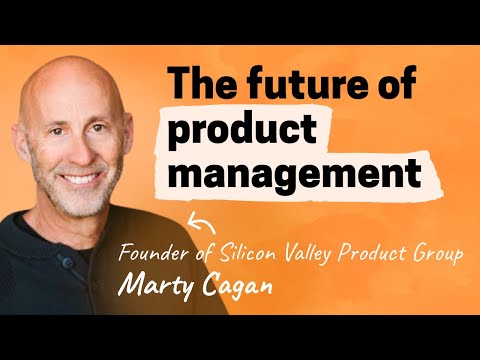
Product management theater | Marty Cagan (Silicon Valley Product Group)
Marty Cagan (guest), Lenny Rachitsky (host)
In this episode of Lenny's Podcast, featuring Marty Cagan and Lenny Rachitsky, Product management theater | Marty Cagan (Silicon Valley Product Group) explores marty Cagan warns PMs: escape feature factories or get replaced Marty Cagan argues that much of today’s “product management” is actually overpaid project management inside bloated, process-heavy feature factories. He contrasts this with empowered product teams that own outcomes, not output, and require real product managers accountable for value and viability, alongside strong design, engineering, and product leadership. He warns that macro trends—over‑hiring, excessive roles, remote work, and especially generative AI—are triggering a reckoning for delivery‑focused PMs and roles like product owners and lightweight product ops. His new book, *Transformed*, explains how non–Silicon Valley companies can move to the “product operating model,” with concrete principles, case studies, and guidance for both leaders and individual contributors to drive true transformation.
Marty Cagan warns PMs: escape feature factories or get replaced
Marty Cagan argues that much of today’s “product management” is actually overpaid project management inside bloated, process-heavy feature factories. He contrasts this with empowered product teams that own outcomes, not output, and require real product managers accountable for value and viability, alongside strong design, engineering, and product leadership. He warns that macro trends—over‑hiring, excessive roles, remote work, and especially generative AI—are triggering a reckoning for delivery‑focused PMs and roles like product owners and lightweight product ops. His new book, *Transformed*, explains how non–Silicon Valley companies can move to the “product operating model,” with concrete principles, case studies, and guidance for both leaders and individual contributors to drive true transformation.
Key Takeaways
Most ‘product managers’ are functioning as project managers in feature factories.
Cagan says many PMs are given roadmaps of features, dates, and outputs; they manage backlogs and communication but don’t own outcomes, value, or viability—making them unnecessary and overpaid in that context.
Get the full analysis with uListen AI
An empowered product team is given problems, not feature lists, and is measured on outcomes.
In strong product companies, teams are tasked with solving customer or business problems and judged on whether they actually move the metrics, not just whether they ship features on time.
Get the full analysis with uListen AI
A real product manager is a creator responsible for value and viability, not a facilitator.
Cagan emphasizes that PMs must deeply understand customers, data, market, legal/compliance, sales, marketing, and monetization, and co‑create solutions with design and engineering rather than simply ‘herding cats’ or managing Jira.
Get the full analysis with uListen AI
Generative AI will rapidly erode low‑value PM work, raising the bar on skills.
Backlog administration, coordination, and other routine tasks are highly automatable; PMs who don’t step up into deeper discovery, strategic thinking, and viability decision‑making are particularly vulnerable.
Get the full analysis with uListen AI
Most popular PM content, certifications, and community advice propagate weak models.
Cagan argues that roughly 90% of online PM material reflects feature‑team realities, not best‑in‑class practice, so PMs must think critically about sources and proactively seek out high‑quality guidance.
Get the full analysis with uListen AI
Transformation requires a product operating model with clear principles and four real competencies.
The model centers on how you choose problems, solve them, and ship reliably, anchored by genuine product managers, product designers, tech leads, and product leaders who can craft strategy and coach teams.
Get the full analysis with uListen AI
Individual PMs are not powerless; they can raise their game and catalyze change.
Cagan insists PMs aren’t just victims of bad orgs: by building real product skills and modeling empowered practices, they often get promoted, gain influence, and can pilot better ways of working—even before leadership fully buys in.
Get the full analysis with uListen AI
Notable Quotes
“They are dramatically overpaid for the value they provide, because it's a project management role.”
— Marty Cagan
“It is a lot easier to deliver output than it is to deliver outcomes.”
— Marty Cagan
“A product manager is a creator, not a facilitator.”
— Marty Cagan
“Too many people in our industry view themselves as a victim of their company... I think that's not true, there is so much they can do.”
— Marty Cagan
“Do you want to work like the best or do you want to work like the rest?”
— Marty Cagan
Questions Answered in This Episode
How can I concretely diagnose whether my team is a feature team or an empowered product team, beyond just looking at roadmaps?
Marty Cagan argues that much of today’s “product management” is actually overpaid project management inside bloated, process-heavy feature factories. ...
Get the full analysis with uListen AI
If I’m currently a backlog‑managing PM, what are the first three skills I should build to become a true value/viability‑owning product manager?
Get the full analysis with uListen AI
How should companies practically reshape roles like agile coaches, product ops, and business analysts when moving to the product operating model?
Get the full analysis with uListen AI
In what specific ways do you expect generative AI to replace or reshape PM, design, and engineering work over the next five to ten years?
Get the full analysis with uListen AI
What are realistic first steps a non‑product CEO or CFO can take to start transforming a traditional, sales‑ or process‑driven org into a product‑led operating model?
Get the full analysis with uListen AI
Transcript Preview
(instrumental music plays) There is no question that a lot of companies over-hired during the pandemic. I go into some companies, and honestly I can't believe all the ridiculous roles that they have: agile coaches, and product owners, and product ops, and business analysts.
And this is essentially the theater you're describing, people that aren't real product managers.
They're dramatically overpaid for the value they provide, because it's a project management role. It is a lot easier to deliver output than it is to deliver outcomes.
What made you decide to write another book, and what is it about?
Too many people in our industry view themselves as a victim of their company, like they're stuck in a feature team and there's nothing they can do about it other than quit. I think that's not true, there is so much they can do.
(instrumental music plays) Today my guest is Marty Cagan. Marty has been helping product teams and product managers improve their craft, processes, and careers for over 20 years. He's worked with more product teams and more product managers than any human alive. He's also written two of the most popular books in the field of product management, Inspired and Empowered, and this week he's releasing his newest book, Transformed. In our conversation, we cover some spicy and important topics: where the product management field is going, the over-hiring of product managers and adjacent functions, a trend he's noticed called product management theater, also why most product management advice you find online is giving you the wrong advice and why that's the case, why many product managers are simply project managers and how to avoid becoming that person, also how to avoid hiring that person, what skills you need to work on and build to be an incredible product manager, especially with AI, how to shift your team and company to be more empowered, signs that you're working on a feature team and why you probably don't want to be there, and so much more. If you care about the field of product management and where it's going, you will absolutely love this episode. With that, I bring you Marty Cagan after a short word from our sponsors. And if you enjoy this podcast, don't forget to subscribe and follow it in your favorite podcasting app or YouTube. It's the best way to avoid missing future episodes and it helps the podcast tremendously. Let me tell you about a product called Sprig. Next-gen product teams like Figma and Notion rely on Sprig to build products that people love. Sprig is an AI-powered platform that enables you to collect relevant product experience insights from the right users so you can make product decisions quickly and confidently. Here's how it works. It all starts with Sprig's precise targeting, which allows you to trigger in-app studies based on users' characteristics and actions taken in-product. Then Sprig's AI is layered on top of all studies to instantly surface your product's biggest learnings. Sprig's surveys enables you to target specific users to get relevant and timely feedback. Sprig Replays enables you to capture targeted session clips to see your product experience firsthand. Sprig's AI is a game-changer for product teams. They're the only platform with product-level AI, meaning it analyzes data across all of your studies to centralize the most important product opportunities, trends, and correlations in one real-time feed. Visit sprig.com/lenny to learn more and get 10% off. That's S-P-R-I-G.com/lenny. This episode is brought to you by Eppo. Eppo is a next-generation A/B testing and feature management platform built by alums of Airbnb and Snowflake for modern growth teams. Companies like Twitch, Miro, ClickUp, and DraftKings rely on Eppo to power their experiments. Experimentation is increasingly essential for driving growth and for understanding the performance of new features, and Eppo helps you increase experimentation velocity while unlocking rigorous deep analysis in a way that no other commercial tool does. When I was at Airbnb, one of the things that I loved most was our experimentation platform, where I could set up experiments easily, troubleshoot issues, and analyze performance all on my own. Eppo does all that and more with advanced statistical methods that can help you shave weeks off experiment time, an accessible UI for diving deeper into performance, and out-of-the-box reporting that helps you avoid annoying prolonged analytic cycles. Eppo also makes it easy for you to share experiment insights with your team, sparking new ideas for the A/B testing flywheel. Eppo powers experimentation across every use case, including product, growth, machine learning, monetization, and email marketing. Check out Eppo at geteppo.com/lenny and 10X your experiment velocity. That's geteppo.com/lenny. Marty Cagan, welcome back to the podcast.
Install uListen to search the full transcript and get AI-powered insights
Get Full TranscriptGet more from every podcast
AI summaries, searchable transcripts, and fact-checking. Free forever.
Add to Chrome