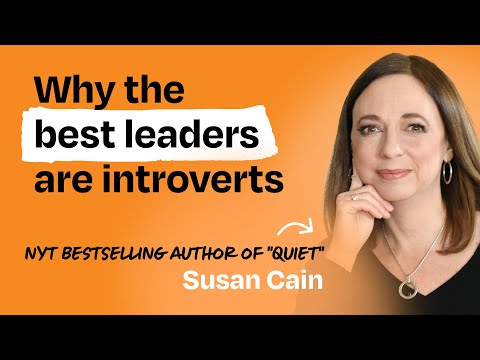
The hidden power of introverts: How to thrive without changing who you are | Susan Cain
Susan Cain (guest), Lenny Rachitsky (host), Christina Cacioppo (guest)
In this episode of Lenny's Podcast, featuring Susan Cain and Lenny Rachitsky, The hidden power of introverts: How to thrive without changing who you are | Susan Cain explores introverts Can Thrive: Succeed at Work Without Becoming Extroverts Susan Cain explains that introversion and extroversion are different but equally valuable temperaments, and that success doesn’t require changing who you are—only building specific skills. She distinguishes true temperament from shyness and from learned abilities like public speaking, emphasizing that many ‘extroverted-seeming’ high performers are actually introverts using well-practiced skills. Cain offers concrete tactics for introverts to thrive at work: leaning into deep focus and listening, carefully choosing environments, and learning visible skills like speaking and self-advocacy without pretending to be someone else. She also shares guidance for managers and parents on how to support introverts through better meeting structures, longer “runways” for kids, and cultures that value quiet strengths.
Introverts Can Thrive: Succeed at Work Without Becoming Extroverts
Susan Cain explains that introversion and extroversion are different but equally valuable temperaments, and that success doesn’t require changing who you are—only building specific skills. She distinguishes true temperament from shyness and from learned abilities like public speaking, emphasizing that many ‘extroverted-seeming’ high performers are actually introverts using well-practiced skills. Cain offers concrete tactics for introverts to thrive at work: leaning into deep focus and listening, carefully choosing environments, and learning visible skills like speaking and self-advocacy without pretending to be someone else. She also shares guidance for managers and parents on how to support introverts through better meeting structures, longer “runways” for kids, and cultures that value quiet strengths.
Key Takeaways
Don’t try to become an extrovert; build skills around your introverted strengths.
Cain argues the goal isn’t to change your temperament but to acquire specific skills—like public speaking or networking—so you can operate effectively while staying true to your preference for depth, focus, and quieter environments.
Get the full analysis with uListen AI
Differentiate temperament (introversion) from shyness (fear of judgment).
Introversion is a preference for low-stimulation settings; shyness is anxiety about being judged. ...
Get the full analysis with uListen AI
Use structure to be heard in meetings: prepare and speak early.
Introverts can prep key points ahead of time and aim to contribute early in a meeting, which both anchors the discussion and creates a virtuous cycle of participation and visibility.
Get the full analysis with uListen AI
Make your contributions visible in ways that fit you.
Instead of classic self-promotion, introverts can write internal posts, run short intro segments at events, or share clear follow-up docs after meetings—giving disproportionate career returns with relatively low social strain.
Get the full analysis with uListen AI
Find introverted role models in your field to rewires your beliefs about success.
Actively look for successful introverts (e. ...
Get the full analysis with uListen AI
For managers, deliberately design introvert-friendly environments and meetings.
Use techniques like going around the room, advance prompts, written ‘brainwriting,’ and protected deep-work time or no-meeting days to unlock contributions from quieter team members.
Get the full analysis with uListen AI
With introverted kids, respect a longer ‘runway’ and normalize their temperament.
Support children by introducing new situations gradually (stepwise exposure), helping them build mastery (which creates self-confidence), and talking lightly and openly about shyness so it carries no shame.
Get the full analysis with uListen AI
Notable Quotes
“The more introverts become deeply comfortable in their own skin, that’s when they start to show up at the job interview or on the stage in a more powerful way.”
— Susan Cain
“There’s a difference between acquiring skills and trying to be someone who you’re not. Those are really different things.”
— Susan Cain
“Self-confidence comes from mastery and not the other way around.”
— Susan Cain
“If you have a job that requires you to wake up every morning feeling dread because you’re going to be so far out of your comfort zone, is it really worth it?”
— Susan Cain
“In a gentle way, you can shake the world.”
— Mahatma Gandhi (quoted by Susan Cain)
Questions Answered in This Episode
How can I systematically identify and lean into my specific introverted strengths in my current role?
Susan Cain explains that introversion and extroversion are different but equally valuable temperaments, and that success doesn’t require changing who you are—only building specific skills. ...
Get the full analysis with uListen AI
Where in my work life am I confusing a lack of skill (e.g., speaking, negotiation) with being ‘too introverted’—and what exposure steps could I take to build those skills?
Get the full analysis with uListen AI
If I manage people, what concrete changes could I make to meeting formats and schedules this month to better support introverted team members?
Get the full analysis with uListen AI
Am I in a career or role that chronically violates my temperament, and if so, what would a better-fitting alternative look like day-to-day?
Get the full analysis with uListen AI
For parents: how can I give my introverted or shy child a longer runway in new situations without overprotecting them or reinforcing avoidance?
Get the full analysis with uListen AI
Transcript Preview
(instrumental music) I see introversion and extroversion in general as just two different kinds of strengths. The problem in our culture is just that we emphasize one type of strength, the extroverted strength, usually more than we do the introverted strength, but that they're equally valuable.
It's probably not this binary thing, your introvert/extrovert. It's a spectrum of introverted-ness, extroverted-ness. Do people move along the spectrum often? I feel like I've definitely become more extroverted over time.
I've had the exact same trajectory you just described. I used to be terrified of public speaking, now I do it all the time. I used to be quite shy. But that's not really describing, I don't believe, becoming more extroverted. That's more describing acquiring skills. As we grow and gain experience, we acquire all kinds of skills.
What people most want is just like, "How do I become potentially more extroverted/less allow introverted-ness to hurt me in my career?"
This is a paradox that I have observed, that the more introverts become, like, deeply comfortable in their own skin, that's when they start to show up at the job interview or on the stage in a more powerful way, because you're now there as your own true being, as opposed to there always being a voice in your head saying, "I'm not really supposed to be me."
How can you help people believe this is actually true, that you can be just as successful being very true to yourself versus learning to be an extrovert?
One of the most important things you can do... (instrumental music)
Today my guest is Susan Cain. Susan is the author of the number one New York Times bestseller, Quiet: The Power of Introverts in a World That Can't Stop Talking. Her books have been translated into 40 languages, her TED Talks have been viewed over 50 million times, and she basically made me and every other introvert in the world feel okay about being an introvert, and showed that actually embracing that about yourself can unlock a ton of opportunity and success in your life. In our conversation, Susan shares a ton of very tangible advice for how to be more successful in business as an introvert, including what skills you should actually be building that don't come naturally to you, also what actually is an introvert, how to raise kids who might be introverted, and so much more. This was such a wonderful conversation, and so much of it resonated with me. This episode is for anyone who considers themselves an introvert, or if you work with people who are introverts and you want to learn how to help them thrive. If you enjoy this podcast, don't forget to subscribe and follow it in your favorite podcasting app or YouTube. It's the best way to avoid missing future episodes, and it helps the podcast tremendously. With that, I bring you Susan Cain. This episode is brought to you by Interpret. Interpret unifies all your customer interactions, from Gong calls to Zendesk tickets to Twitter threads to App Store reviews, and makes it available for analysis. It's trusted by leading product orgs like Canva, Notion, Loom, Linear, monday.com and Strava to bring the voice of the customer into the product development process, helping you build best in class products faster. What makes Interpret special is its ability to build and update customer-specific AI models that provide the most granular and accurate insights into your business, connect customer insights to revenue and operational data in your CRM or data warehouse to map the business impact of each customer need and prioritize confidently, and empower your entire team to easily take action on use cases like win/loss analysis, critical bug detection and identifying drivers of churn, with Interpret's AI assistant, Wisdom. Looking to automate your feedback loops and prioritize your roadmap with confidence like Notion, Canva and Linear? Visit E-N-T-E-R-P-R-E-T dot com slash Lenny to connect with the team and get two free months when you sign up for an annual plan. This is a limited time offer. That's Interpret.com/Lenny. This episode is brought to you by Vanta, and I am very excited to have Christina Cacioppo, CEO and co-founder of Vanta joining me for this very short conversation.
Install uListen to search the full transcript and get AI-powered insights
Get Full TranscriptGet more from every podcast
AI summaries, searchable transcripts, and fact-checking. Free forever.
Add to Chrome