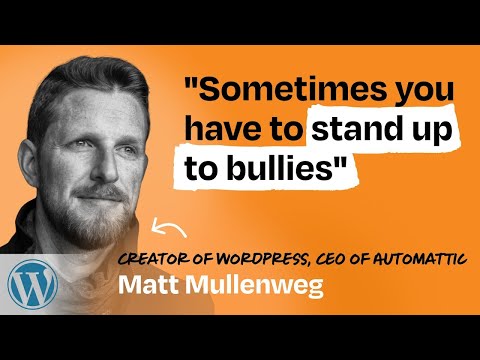
Matt Mullenweg on the future of open source and why he’s taking a stand
Matt Mullenweg (guest), Lenny Rachitsky (host), Christina Cacioppo (guest)
In this episode of Lenny's Podcast, featuring Matt Mullenweg and Lenny Rachitsky, Matt Mullenweg on the future of open source and why he’s taking a stand explores matt Mullenweg defends WordPress, open source, and his embattled reputation Matt Mullenweg, co‑creator of WordPress and CEO of Automattic, explains his lifelong commitment to open source and why he believes software freedom is a fundamental modern right.
Matt Mullenweg defends WordPress, open source, and his embattled reputation
Matt Mullenweg, co‑creator of WordPress and CEO of Automattic, explains his lifelong commitment to open source and why he believes software freedom is a fundamental modern right.
He details the escalating conflict and litigation with WP Engine and its private‑equity owner Silver Lake, arguing they misused the WordPress trademark, degraded the product, and misled users while preparing a lawsuit against Automattic and him personally.
Mullenweg also critiques "fake open source" AI models like Meta’s LLaMA, explores how AI is both powered by and can help secure open source, and shares lessons on building durable communities, products, and acquisitions like WooCommerce and Tumblr.
Throughout, he reflects on the backlash against him, how social media algorithms amplify outrage and misinformation, and why he still believes strong, opinionated leadership—rather than governance by committee—is essential for open source to thrive.
Key Takeaways
Open source is framed as a core civil liberty in a software-driven world.
Mullenweg argues that as software increasingly governs our lives, users must have the four freedoms of the GPL (use, inspect, modify, and redistribute) or they are effectively not free; he sees open source as the modern equivalent of foundational democratic ideas.
Get the full analysis with uListen AI
Not all “open” AI is truly open source—and licensing details matter.
He calls models like LLaMA “fake open source” because commercial-usage caps and ambiguous clauses violate formal open-source definitions, limiting the freedom to use software for any purpose and exposing builders to future permission or control risks.
Get the full analysis with uListen AI
AI both depends on and can strengthen open source ecosystems.
Modern code models are largely trained on open source repositories (because that’s what’s legally crawlable), and Mullenweg expects AI-assisted coding and automated security scanning to soon touch most open source commits, especially across WordPress’s huge plugin ecosystem.
Get the full analysis with uListen AI
Building a durable platform requires a movement, not just a product.
WordPress’s resilience and dominance (powering over 40% of the web) come from a strong philosophy, cultural rituals (“Code is poetry,” jazz-based release names), local meetups, and a massive ecosystem of plugins and themes that together create a powerful moat.
Get the full analysis with uListen AI
The WP Engine fight is framed as protecting users, trademarks, and product integrity.
Mullenweg claims WP Engine’s private-equity era brought reduced contributions, confusing trademark use, and cost-cutting that broke core WordPress features (like revision history), forcing Automattic to act legally and publicly to avoid brand dilution and user harm.
Get the full analysis with uListen AI
Strong product leadership can require unpopular, long-horizon decisions.
He defends centralized decision-making (e. ...
Get the full analysis with uListen AI
Turnarounds and roll-ups work best when you’re a long-term steward, not a financial optimizer.
Using Tumblr and WooCommerce as examples, Mullenweg differentiates Automattic’s acquisition approach from control-style private equity: focus on founder alignment, product acceleration, and community stewardship, even if it means subsidizing a product like Tumblr for years.
Get the full analysis with uListen AI
Notable Quotes
“If you’re really open in open source, sometimes you have to stand up to bullies and you have to fight to protect your open source ideals.”
— Matt Mullenweg
“If the founding fathers were around today, I think they would be open source advocates.”
— Matt Mullenweg
“You can’t walk up to Facebook and change their homepage, but you can come to an open source project and change a feature that hundreds of millions of people use.”
— Matt Mullenweg
“To the extent that we’ve been successful, it’s that we didn’t just build a product, we built a movement.”
— Matt Mullenweg
“A lie gets around the world seven times before truth has time to get out of bed.”
— Matt Mullenweg
Questions Answered in This Episode
Where should the line be drawn between protecting an open source brand and allowing commercial actors maximal freedom to innovate on top of it?
Matt Mullenweg, co‑creator of WordPress and CEO of Automattic, explains his lifelong commitment to open source and why he believes software freedom is a fundamental modern right.
Get the full analysis with uListen AI
How can open source communities design governance models that preserve strong product leadership while still distributing power and avoiding founder capture?
He details the escalating conflict and litigation with WP Engine and its private‑equity owner Silver Lake, arguing they misused the WordPress trademark, degraded the product, and misled users while preparing a lawsuit against Automattic and him personally.
Get the full analysis with uListen AI
What obligations—if any—do AI companies have to open source communities whose code underpins their models’ capabilities?
Mullenweg also critiques "fake open source" AI models like Meta’s LLaMA, explores how AI is both powered by and can help secure open source, and shares lessons on building durable communities, products, and acquisitions like WooCommerce and Tumblr.
Get the full analysis with uListen AI
Could Automattic’s WordPress–Tumblr integration and Beeper bet meaningfully shift social and messaging away from closed, ad-driven platforms, or will network effects prevail?
Throughout, he reflects on the backlash against him, how social media algorithms amplify outrage and misinformation, and why he still believes strong, opinionated leadership—rather than governance by committee—is essential for open source to thrive.
Get the full analysis with uListen AI
How can individual developers and small teams practically start contributing to large open source projects without being overwhelmed by scale or politics?
Get the full analysis with uListen AI
Transcript Preview
If you're really open in open source, sometimes you have to stand up to bullies and you have to fight to protect your open source ideals. Please put your hands together for Matt Mullenweg.
Matt Mullenweg has been making some questionable moves recently. There's a lot going on with Matt and WordPress these days.
20 plus years of good sentiment burned in days.
You were like a 100% beloved hero of open source and internet, and now you're like in this, a lot of people don't like you.
If you were kind of inside baseball with WordPress, there's actually a lot of people who have been unhappy with me over the years. Previously, like one percent of the world thought I was terrible, and now I feel like it's up to like four or five percent.
People that don't know what the hell is going on, what's just like the high level overview of what's going on?
There's a company called WP Engine. By 2018, they got bought out by a private equity firm called Silverlake. You know, since 2019, WP Engine has kind of changed a bit. They started using the trademark. They're offering something called WordPress. I refer to it as like a bastardized, hacked up version of it. (laughs) It's diluting our brand.
Why do you think so many people are looking at you as the bad guy?
A lie gets around the world seven times before truth has time to, you know, get out of bed.
(instrumental music) Today my guest is Matt Mullenweg. Matt is the co-creator of WordPress, which powers 40% of websites on the internet today, including whitehouse.gov. He's also the CEO of Automattic, which is valued at over seven billion dollars and owns products like wordpress.com, Tumblr, WooCommerce, Gravatars, and Pocketcasts. There is a lot of drama these days around Matt and WordPress and within the open source community. So I thought I'd have Matt on to address many of the criticisms head on that he hasn't addressed in other places, and also just get the full story on what's going on. We also chat about what incepted him to spend over half his life at this point on open source and creating WordPress, also why products like LLaMA are what he calls fake open source, and his perspective on AI and open source, also how AI is actually trained on open source code and what that means for the future, and his approach for deciding what companies to acquire within Automattic. If you enjoy this episode, don't forget to subscribe and follow it in your favorite podcasting app or YouTube. Also, if you become an annual subscriber of my newsletter, you now get a year free of Notion and Superhuman and Perplexity Pro and Linear and Granola. Check it out at lennysnewsletter.com. With that, I bring you Matt Mullenweg. This episode is brought to you by WorkOS. If you're building a SaaS app, at some point, your customers will start asking for enterprise features like SAML authentication and SCIM provisioning. That's where WorkOS comes in, making it fast and painless to add enterprise features to your app. Their APIs are easy to understand so that you can ship quickly and get back to building other features. Today, hundreds of companies are already powered by WorkOS, including ones you probably know like Vercel, Webflow, and Loom. WorkOS also recently acquired Warrant, the fine-grained authorization service. Warrant's product is based on a groundbreaking authorization system called Zanzibar, which was originally designed for Google to power Google Docs and YouTube. This enables fast authorization checks at enormous scale while maintaining a flexible model that can be adapted to even the most complex use cases. If you're currently looking to build role-based access control or other enterprise features like single sign-on, SCIM, or user management, you should consider WorkOS. It's a drop-in replacement for Auth0 and supports up to one million monthly active users for free. Check it out at workos.com to learn more. That's workos.com. This episode is brought to you by Vanta, and I am very excited to have Christina Cacioppo, CEO and co-founder of Vanta joining me for this very short conversation.
Install uListen to search the full transcript and get AI-powered insights
Get Full TranscriptGet more from every podcast
AI summaries, searchable transcripts, and fact-checking. Free forever.
Add to Chrome