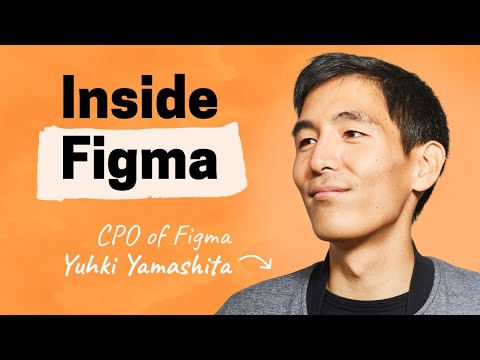
An inside look at how Figma builds product | Yuhki Yamashita (CPO of Figma)
Yuhki Yamashita (guest), Lenny Rachitsky (host), Narrator
In this episode of Lenny's Podcast, featuring Yuhki Yamashita and Lenny Rachitsky, An inside look at how Figma builds product | Yuhki Yamashita (CPO of Figma) explores inside Figma’s Playbook: Storytelling, Community, And Product-Led Growth In this episode, Figma CPO Yuhki Yamashita walks through his career from Microsoft, Google/YouTube, and Uber to Figma, and how those experiences shaped his product philosophy. He emphasizes storytelling, ownership of the “why,” and deep proximity to customers as core PM superpowers. Yuhki describes how Figma builds consistently high-quality products through obsessive dogfooding, tight feedback loops with a passionate design community, and a distinct approach to OKRs and goal-setting. He also explains Figma’s flavor of product-led, community-led growth and reflects on working with CEO Dylan Field and the potential future with Adobe.
Inside Figma’s Playbook: Storytelling, Community, And Product-Led Growth
In this episode, Figma CPO Yuhki Yamashita walks through his career from Microsoft, Google/YouTube, and Uber to Figma, and how those experiences shaped his product philosophy. He emphasizes storytelling, ownership of the “why,” and deep proximity to customers as core PM superpowers. Yuhki describes how Figma builds consistently high-quality products through obsessive dogfooding, tight feedback loops with a passionate design community, and a distinct approach to OKRs and goal-setting. He also explains Figma’s flavor of product-led, community-led growth and reflects on working with CEO Dylan Field and the potential future with Adobe.
Key Takeaways
Great product managers are great storytellers and synthesizers.
Yuhki sees PM work as narrative-building: distilling many inputs into a clear thesis, making insights memorable (even “memefied”), and crafting stories that drive concrete action across distracted stakeholders.
Get the full analysis with uListen AI
PMs must uniquely own the “why,” not necessarily the ideas or the “what.”
Ideas can come from designers, engineers, or customers, but PMs are accountable for articulating why something matters, what problem it solves, and giving everyone enough context to make good local decisions at scale.
Get the full analysis with uListen AI
Proximity to customers must be continuous, multi-channel, and champion-led.
Figma leans heavily on Twitter/X, user feedback, support tickets, sales conversations, and programs like Friends of Figma, while recognizing the need to balance loud voices with research and data to avoid blind spots.
Get the full analysis with uListen AI
Internal dogfooding creates personal accountability and drives quality.
By forcing more of the company to work inside Figma/FigJam (e. ...
Get the full analysis with uListen AI
OKRs are only useful if they’re legible, actionable, and authentic.
Figma has iterated through several goal-setting approaches, struggling with metrics that either don’t truly matter or that teams can’t realistically move; they now focus more on clear “headlines” and honest reflections than rigid metrics theater.
Get the full analysis with uListen AI
Community-led, product-led growth depends on irrational love, not just usage.
Figma’s growth is fueled by users who emotionally love the product and champion a new way of working (multiplayer, transparent design) inside their companies; Figma and its sales team focus on equipping these internal champions, not replacing them.
Get the full analysis with uListen AI
Hiring PMs who can “fast-forward to the future” accelerates decision-making.
Yuhki looks for candidates who can rapidly explore UX branches, reason through likely experiment or research outcomes, and use that imagination to decide what not to build as much as what to build.
Get the full analysis with uListen AI
Notable Quotes
“I actually think that a lot of being a great product manager is being a great storyteller.”
— Yuhki Yamashita
“The PM doesn’t have to come up with the idea, but they must own the why.”
— Yuhki Yamashita
“There has to be this almost irrational, emotional response to your product—this love for it.”
— Yuhki Yamashita
“It’s really easy to listen to some of these podcasts and feel like these people have everything figured out. The reality is, we haven’t.”
— Yuhki Yamashita
“If this is the future of design, I’m quitting… I’m changing careers.”
— Yuhki Yamashita (quoting an early Figma user reaction)
Questions Answered in This Episode
How can PMs systematically practice and improve storytelling and synthesis, beyond just “doing more of it”?
In this episode, Figma CPO Yuhki Yamashita walks through his career from Microsoft, Google/YouTube, and Uber to Figma, and how those experiences shaped his product philosophy. ...
Get the full analysis with uListen AI
What practical methods can teams use to balance loud social-media feedback with quieter but more representative customer signals?
Get the full analysis with uListen AI
How should startups decide when to prioritize bottom-up, engineer-led quality fixes versus top-down roadmap commitments?
Get the full analysis with uListen AI
What’s the right way to implement OKRs so that engineers and PMs actually think in terms of the goals day to day, instead of treating them as a quarterly ritual?
Get the full analysis with uListen AI
If Figma becomes part of Adobe, how can it preserve its unique community-centric culture while leveraging Adobe’s broader creative ecosystem?
Get the full analysis with uListen AI
Transcript Preview
There's something controversial about this idea that, you know, everyone can see what you're doing, right? Or that, you know, multiple designers can be in the file at the same time. Like, we like to say that one of the first responses we saw when we launched Figma was, "If this is the future of design, I'm quitting," right? "I'm changing careers." And there's that kind of, like, tension, of that narrative tension, but like that is signal that you're kind of part of this revolution, and you're trying to change something. And when you can equip, you know, your customers or user base with that, then I think that's something they can really get behind and champion. So it's not just that they're championing for a tool, they're also championing for like a new way of working. Obviously, that's a tall order (laughs) for someone to kind of, uh, come up with that. But hopefully, you know, if you're a founder and you're working on something, your vision is so big that, like you- you have those kind of ideas. And it's like, how do you actually equip your c- customers to want to talk about that?
(instrumental music) Welcome to Lenny's Podcast. I'm Lenny, and my goal here is to help you get better at the craft of building and growing products, interview world-class product leaders and growth experts to learn from their hard-won experiences building and scaling today's most successful companies. Today, my guest is Yuki Yamashita. Yuki is chief product officer at Figma, where he's been for almost four years. Prior to Figma, he was at Uber, both as a product leader, and also interestingly, as head of design for one of their bigger product teams. Before Uber, Yuki spent time at Google and Microsoft, even taught an introductory computer science course at Harvard. In our conversation, we explore Figma's product development philosophy, how they build such consistently great products, how they hire, what habit Yuki has found to be the most instrumental in his success in his career, and also what Yuki and his product team have learned by building a product-led growth business. This episode builds on a newsletter post where I interview Yuki about how Figma builds product. So if you enjoy this episode, or even while you're listening to it, I highly recommend you check it out. It's currently my fourth most popular newsletter post of all time. You can find it at lennysnewsletter.com. With that, I bring you Yuki Yamashita after a short word from our wonderful sponsors. This episode is brought to you by Notion. If you haven't heard of Notion, where have you been? I use Notion to coordinate this very podcast, including my content calendar, my sponsors, and prepping guests for launch of each episode. Notion is an all-in-one team collaboration tool that combines note-taking, document sharing, wikis, project management, and much more, into one space that's simple, powerful, and beautifully designed. And not only does it allow you to be more efficient in your work life, but you can easily transition to using it in your personal life, which is another feature that truly sets Notion apart. The other day, I started a home project and immediately opened up Notion to help me organize it all. Learn more and get started for free at notion.com/lennyspod. Take the first step towards an organized, happy team today, again at notion.com/lennyspod. This episode is brought to you by Vanta, helping you streamline your security compliance to accelerate growth. If your business stores any data in the cloud, then you've likely been asked, or you're gonna be asked, about your SOC 2 compliance. SOC 2 is a way to prove your company's taking proper security measures to protect customer data, and builds trust with customers and partners, especially those with serious security requirements. Also, if you wanna sell to the enterprise, proving security is essential. SOC 2 can either open the door for bigger and better deals, or it can put your business on hold. If you don't have a SOC 2, there's a good chance you won't even get a seat at the table. But getting a SOC 2 report can be a huge burden, especially for startups. It's time-consuming, tedious, and expensive. Enter Vanta. Over 3,000 fast-growing companies use Vanta to automate up to 90% of the work involved with SOC 2. Vanta can get you ready for security audits in weeks instead of months, less than a third of the time that it usually takes. For a limited time, Lenny's Podcast listeners get $1,000 off Vanta. Just go to vanta.com/lenny. That's V-A-N-T-A dot com slash Lenny to learn more, and to claim your discount. Get started today. Yuki, welcome to the podcast.
Install uListen to search the full transcript and get AI-powered insights
Get Full TranscriptGet more from every podcast
AI summaries, searchable transcripts, and fact-checking. Free forever.
Add to Chrome