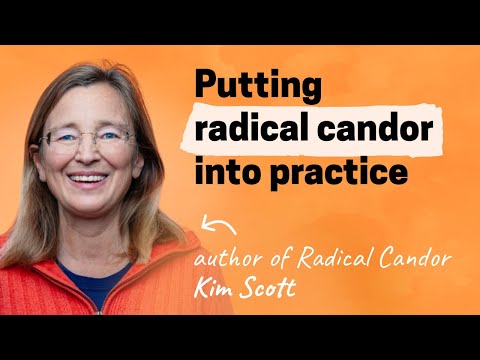
Radical Candor: From theory to practice with author Kim Scott
Kim Scott (guest), Lenny Rachitsky (host)
In this episode of Lenny's Podcast, featuring Kim Scott and Lenny Rachitsky, Radical Candor: From theory to practice with author Kim Scott explores kim Scott Turns Radical Candor From Abstract Framework Into Daily Practice Kim Scott joins Lenny to break down Radical Candor as the practice of simultaneously caring personally and challenging directly, contrasted against obnoxious aggression, ruinous empathy, and manipulative insincerity.
Kim Scott Turns Radical Candor From Abstract Framework Into Daily Practice
Kim Scott joins Lenny to break down Radical Candor as the practice of simultaneously caring personally and challenging directly, contrasted against obnoxious aggression, ruinous empathy, and manipulative insincerity.
Through vivid stories (the “um” speech-coach moment, the firing of “Bob,” and a Manhattan dog-walker) she illustrates why most people default to ruinous empathy, how this harms performance and relationships, and how to course-correct.
She offers concrete, repeatable tactics to give and solicit feedback: how to phrase requests, when and where to do it, how to read emotional signals, and how to build a culture that supports candid conversations.
Scott also previews her new book, Radical Respect, arguing that without a foundation of respect and awareness of bias, prejudice, and bullying, Radical Candor cannot work as intended.
Key Takeaways
Most feedback failures come from ruinous empathy, not harshness.
Roughly 90% of people’s mistakes land in the “care but don’t challenge” quadrant—avoiding hard truths to spare feelings—which ultimately harms the person, the team, and top performers who have to compensate.
Get the full analysis with uListen AI
Anchor feedback in behavior, not personality, using simple structure.
Use CORRRE (Context, Observation, Result, Next step) for both praise and criticism—e. ...
Get the full analysis with uListen AI
Solicit criticism first and make it a weekly ritual.
As a manager, reserve ~5 minutes at the end of every 1:1 to ask your own authentic version of a go-to question like, “What could I do or stop doing to make it easier to work with me? ...
Get the full analysis with uListen AI
Silence after asking for feedback is a tool, not a bug.
When you ask for feedback, embrace discomfort by pausing for up to six seconds; the silence nudges people to actually answer instead of reflexively saying, “Everything’s fine.”
Get the full analysis with uListen AI
You must reward feedback or you’ll never get it again.
If you agree, fix the issue and make the change visible; if you disagree, acknowledge the 5–10% you do agree with, explain your reasoning respectfully, and always close the loop so people see that speaking up matters.
Get the full analysis with uListen AI
Caring personally often means giving harder feedback, not less.
Scott’s “Bob” story shows that withholding clear criticism to be liked leads to firing people too late and losing high performers; truly caring is helping someone improve or find a role where they can excel.
Get the full analysis with uListen AI
Culture change starts with individual behavior and explicit questions.
In “nice” or conflict-averse cultures, you don’t wait for perfect conditions; you model Radical Candor by asking for criticism, giving specific timely feedback in private, and showing how this leads to better work and stronger relationships.
Get the full analysis with uListen AI
Notable Quotes
“Radical candor is what happens when you care personally and challenge directly at the same time.”
— Kim Scott
“It’s not mean, it’s clear.”
— Kim Scott (quoting a stranger on a Manhattan street)
“By not telling Bob, thinking I was being so nice, I’m having to fire him as a result. Not so nice after all.”
— Kim Scott
“You do not have to choose between being successful and being a jerk. You can be a successful, kind person.”
— Kim Scott
“If you say, ‘Do you have any feedback for me?’ you’re wasting your breath.”
— Kim Scott
Questions Answered in This Episode
In my current team, where do I most often slip into ruinous empathy, and what is one conversation I’m avoiding that I should have this week?
Kim Scott joins Lenny to break down Radical Candor as the practice of simultaneously caring personally and challenging directly, contrasted against obnoxious aggression, ruinous empathy, and manipulative insincerity.
Get the full analysis with uListen AI
What would my own authentic go-to question for soliciting criticism sound like, and from whom should I ask it first?
Through vivid stories (the “um” speech-coach moment, the firing of “Bob,” and a Manhattan dog-walker) she illustrates why most people default to ruinous empathy, how this harms performance and relationships, and how to course-correct.
Get the full analysis with uListen AI
How can I redesign my 1:1s and meeting schedules to create the two-minute windows needed for real-time Radical Candor instead of saving things for performance reviews?
She offers concrete, repeatable tactics to give and solicit feedback: how to phrase requests, when and where to do it, how to read emotional signals, and how to build a culture that supports candid conversations.
Get the full analysis with uListen AI
Where might bias, prejudice, or bullying be undermining Radical Candor on my team, and how can I start acting more as an upstander than a bystander?
Scott also previews her new book, Radical Respect, arguing that without a foundation of respect and awareness of bias, prejudice, and bullying, Radical Candor cannot work as intended.
Get the full analysis with uListen AI
Looking back on my career, who was my “Bob”—someone I failed by not being candid—and what can I do differently now to avoid repeating that pattern?
Get the full analysis with uListen AI
Transcript Preview
If you say, "Do you have any feedback for me?" You're wasting your breath. The other person's gonna say, "Oh, no, everything's fine." The question that I like to ask is, "What could I do or stop doing that would make it easier to work with me?" Do not write down my question, 'cause if you sound like Kim Scott and not like yourself, then other people are not gonna believe you on the answer. It needs to sound authentic to you. And if everybody can write down their question, who they're gonna ask it of, and then pop it into their calendar right now, this will be one of the most productive podcasts in all of podcast land.
(instrumental music) Today, my guest is Kim Scott. Kim is the author of Radical Candor, which is the single most referenced book on this podcast. The book has sold over one million copies, has been translated into 23 languages. It was such an honor to have Kim on the podcast. Prior to this book, Kim was a CO coach at Dropbox, Qualtrics, Twitter, and many other tech companies. She was a member of the faculty at Apple University. Before that, she led AdSense, YouTube, and DoubleClick teams at Google. Prior to that, Kim managed a pediatric clinic in Kosovo, and started a diamond cutting factory in Moscow. She's also working on a new book that you can pre-order now, called Radical Respect. In our conversation, we get very practical and very tactical about practicing radical candor. Kim briefly describes the core idea, shares language and phrases and words you can use to get better at practicing radical candor. She shares tips for people-pleasers, like myself. Also, a lot of very concrete advice for how to get feedback. Also, what to do if your culture is on the ruinous empathy side of the spectrum, or even worse, obnoxious aggression, and so much more. I guarantee listening to this episode will make you a better leader and a better employee. With that, I bring you Kim Scott after a short word from our one featured sponsor for this episode. You fell in love with building products for a reason, but sometimes the day-to-day reality is a little different than you imagined. Instead of dreaming up big ideas, talking to customers and crafting a strategy, you're drowning in spreadsheets and roadmap updates and you're spending your days basically putting out fires. A better way is possible. Introducing Jira Product Discovery, the new prioritization and road mapping tool built for product teams by Atlassian. With Jira Product Discovery, you can gather all your product ideas and insights in one place and prioritize confidently, finally replacing those endless spreadsheets. Create and share custom product roadmaps with any stakeholder in seconds, and it's all built on Jira, where your engineering teams are already working, so true collaboration is finally possible. Great products are built by great teams, not just engineers. Sales, support, leadership, even Greg from finance. Anyone that you want can contribute ideas, feedback and insights in Jira Product Discovery for free. No catch. And it's only $10 a month for you. Say goodbye to your spreadsheets and the never-ending alignment efforts. The old way of doing product management is over. Rediscover what's possible with Jira Product Discovery. Try it for free at atlassian.com/lenny. That's atlassian.com/lenny. Kim, thank you so much for being here, and welcome to the podcast.
Install uListen to search the full transcript and get AI-powered insights
Get Full TranscriptGet more from every podcast
AI summaries, searchable transcripts, and fact-checking. Free forever.
Add to Chrome