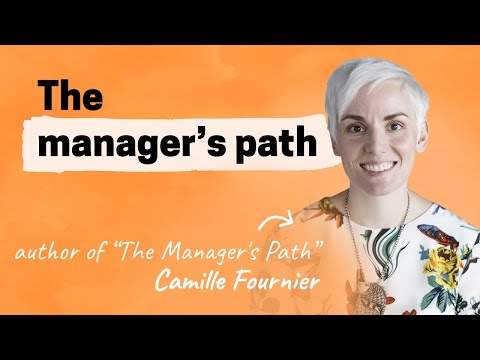
The things engineers are desperate for PMs to understand | Camille Fournier (“The Manager’s Path”)
Lenny Rachitsky (host), Camille Fournier (guest)
In this episode of Lenny's Podcast, featuring Lenny Rachitsky and Camille Fournier, The things engineers are desperate for PMs to understand | Camille Fournier (“The Manager’s Path”) explores engineers Reveal What They Need Most From Product Managers, Leaders Camille Fournier shares what most frustrates engineers about product managers—credit hoarding, dismissing technical details, playing communication “telephone,” and shutting engineers out of product ideation—and offers concrete fixes. She explains why full system rewrites are usually a costly trap and suggests evolutionary, staged technical change instead. The conversation then moves into engineering leadership: when to move into management, how to stay credibly technical, how to use (fewer) one-on-ones well, and how to create a high-output culture without overwork. In the latter part, she unpacks how to build and work with platform teams, emphasizing that platforms are products, need PMs, and succeed only when they measurably improve developer and business outcomes.
Engineers Reveal What They Need Most From Product Managers, Leaders
Camille Fournier shares what most frustrates engineers about product managers—credit hoarding, dismissing technical details, playing communication “telephone,” and shutting engineers out of product ideation—and offers concrete fixes. She explains why full system rewrites are usually a costly trap and suggests evolutionary, staged technical change instead. The conversation then moves into engineering leadership: when to move into management, how to stay credibly technical, how to use (fewer) one-on-ones well, and how to create a high-output culture without overwork. In the latter part, she unpacks how to build and work with platform teams, emphasizing that platforms are products, need PMs, and succeed only when they measurably improve developer and business outcomes.
Key Takeaways
Stop hoarding credit; put engineers in the spotlight.
Engineers often feel PMs take all the glory because they’re front-facing. ...
Get the full analysis with uListen AI
Respect technical details even if you don’t fully understand them.
When PMs wave away implementation details or complain about estimates without curiosity, engineers read it as a lack of empathy and respect. ...
Get the full analysis with uListen AI
Avoid playing ‘telephone’—connect people directly when questions get too detailed.
Acting as a constant intermediary between stakeholders and engineers wastes time and garbles information. ...
Get the full analysis with uListen AI
Invite engineers into ideation to reduce over-engineering and resentment.
When PMs try to own all the ideas, engineers look for creativity in tech choices—often over-engineering infrastructure or pushing for rewrites. ...
Get the full analysis with uListen AI
Treat rewrites as a last resort; prefer staged evolution.
Teams systematically underestimate migration time, hidden legacy behavior, and the need to support old and new systems in parallel. ...
Get the full analysis with uListen AI
Don’t rush into management; build deep technical mastery first.
Fournier suggests staying hands-on long enough that coding feels “in your bones” (often close to ~10 years of cumulative, serious practice). ...
Get the full analysis with uListen AI
Platform teams are product teams and must prove impact.
Effective platform orgs mix software engineers, systems/SRE, and dedicated PMs to create coherent internal products (CI/CD, infra, core services). ...
Get the full analysis with uListen AI
Notable Quotes
“The best PMs are the ones that talk the least and encourage other people to do the presenting.”
— Camille Fournier
“Engineering, done successfully, really is all about the details.”
— Camille Fournier
“When you take people out of the creative loop entirely, they’re going to find that creative outlet somewhere else—and that’s usually technology choices.”
— Camille Fournier
“If you don’t challenge yourself, if you don’t take risks, you’ll never grow.”
— Camille Fournier
“Platforms are products, ultimately. You can’t just leave that to engineers and hope it works out.”
— Camille Fournier
Questions Answered in This Episode
How can PMs systematically build more empathy for engineering work without needing to become deeply technical themselves?
Camille Fournier shares what most frustrates engineers about product managers—credit hoarding, dismissing technical details, playing communication “telephone,” and shutting engineers out of product ideation—and offers concrete fixes. ...
Get the full analysis with uListen AI
What concrete signals should a company look for to decide it genuinely needs a rewrite rather than an incremental evolution?
Get the full analysis with uListen AI
For engineers early in their careers, how can they tell if they’re on a path toward true technical mastery before considering management?
Get the full analysis with uListen AI
What specific metrics best capture the impact of a platform team on developer productivity and business outcomes?
Get the full analysis with uListen AI
How should leaders practically audit their own time and their team’s time to reduce overwork while improving focus and output?
Get the full analysis with uListen AI
Transcript Preview
(instrumental music) I'm curious what it is that PMs do that annoy engineers most.
Hoarding credit. PMs, they tend to be the front-facing person for an initiative. Engineers sometimes think that they don't get the credit for their work because the PM takes all the glory and all the credit for the project that they really worked very hard on.
I find the best PMs are the ones that talk the least and encourage other people to do the presenting.
The next thing that engineers really get annoyed about with PMs, when they just don't understand the details and act like they don't matter. It just shows a real lack of empathy for the work that engineers are doing, and I think it really can be very off-putting.
Is there any insight you can give about what people maybe miss about the motivation of engineers, what gets them excited?
A lot of people assume that engineers just write code. Don't underestimate the ability for your engineers to... Who wants to understand the business problem, want to understand the customer problem. I think the product managers that have done the best, they're not threatened by other people having ideas.
(instrumental music) Today my guest is Camille Fournier. Camille is one of the most respected technology executives in tech, and the author of The Manager's Path, which many consider the definitive guide for navigating your career and moving into management. Over the course of her career, she was CTO of Rent the Runway, VP of Technology at Goldman Sachs, Global Head of Engineering and Architecture at JPMorgan Chase, and Head of Platform Engineering at Two Sigma. She's also releasing a new book later this year called Platform Engineering: A Guide for Technical, Product, and People Leaders, which you can actually pre-order today, and we get into this topic in the latter half of the conversation. We also dig into what PMs do that most annoys engineers, and how to stop doing these things, why major rewrites are often a trap, why you may want to be doing fewer one-on-ones, what most surprises people when they become a manager, and some really useful heuristics for how long you should stay in IC before you make the leap into management, and tons more. This episode covers a lot of ground, and will help you think about management, platform teams, team culture, and the PM and eng relationship in a whole new way. If you enjoy this podcast, don't forget to subscribe and follow it in your favorite podcasting app or YouTube. It's the best way to avoid missing future episodes, and helps the podcast tremendously. With that, I bring you Camille Fournier. Camille, thank you so much for being here, and welcome to the podcast.
Thank you so much for having me.
It's my pleasure. I want to start by asking you a question that is on the minds of a lot of product managers, is how to be less annoying as a product manager. I know you've worked with a lot of engineers over time. I'm curious what it is that PMs do that annoy engineers most, and how can PMs stop doing that?
Install uListen to search the full transcript and get AI-powered insights
Get Full TranscriptGet more from every podcast
AI summaries, searchable transcripts, and fact-checking. Free forever.
Add to Chrome