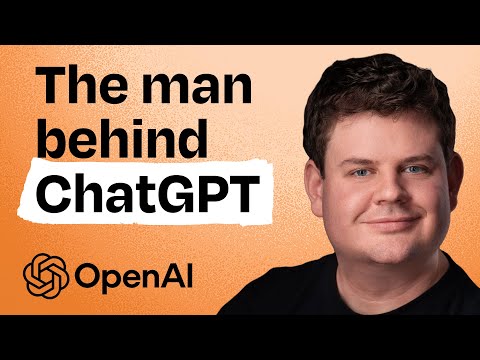
Inside ChatGPT: The fastest growing product in history | Nick Turley (OpenAI)
Lenny Rachitsky (host), Nick Turley (guest), Christina Cacioppo (guest), Narrator
In this episode of Lenny's Podcast, featuring Lenny Rachitsky and Nick Turley, Inside ChatGPT: The fastest growing product in history | Nick Turley (OpenAI) explores inside ChatGPT: Shipping Fast, Learning Faster, Redefining Personal AI Assistants OpenAI’s Nick Turley shares the origin, growth, and future vision of ChatGPT, from a scrappy 10‑day hackathon launch to 700M weekly users and billions in revenue.
Inside ChatGPT: Shipping Fast, Learning Faster, Redefining Personal AI Assistants
OpenAI’s Nick Turley shares the origin, growth, and future vision of ChatGPT, from a scrappy 10‑day hackathon launch to 700M weekly users and billions in revenue.
He explains why GPT‑5 feels like a categorical step change—smarter, faster, more ‘alive’—and why OpenAI is making it available for free while keeping powerful ‘Pro’ tiers for enthusiasts and enterprises.
A central theme is speed: in AI, you can’t know what to polish until after you ship, so OpenAI optimizes for rapid launches, real‑world feedback, and iterative improvement while maintaining rigorous safety processes.
Turley outlines a long‑term vision of “your AI” that knows your goals, can act on your behalf, and builds a relationship over time, emphasizing amplification of people rather than replacement—and the responsibility that comes with that scale.
Key Takeaways
Ship early, then discover what to polish.
In AI, many behaviors are emergent; you literally can’t predict which use cases or failure modes matter most until real users interact with the model, so speed to production is more valuable than pre‑launch perfection.
Get the full analysis with uListen AI
Treat the model itself as a product, not just infrastructure.
OpenAI iterates on GPT models based on concrete use cases—coding, writing, search, health, advice—and even ‘vibes’ (tone, personality), using user data and evals to hill‑climb specific behaviors and capabilities.
Get the full analysis with uListen AI
Maximize velocity, but separate it from safety rigor.
Internally, Turley pushes teams with the question “Is this maximally accelerated? ...
Get the full analysis with uListen AI
Horizontal AI products still require strong product thinking.
Despite being a general‑purpose tool, ChatGPT’s growth and retention come from deliberate product work: lowering friction (no login), adding search and personalization, improving memory, and building enterprise features like privacy and compliance.
Get the full analysis with uListen AI
AI assistants should amplify users, not replace them.
The long‑term vision is “your AI”: an entity that understands your goals, has deep context on your life, and can act through tools—while keeping you in control and avoiding dystopian patterns of over‑delegation or manipulation.
Get the full analysis with uListen AI
Emergent use cases and ecosystem effects are strategic assets.
OpenAI learns from organic behavior—TikTok threads, comments, usage patterns—to spot new opportunities (relationship counseling, education, health) and sees ChatGPT increasingly as a traffic driver and distribution channel for other products.
Get the full analysis with uListen AI
Evals are becoming a core PM skill in AI products.
Turley frames evals as simply a formal way to define ‘what good looks like’ for a use case so researchers and engineers can train and improve models; PMs must learn to design these evals as part of their normal product toolkit.
Get the full analysis with uListen AI
Notable Quotes
“You won’t know what to polish until after you ship.”
— Nick Turley
“ChatGPT feels a little bit like MS‑DOS. We haven’t built Windows yet, and it will be obvious once we do.”
— Nick Turley
“The model is the product. And therefore you need to iterate on it like a product.”
— Nick Turley
“We always view technology as something that amplifies what you’re capable of rather than replacing it.”
— Nick Turley
“When someone offers you a rocket ship, don’t ask which seat… except I didn’t know it was a rocket ship.”
— Nick Turley
Questions Answered in This Episode
If chat isn’t the final interface, what might the ‘Windows’ layer on top of large language models actually look like for everyday users?
OpenAI’s Nick Turley shares the origin, growth, and future vision of ChatGPT, from a scrappy 10‑day hackathon launch to 700M weekly users and billions in revenue.
Get the full analysis with uListen AI
How should content creators and companies think about ‘AI‑era SEO’ when ChatGPT and similar tools increasingly mediate discovery and traffic?
He explains why GPT‑5 feels like a categorical step change—smarter, faster, more ‘alive’—and why OpenAI is making it available for free while keeping powerful ‘Pro’ tiers for enthusiasts and enterprises.
Get the full analysis with uListen AI
Where is the line between being a supportive AI advisor and taking too much agency over people’s emotional, medical, or life decisions?
A central theme is speed: in AI, you can’t know what to polish until after you ship, so OpenAI optimizes for rapid launches, real‑world feedback, and iterative improvement while maintaining rigorous safety processes.
Get the full analysis with uListen AI
As models get dramatically more capable, can OpenAI realistically maintain a culture of rapid shipping without compromising on safety and trust?
Turley outlines a long‑term vision of “your AI” that knows your goals, can act on your behalf, and builds a relationship over time, emphasizing amplification of people rather than replacement—and the responsibility that comes with that scale.
Get the full analysis with uListen AI
What kinds of new businesses and products become possible if ChatGPT evolves into a true platform where third parties can build, distribute, and monetize apps directly inside the assistant?
Get the full analysis with uListen AI
Transcript Preview
You were a product leader at Dropbox, then Instacart. Now you're the PM of the most consequential product in history.
I didn't know what I would do here because it was a research lab. My first task was to fix the blinds or something like that.
When someone offers you a rocket ship, don't ask which seat.
We set out to build a super assistant. It was supposed to be a hackathon codebase.
What was it called before?
It was going to be Chat with GPT-3.5. Because we really didn't think it was gonna be a successful product.
And then Sam Altman's just like, "Hey, let me tweet about it."
This is a pattern with AI. You won't know what to polish until after you ship. My dream is that we ship daily.
By the time people hear this, they're gonna have their hands on GPT-5.
About 10% of the world population uses it every week. With scale comes responsibility. It just feels a little more alive, a bit more human. This model has taste.
Kevin Wheal, your CPO, said to ask you about this principle of, is it maximally accelerated?
I just really want to jump to the punchline, why can't we do this now? I always felt like part of my role here is to set the pace and the resting heartbeat.
Everyone's always wondering, is chat the future of all of this stuff?
Chat was the simplest way to ship at the time. I'm baffled by how much it took off. I'm even more baffled by how many people have copied.
ChatGPT is now driving more traffic to my newsletter than Twitter.
That is a type of capability that has been incredibly retentive. I've been really excited about what we've been doing in search.
Can you give us a peek into where this goes long term?
ChatGPT feels a little bit like MS-DOS. We haven't built Windows yet, and it will be obvious once we do.
Today, my guest is Nick Turley. Nick is head of ChatGPT at OpenAI. He joined the company three years ago when it was still primarily a research lab. He helped come up with the idea of ChatGPT and took it from zero to over 700 million weekly active users, billions in revenue, and arguably the most successful and impactful consumer software product in human history. Nick is incredible. He's been very much under the radar. This is the first major podcast interview that he has ever done, and you are in for a treat. We talk about all the things, including the just-launched GPT-5. A huge thank you to Kevin Wheal, Claire Vo, George O'Brien, Joanne Zhang, and Peter Deng for suggesting topics for this conversation. If you enjoy this podcast, don't forget to subscribe and follow it in your favorite podcasting app or YouTube. And if you become an annual subscriber of my newsletter, you get a year free of a bunch of incredible products, including Lovable, Replit, Bolt, n8n, Linear, Superhuman, Descript, Whisperflow, Gamma, Perplexity, Warp, Granola, Magic Patterns, Raycast, ChatPIR, Dee, and Mobbin. Check it out at lennysnewsletter.com and click bundle. With that, I bring you Nick Turley. This episode is brought to you by Orkes, the company behind open source Conductor, the orchestration platform powering modern enterprise apps and agentic workflows. Legacy automation tools can't keep pace. Siloed low-code platforms, outdated process management, and disconnected API tooling fall short in today's event-driven, AI-powered agentic landscape. Orkes changes this. With Orkes Conductor, you gain an agentic orchestration layer that seamlessly connects humans, AI agents, APIs, microservices and data pipelines in real time at enterprise scale. Visual and code-first development, built-in compliance, observability, and rock-solid reliability ensure workflows evolve dynamically with your needs. It's not just about automating tasks. It's orchestrating autonomous agents and complex workflows to deliver smarter outcomes faster. Whether modernizing legacy systems or scaling next-gen AI-driven apps, Orkes accelerates your journey from idea to production. Learn more and start building at orkes.io/lenny. That's O-R-K-E-S.io/lenny. This episode is brought to you by Vanta, and I am very excited to have Christina Cacioppo, CEO and co-founder of Vanta, joining me for this very short conversation.
Install uListen to search the full transcript and get AI-powered insights
Get Full TranscriptGet more from every podcast
AI summaries, searchable transcripts, and fact-checking. Free forever.
Add to Chrome