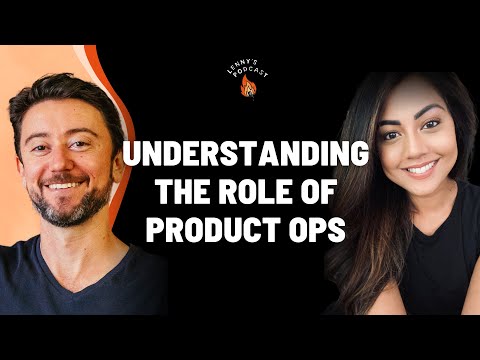
Understanding the role of product ops | Christine Itwaru (Pendo)
Christine Itwaru (guest), Lenny Rachitsky (host)
In this episode of Lenny's Podcast, featuring Christine Itwaru and Lenny Rachitsky, Understanding the role of product ops | Christine Itwaru (Pendo) explores why Product Ops Matters: Clarifying, Scaling, And Empowering Product Teams Lenny chats with Christine Itwaru, longtime product ops leader at Pendo and former product manager, to demystify what product operations is and why it’s become so prominent.
Why Product Ops Matters: Clarifying, Scaling, And Empowering Product Teams
Lenny chats with Christine Itwaru, longtime product ops leader at Pendo and former product manager, to demystify what product operations is and why it’s become so prominent.
Christine frames product ops both as a system you create and as a role: a partner to PMs and a strategic advisor to product leadership that removes friction, improves alignment, and amplifies customer insight.
They walk through concrete responsibilities of product ops—voice of customer, tooling, content/education, process, and cross‑functional transparency—plus when a company should consider investing in the function.
The conversation also tackles spicy questions: whether ops roles signal inefficiency, how to convince skeptical PMs and leaders, what product ops should never take away from PMs, and who’s best suited for a career in product ops.
Key Takeaways
Treat product ops as both a system and a role.
Product operations isn’t just a job title; it’s the underlying system that lets product teams thrive, plus (in many orgs) a dedicated person or team that designs, runs, and continually improves that system.
Get the full analysis with uListen AI
Free PMs’ time to focus on customers and engineers.
Product ops should deliberately take on work like internal alignment, data synthesis, and stakeholder communication so PMs can spend more time understanding customer pain and partnering deeply with engineering—work they should never give up.
Get the full analysis with uListen AI
Centralize and synthesize the voice of the customer.
A strong product ops function aggregates qualitative and quantitative inputs from sales, success, support, NPS, and product usage, makes sense of them with research, and feeds actionable insights to PMs and stakeholders instead of raw noise.
Get the full analysis with uListen AI
Use ops to drive transparency and readiness across the company.
Product ops boosts internal trust by making roadmaps, decisions, and outcomes clearer—for example, through recurring product digests and structured launch/readiness processes that help go-to-market teams know what’s coming and what to do with it.
Get the full analysis with uListen AI
Start with processes and systems—but plan to automate and move upmarket.
In earlier-stage orgs, product ops often begins with planning and process hygiene; over time, the mandate should shift toward automation, tooling, and more strategic advisory work, rather than permanently owning basic coordination tasks.
Get the full analysis with uListen AI
Ops roles signal growth and complexity, not just inefficiency.
While using people to patch broken processes can be a red flag, Christine argues that the rise of ops across functions (sales, marketing, product) usually reflects organizational maturation and the need for cross-functional alignment at scale.
Get the full analysis with uListen AI
The best product ops leaders deeply understand product and the business.
Effective product ops leaders are often former PMs who’ve felt the pain themselves; strong ICs frequently come from product, consulting, or customer success and are motivated by cross-functional problem solving, systems thinking, and enabling others.
Get the full analysis with uListen AI
Notable Quotes
“Product operations is a thing you do, and it’s also the person or people who design that system so product teams can thrive.”
— Christine Itwaru
“Speaking as a former PM, I would not ever give up spending time with customers and watching their pain.”
— Christine Itwaru
“If your PMs are constantly fielding questions from your revenue team when they could be spending time with customers, you have a problem product ops can solve.”
— Christine Itwaru
“Ops alignment across companies is what often ends up keeping the companies moving and keeping everybody aligned.”
— Christine Itwaru
“Get into this role if you’re comfortable letting go of things and moving on to something that is well worth your time.”
— Christine Itwaru
Questions Answered in This Episode
At what stage or scale should a company formally invest in a dedicated product ops role instead of just improving product management practices?
Lenny chats with Christine Itwaru, longtime product ops leader at Pendo and former product manager, to demystify what product operations is and why it’s become so prominent.
Get the full analysis with uListen AI
How can a product leader clearly define success metrics for product ops so the function doesn’t become an unfocused catch-all?
Christine frames product ops both as a system you create and as a role: a partner to PMs and a strategic advisor to product leadership that removes friction, improves alignment, and amplifies customer insight.
Get the full analysis with uListen AI
Where exactly should the line be drawn between responsibilities of product ops, product marketing, and program management in different types of organizations?
They walk through concrete responsibilities of product ops—voice of customer, tooling, content/education, process, and cross‑functional transparency—plus when a company should consider investing in the function.
Get the full analysis with uListen AI
What are practical first steps for a lone PM who wants to introduce “product ops as a system” before any headcount is approved?
The conversation also tackles spicy questions: whether ops roles signal inefficiency, how to convince skeptical PMs and leaders, what product ops should never take away from PMs, and who’s best suited for a career in product ops.
Get the full analysis with uListen AI
How should product ops evolve over time as tooling, automation, and AI increasingly take over the more operational aspects of the role?
Get the full analysis with uListen AI
Transcript Preview
Speaking as a former PM, I would not ever give up spending time with customers and watching their pain. The- that's how I fell in love with product was, I saw my internal customer, 12 years back now, fighting with the keyboard, fighting with the mouse. And I was just like, "Oh my gosh, what is this guy doing?" (laughs)
(instrumental music) Welcome to Lenny's Podcast, where I interview world-class product leaders and growth experts to learn from their hard-won experiences building and growing today's most successful products. Today, my guest is Christine Etwaru. Christine is a longtime product ops leader at Pendo, a role that she transitioned into from product management. I've been hearing more and more about the rise of product ops, and I've never really understood what the role was, until I had this conversation with Christine. We dig into what product ops people do day-to-day, where the line is between their role in product management, whether you should consider getting into the role, whether your company would benefit from product ops. We also have an interesting discussion around whether ops roles in general are a sign of inefficiency at your company. I learned a ton from this conversation, and Christine is awesome. And so with that, I bring you Christine Etwaru after a short word from our wonderful sponsors. This episode is brought to you by Amplitude. If you're setting up your analytics stack, but not using Amplitude, what are you doing? Anyone can sell you analytics, while Amplitude unlocks the power of your product and guides you every step of the way. Get the right data, ask the right questions, get the right answers, and make growth happen. To get started with Amplitude for free, visit amplitude.com. Amplitude, power to your products. Are you hiring? Or on the flip side, are you looking for a new opportunity? Well, either way, check out lennysjobs.com/talent. If you're a hiring manager, you can sign up and get access to hundreds of hand-curated people who are open to new opportunities. Thousands of people apply to join this collective, and I personally review and accept just about 10% of them. You won't find a better place to hire product managers and growth leaders. Join almost 100 other companies who are actively hiring through this collective. And if you're looking around for a new opportunity, actively or passively, join the collective. It's free, you can be anonymous, and you can even hide yourself from specific companies. You could also leave any time, and you'll only hear from companies that you want to hear from. Check out lennysjobs.com/talent. Christine, welcome to the podcast.
Thank you. I'm so happy to be here, Lenny.
First of all, I just wanted to give a big thank you to Ben Williams, who was a previous guest on this podcast, who suggested you join this podcast and who connected us. And we were chatting earlier, and you said you have a story about Ben. And so what is that?
Install uListen to search the full transcript and get AI-powered insights
Get Full TranscriptGet more from every podcast
AI summaries, searchable transcripts, and fact-checking. Free forever.
Add to Chrome