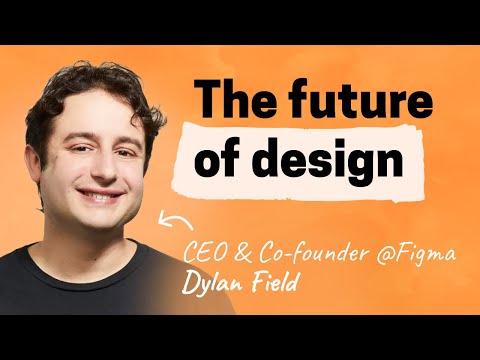
Dylan Field live at Figma's Config: Intuition, simplicity, and the future of design
Lenny Rachitsky (host), Dylan Field (guest), Narrator, Narrator, Narrator, Narrator, Narrator, Narrator
In this episode of Lenny's Podcast, featuring Lenny Rachitsky and Dylan Field, Dylan Field live at Figma's Config: Intuition, simplicity, and the future of design explores dylan Field on product taste, simplicity, AI, and Figma’s future Live from Figma’s Config conference, CEO Dylan Field discusses how he develops product intuition, treats intuition as a hypothesis generator, and relentlessly gathers user feedback to shape Figma.
Dylan Field on product taste, simplicity, AI, and Figma’s future
Live from Figma’s Config conference, CEO Dylan Field discusses how he develops product intuition, treats intuition as a hypothesis generator, and relentlessly gathers user feedback to shape Figma.
He explains why simplicity is a constant battle in complex tools, how he tries to operationalize it across the company, and what he believes great product managers uniquely contribute.
Field reflects on Figma’s long, difficult early years, including a three‑and‑a‑half‑year pre-launch period, the importance of shipping earlier, and the strategic seeding of influential designers.
The conversation also touches on AI’s impact on software creation, experimental tools like WebSim, his evolution as a leader, and the responsibility he feels toward Figma’s design community.
Key Takeaways
Treat intuition as a hypothesis generator, not a final answer.
Field views his ‘product taste’ as a steady stream of hypotheses that must be debated, tested with data, and refined, rather than as a magical gut feeling that is automatically correct.
Get the full analysis with uListen AI
Relentlessly gather user feedback from everywhere.
He reads mentions, support channels, and engages directly with users to uncover root problems, recognizing that what users ask for (X) often masks what they truly need (Y or Z).
Get the full analysis with uListen AI
Everyone is responsible for simplicity in the product.
Field emphasizes that as you add features, complexity grows non-linearly; maintaining coherence requires the whole org to “keep simple things simple and make complex things possible,” and to periodically revisit overgrown systems.
Get the full analysis with uListen AI
Ship early, then iterate to reach ‘minimally awesome.’
Reflecting on Figma’s slow initial launch, he advises getting products into users’ hands quickly, choosing two of “quality, features, deadline,” then improving quality and depth over time (as with FigJam and Figma Slides).
Get the full analysis with uListen AI
Great PMs create clear frameworks with a strong point of view.
The best product managers, in his view, synthesize strategy, user needs, and constraints into shared frameworks that align design and engineering, clarify the destination, and keep the team energized and cohesive.
Get the full analysis with uListen AI
Influence is earned through concrete artifacts and data.
To change his mind, Field responds best to tangible examples, well-thought-through answers to follow-up questions, and data that addresses his first-principles concerns, rather than abstract arguments alone.
Get the full analysis with uListen AI
Deliberately seed products with the right early users.
Figma’s early growth came from mapping the designer graph on Twitter, identifying central, high-craft designers, and engaging them deeply for feedback—creating both better product decisions and organic evangelists.
Get the full analysis with uListen AI
Notable Quotes
“Intuition is like a hypothesis generator.”
— Dylan Field
“Design is art applied to problem-solving.”
— Dylan Field (describing a definition he likes)
“Keep the simple things simple. Make the complex things possible.”
— Dylan Field (quoting a principle he follows)
“If you’re introducing a new launch, you’ve got quality, features, deadline—choose two.”
— Dylan Field
“We’re so early on this journey of computing in general… it’s a responsibility, and one I don’t take lightly.”
— Dylan Field
Questions Answered in This Episode
How can teams practically institutionalize Dylan’s idea of intuition as a ‘hypothesis generator’ without slowing down decision-making?
Live from Figma’s Config conference, CEO Dylan Field discusses how he develops product intuition, treats intuition as a hypothesis generator, and relentlessly gathers user feedback to shape Figma.
Get the full analysis with uListen AI
What specific mechanisms does Figma use to detect when a product area has crossed from ‘powerful’ into ‘too complex’ and trigger a redesign?
He explains why simplicity is a constant battle in complex tools, how he tries to operationalize it across the company, and what he believes great product managers uniquely contribute.
Get the full analysis with uListen AI
In a world where AI can generate more of the software, how does Figma plan to preserve and elevate human craft and uniqueness in design?
Field reflects on Figma’s long, difficult early years, including a three‑and‑a‑half‑year pre-launch period, the importance of shipping earlier, and the strategic seeding of influential designers.
Get the full analysis with uListen AI
How might the PM role evolve over the next decade if designers and engineers increasingly share more of the traditional PM skill set?
The conversation also touches on AI’s impact on software creation, experimental tools like WebSim, his evolution as a leader, and the responsibility he feels toward Figma’s design community.
Get the full analysis with uListen AI
Looking back, which early Figma product decisions (like pages) would Dylan most like to redesign from scratch, and what would he do differently now?
Get the full analysis with uListen AI
Transcript Preview
(instrumental music) Today, I'm excited to bring you a very special episode which was recorded live at Figma Config with Figma CEO and co-founder, Dillon Field, in front of a live audience at the Moscone Center in San Francisco. This is the first ever live recording of this podcast, and it was so much fun. If you watch this on YouTube, you can see the epic stage that they built specifically for us to recreate my podcast studio. I could not be more thankful to the Config team for making this happen. In my conversation with Dillon, we dig into how he builds and refines his product taste and intuition, how intuition is a hypothesis generator, the future of product management, how Dillon attempts to operationalize keeping Figma simple and to continue simplifying the experience, a bunch of stories from the early days of Figma that I've never heard before. Also, he shares his favorite AI tool called WebSim, which is wild. And if you wait till the very end, you can see a very young child actor Dillon Field in a clip that I found online that was hilarious. If you enjoy this podcast, don't forget to subscribe and follow it in your favorite podcasting app or YouTube. It's the best way to avoid missing future episodes, and it helps the podcast tremendously. With that, I bring Dillon Field. Dillon, thank you so much for joining me and welcome to the podcast.
Thank you, Lenny. (laughs) Hi, all.
(cheering)
Uh, is this... Is this your first live podcast?
This is my first ever live podcast. Also, uh, a big thank you to the Config team who set up this crazy studio. I had no idea this was gonna happen. I feel like I'm in my studio here with a thousand people watching us. Uh, it's very impressive.
I, I very much dig the background and also the mics that may or may not be wired.
That's right. Don't, don't say that. Don't tell people.
Oh, sorry. (laughs)
There's no wires coming out of them.
There's no one behind the curtain either. (laughs)
Okay. So, Dillon, I wanna start by just checking in on how you're doing. So Config is about to wrap up. We... You've been at it for two days now. Uh-huh. I know how much lift goes into doing these sorts of things. I imagine you've been thinking about this for a long time now. I'm just curious how you're doing. Any surprises? Any highlights? Any lowlights? Uh, the highlight is the community and just the incredible, incredible people here at Config. Yeah. Y'all are awesome. (cheering) I don't know why I keep talking in the mic like this. (laughs)
(laughs)
It's instinctual (laughs) . Um, but seriously, it's just the most amazing community to be part of. And, uh, I, I feel so lucky. And then, um, in terms of how I'm doing in this exact moment-
Install uListen to search the full transcript and get AI-powered insights
Get Full TranscriptGet more from every podcast
AI summaries, searchable transcripts, and fact-checking. Free forever.
Add to Chrome