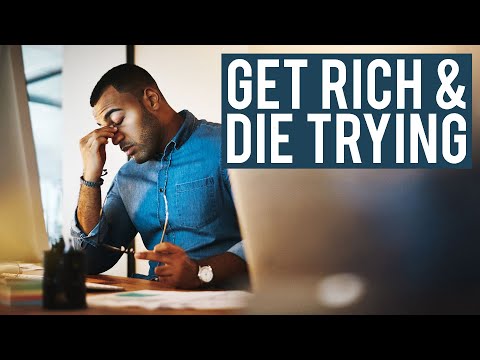
The Dark Side Of The Startup World | John Roa | Modern Wisdom Podcast 242
John Roa (guest), Chris Williamson (host)
In this episode of Modern Wisdom, featuring John Roa and Chris Williamson, The Dark Side Of The Startup World | John Roa | Modern Wisdom Podcast 242 explores startup Glory, Hidden Breakdown: John Roa Exposes Entrepreneurship’s Dark Cost John Roa recounts building Okta, a bootstrapped digital innovation agency that became one of America’s fastest-growing firms and was later sold to Salesforce, while his personal life collapsed under extreme stress, addiction and an eventual psychotic break with dissociative amnesia.
Startup Glory, Hidden Breakdown: John Roa Exposes Entrepreneurship’s Dark Cost
John Roa recounts building Okta, a bootstrapped digital innovation agency that became one of America’s fastest-growing firms and was later sold to Salesforce, while his personal life collapsed under extreme stress, addiction and an eventual psychotic break with dissociative amnesia.
He and Chris Williamson examine how modern startup and Silicon Valley culture, fueled by massive capital and distorted valuations, incentivizes unhealthy risk-taking, fraud-adjacent behavior, and ignores the severe mental health toll on founders.
Roa describes how desperation, luck, timing, and positioning his agency as a “digital Apple” for startups propelled his success despite him not being a designer and lacking credentials.
Now, older and reflective, he rejects hustle-porn advice culture, refuses to offer generic “five steps” lessons, and instead presents his story as a cautionary memoir about risk, priorities, and the real human cost behind glossy entrepreneurial narratives.
Key Takeaways
High-growth entrepreneurship carries a severe, under-discussed mental health cost.
Roa cites data showing entrepreneurs have dramatically higher rates of bipolar disorder, depression, suicide, and substance abuse, arguing that the pressure to “crush it” is literally melting founders down while the public only sees the success headlines.
Get the full analysis with uListen AI
Positioning and timing can matter more than credentials or perfection.
Okta thrived by riding two tailwinds—the post-recession tech boom and Apple-led design obsession—positioning itself as a digital innovation partner for fast-growing startups, even though Roa wasn’t a designer and had a poor formal résumé.
Get the full analysis with uListen AI
Bootstrapping forces discipline and creates real, durable business value.
Starting Okta with roughly $800 and no investors meant Roa had to build a profitable, high-margin, cashflow-positive agency, which later made the company an attractive, substantively valuable acquisition for Salesforce.
Get the full analysis with uListen AI
Ignoring psychological strain can culminate in catastrophic breakdowns.
Years of stress, sleep deprivation, substance abuse, and unresolved pressure culminated in a psychotic break and dissociative amnesia, with Roa waking in a hospital unable to recall his name—an extreme example of what happens when warning signs are dismissed.
Get the full analysis with uListen AI
Healthy relationships and support systems likely improve entrepreneurial outcomes.
Roa now believes most entrepreneurs are more successful with supportive partners, who provide emotional grounding, reduce isolation, and counteract the obsessive rumination that drives many founders toward unhealthy coping mechanisms.
Get the full analysis with uListen AI
Current startup funding culture incentivizes reckless behavior and distorted values.
He criticizes investors like SoftBank and cases like WeWork and Nikola, where huge checks, loose oversight, and hype-driven valuations reward founders even when they destroy value, turning fraud or failure into personal fortunes.
Get the full analysis with uListen AI
Personal stories can be more honest and useful than formulaic advice.
Roa deliberately avoids offering generic “do these three things” guidance; he sees blanket advice as dangerous, preferring to share his unvarnished story so individuals can draw context-specific lessons rather than follow one-size-fits-all prescriptions.
Get the full analysis with uListen AI
Notable Quotes
“We are melting down as the racehorses behind these companies, yet we don't ever hear that story until it's a horrific headline.”
— John Roa
“I was literally trading my life and safety and sanity for this business, which is a ridiculous thing to do.”
— John Roa
“The fact that you can become a billionaire by tanking a company is scary.”
— John Roa
“It's so hard to forget pain but it's even harder to remember sweetness. We have no scars to show for happiness. We learn so little from peace.”
— John Roa, quoting Chuck Palahniuk
“There’s no such thing as blanket advice. Speaking to a room of 2,000 people, maybe 5% of it is perfect, 80% is irrelevant, and 15% I’m going to damage by them following my advice.”
— John Roa
Questions Answered in This Episode
How can founders and investors redesign startup culture to reward sustainable, ethical growth instead of reckless scaling and hype?
John Roa recounts building Okta, a bootstrapped digital innovation agency that became one of America’s fastest-growing firms and was later sold to Salesforce, while his personal life collapsed under extreme stress, addiction and an eventual psychotic break with dissociative amnesia.
Get the full analysis with uListen AI
What early psychological or behavioral warning signs should entrepreneurs watch for to avoid the kind of psychotic break Roa describes?
He and Chris Williamson examine how modern startup and Silicon Valley culture, fueled by massive capital and distorted valuations, incentivizes unhealthy risk-taking, fraud-adjacent behavior, and ignores the severe mental health toll on founders.
Get the full analysis with uListen AI
If bootstrapping encourages discipline while VC money can distort behavior, when (if ever) is taking large outside capital actually the right choice?
Roa describes how desperation, luck, timing, and positioning his agency as a “digital Apple” for startups propelled his success despite him not being a designer and lacking credentials.
Get the full analysis with uListen AI
How can a driven entrepreneur practically build and maintain a strong support system—partners, friends, therapists—without feeling they’re sacrificing ambition?
Now, older and reflective, he rejects hustle-porn advice culture, refuses to offer generic “five steps” lessons, and instead presents his story as a cautionary memoir about risk, priorities, and the real human cost behind glossy entrepreneurial narratives.
Get the full analysis with uListen AI
What responsibilities do motivational “hustle” influencers have for the mental and financial consequences their blanket advice may cause to vulnerable audiences?
Get the full analysis with uListen AI
Transcript Preview
At some point, it's just insane what's going on. And what we don't talk about is the downside of all that, of how the entrepreneurs who are taking these bets and running these companies are struggling. And the, the s- statistics around this are haunting. The entrepreneurs of today in kind of this high growth world have 60% more mental health issues than the average public. This is, um, in America. Um, eight times the rate of bipolar, six times depression, four times suicide, four times substance abuse. We are melting down (laughs) as the kind of race horses behind these companies, yet we don't ever hear that story until, until it's a, a horrific headline, like the Aaron Swartzs of the world and, and other folks who have even taken their own lives when they can't handle the pressure.
For the people who are listening that don't know who you are, what's your background? How did you end up speaking to me here?
Yeah. So I'm a, I'm a pretty lifer entrepreneur. Um, I've been in the tech world since I was technically 11 years old when I learned to program, you know, code, hack, game, build computers. And then s- my first company I started when I was 14, so I'm now 36, so you know, two thirds of my life almost I've been running tech companies. And it's just been, you know, uh, goes without saying, a passion of mine, um, forever. And you know, kind of before it was en vogue like it is today, um, I really just had a knack for computers, an interest in being a self-starter and being an entrepreneur, even though I really didn't know that's what I was for a lot of that time. And, um, you know, that journey led to a number of tough lessons, you know, a lot of early failures, all the stuff that you generally hear about when people go through a lifetime of entrepreneurship. And then when I was 26, so 10 years ago, I was in Chicago and, um, was kind of down on my (laughs) , on my luck. It was not a great time personally and professionally. Um, it was in the midst of the r- the recession, you know, globally, but obviously, you know, a lot of that was happening here in the US. Uh, I was out of work, my parents were out of work, um, the family wasn't doing great, and I was not really, uh, you know, present with a lot of options on what to do to kind of get my life back in order. And in the way I saw it, I could either continue to persist trying to make something work that I could self-generate or go get a job and probably work some crappy role for a number of years and try to, you know, get out of debt and those kind of things. So of course, I did the entrepreneurial thing and I created a company called Okta. And, um, you know, for those of, of listeners that might know a company called IDEO, that's the best way to describe Okta, is that we were an innovation and design consultancy. And, and companies like IDEO have been around for decades and they've been helping everybody in the world design and innovate on amazing stuff. And I kind of figured there's a room in the market for a pure play digital version of that. 'Cause the ideas of the world were all kind of old industrial designers and print designers who had kind of moved to digital somewhat begrudgingly, and I figured if we had a team of kind of thrifty digital only innovation folks that we could succeed in that market. And that's what we did. Um, created the company in 2010, uh, bootstrapped, no investors, no partners, no investor, no anything. I mean, no board, no mentors, (laughs) like truly a one man band. And just kind of right place, right time, lot of luck, perseverance, you know, good fortune, grinding, and two years later it was the single fastest growing, uh, innovation and UX agency in America, uh, one of the fastest growing companies of any kind in America. Um, two years after that, we had acquired companies, we were growing nationally and internationally, um, we were doing work for incredible companies, you know, our clients were BMW and United Airlines and others. Um, and ultimately, um, it was the epitome of that entrepreneurial success story, kind of that just like grind it out till it works kind of thing. And then, you know, we were making money, I'm, I'm, (laughs) I'm doing TED Talks and being photographed for magazine covers, it was kind of this very glamorous success story on one side. On the other side is, it's this, is what no one knew what was going on, which is also a classic story that I was really struggling personally, uh, I didn't know how to handle the risk and stress and pressure that I was enduring. I didn't have a lot of healthy, uh, mechanisms for any kind of support. And, um, and I started to struggle, I mean, at a, at a, at a worse and worse level throughout those, uh, those years, um, really deep kind of mental illness and mental, uh, episodes of depression, anxiety, those kind of things, as I was dealing with the, the company. Um, it then turned into a life of kind of excess and partying and substance abuse and all the things that kind of come along with trying to balance out this incredibly kind of ferocious lifestyle. And so in our fourth year, um, it all, (laughs) it all collided with itself and, and that took the form of a pretty severe mental breakdown. Um, I ended up in the hospital, suffered dissociative amnesia, didn't know who or, or who I was, where I was, um, had no recollection of any part of my life, couldn't even tell you my own name. And was in a hospital in that state for a number of days. Um, they weren't sure if I would come back, if, what state I'd be in, if my brain would ever fully recover. It was a very scary time in my life. And this is all still when the company is, you know, quote unquote crushing it in the public world.
Install uListen to search the full transcript and get AI-powered insights
Get Full TranscriptGet more from every podcast
AI summaries, searchable transcripts, and fact-checking. Free forever.
Add to Chrome