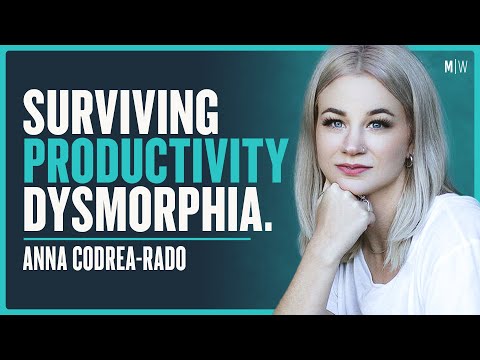
The Danger Of Obsessing Over Productivity - Anna Codrea-Rado
Anna Codrea-Rado (guest), Chris Williamson (host)
In this episode of Modern Wisdom, featuring Anna Codrea-Rado and Chris Williamson, The Danger Of Obsessing Over Productivity - Anna Codrea-Rado explores escaping Productivity Obsession: Rethinking Work, Creativity, and Success Myths Chris Williamson and writer Anna Codrea‑Rado explore the downsides of extreme productivity culture and the tension between optimizing life and allowing for spontaneity and creativity.
Escaping Productivity Obsession: Rethinking Work, Creativity, and Success Myths
Chris Williamson and writer Anna Codrea‑Rado explore the downsides of extreme productivity culture and the tension between optimizing life and allowing for spontaneity and creativity.
Anna shares her experiment with a deliberately ‘de‑optimized’ week, which revealed which productivity systems genuinely help (like batching decisions) and which stifle creativity and serendipity.
They distinguish productivity from creativity, argue that creativity cannot be truly ‘hacked,’ and discuss how over‑optimization, self‑employment, and financial anxiety distort our sense of achievement.
The conversation also covers Anna’s concepts of “productivity dysmorphia” and anti‑work/post‑work ideas, questioning how much we should work, how we define success, and whether monetizing our passions actually improves our lives.
Key Takeaways
Deliberately de‑optimizing your week can reveal which systems actually help.
Dropping rigid routines for a week showed Anna that loose structure plus space for spontaneity boosted joy and creativity, while micro‑scheduled days often just created stress.
Get the full analysis with uListen AI
Batch decisions and repetitive tasks; avoid granular time‑blocking.
Batching things like meal planning, admin, and similar tasks reduces decision fatigue, whereas hyper‑specific calendar blocks often add pressure without improving output.
Get the full analysis with uListen AI
Productivity and creativity are different—and optimising one can harm the other.
Productivity is measurable and efficiency‑oriented; creativity is uncertain, messy, and time‑variable. ...
Get the full analysis with uListen AI
Creativity can’t be shortcut around discomfort; you can only improve conditions.
Anna notes that every serious creative project hits a painful “this is terrible” phase that you can’t bypass with hacks; what you can do is create environments—walks, reading, note‑taking—that make ideas more likely to emerge.
Get the full analysis with uListen AI
Productivity dysmorphia makes real achievements feel like “not enough.”
Even major milestones (a published book, a New York Times front page) felt illegitimate to Anna because she mentally discounted them; she frames this as backward‑looking self‑doubt distinct from classic imposter syndrome.
Get the full analysis with uListen AI
Being paid for output rather than hours amplifies productivity pressure.
As a freelancer, Anna feels constantly measured by deliverables, unlike office jobs where presence is rewarded; this can sharpen efficiency but also fuel overwork and anxiety.
Get the full analysis with uListen AI
Turning your passion into your job can erode the joy that drew you to it.
Both speakers warn that commercializing what you love often adds deadlines, pressure, and identity stakes, turning a source of freedom into another grind—and people underestimate this trade‑off.
Get the full analysis with uListen AI
Notable Quotes
“Somewhere along the line, I confused productivity with creativity. And they are not the same thing.”
— Anna Codrea‑Rado
“Creativity can’t be hacked. You can’t shortcut your way out of the uncomfortable and messy parts.”
— Anna Codrea‑Rado
“Productivity is the thing that spurs us to achieve something, but productivity dysmorphia robs us of our ability to savor the fruits of that achievement.”
— Anna Codrea‑Rado
“If you find something that you love, you will work harder at it than you ever have before—but the tools will feel light in your hands.”
— Tim Cook (quoted by Chris Williamson)
“It is possible to really like what you do and really like your job, but also know that maybe you work a bit too much.”
— Anna Codrea‑Rado
Questions Answered in This Episode
How can someone practically find their own ‘Goldilocks zone’ between enough structure for productivity and enough looseness for creativity and serendipity?
Chris Williamson and writer Anna Codrea‑Rado explore the downsides of extreme productivity culture and the tension between optimizing life and allowing for spontaneity and creativity.
Get the full analysis with uListen AI
What early signs suggest that your drive for productivity is tipping into productivity dysmorphia rather than healthy ambition?
Anna shares her experiment with a deliberately ‘de‑optimized’ week, which revealed which productivity systems genuinely help (like batching decisions) and which stifle creativity and serendipity.
Get the full analysis with uListen AI
If creativity can’t be hacked, what specific conditions or routines reliably increase your own likelihood of having good ideas?
They distinguish productivity from creativity, argue that creativity cannot be truly ‘hacked,’ and discuss how over‑optimization, self‑employment, and financial anxiety distort our sense of achievement.
Get the full analysis with uListen AI
How should people decide whether to commercialize a passion, given the real risk that doing so may destroy their love for it?
The conversation also covers Anna’s concepts of “productivity dysmorphia” and anti‑work/post‑work ideas, questioning how much we should work, how we define success, and whether monetizing our passions actually improves our lives.
Get the full analysis with uListen AI
What would a realistic, non‑utopian version of ‘post‑work’ look like for an individual who still needs to pay bills but wants work to occupy a smaller part of life?
Get the full analysis with uListen AI
Transcript Preview
It is possible to really like what you do and really like your job, but also know that maybe you work a bit too much, and maybe it's time to think about letting go of this obsession with work or productivity or whatever. (wind blows)
Anna Codrea-Rado, welcome to the show.
Thanks so much for having me.
You were just telling me that you have de-optimized your week, the anti-productivity week.
Yeah, I have. Uh, so normally, I'm all for any productivity hack. Um, I'm signed up to Pomodoro technique-ing, bullet journaling, calendar blocking, making sure I've got a really solid morning routine. Um, but I thought as an experiment, I would see what, what would happen if I threw all of that out and basically did the opposite of what I would normally do and actively try to de-optimize my week. Um, it's been super interesting because it's really shown to me the stuff that does really work and also the stuff that is kind of a waste of time. Um, and the biggest takeaway for me, or the biggest surprise, the biggest thing I was not expecting to happen is I had so much more spontaneity in my week, and so many things happened that I don't think would've ha- would, would have otherwise happened had I been just bumbling about doing my normal, very rigid stuff. Um, so, for example, on Wednesday morning, I woke up, and in the absence of normally going about my kind of set list of things that I do in the morning, I was like, "Oh, what should I do?" And I thought, "You know what? I've been really wanting to go to the..." there's a new leisure center that's opened where I live, and they do yoga classes. And I was like, "You know what? I'm just, I'm gonna go and try one." And there's a library right next door, so I'm gonna work from the library, which is something that I never do. I just, I'm always in my home office. Um, so I went, went to the yoga class. Okay, the yoga class itself, not that great, but still, it, you know, it's good to move your body first thing in the morning. Um, but then in the library-
Ah.
... I found a copy of my own book, which I was just really not expecting, because I live in a small town. Um, the library's really tiny, and there, it's mainly kind of just kids books. But they had a really small section on jobs, and I think it was called Jobs and Business. And there, I found my book on the shelf, which was just so joyful and something that just gave me this kind of boost that I didn't even know that I needed. And it's, it's honestly something I just, I wouldn't, I wouldn't have had that... It's, you know, one of those sort of small moments of enjoyment in my week that I just otherwise wouldn't have had, because I normally am so rigid and so kind of must be focused on getting as much out of my day as possible. Um, so yeah, it was, it's been great. It's been really, really interesting.
Install uListen to search the full transcript and get AI-powered insights
Get Full TranscriptGet more from every podcast
AI summaries, searchable transcripts, and fact-checking. Free forever.
Add to Chrome