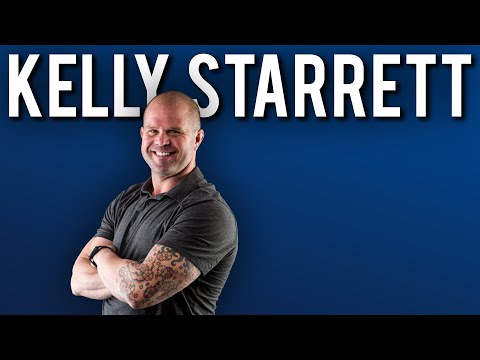
Kelly Starrett | Getting Better At The Game Of Life | Modern Wisdom Podcast 119
Kelly Starrett (guest), Chris Williamson (host)
In this episode of Modern Wisdom, featuring Kelly Starrett and Chris Williamson, Kelly Starrett | Getting Better At The Game Of Life | Modern Wisdom Podcast 119 explores kelly Starrett Redefines Fitness As Lifelong, Community-Driven Human Performance Practice Kelly Starrett discusses shifting from his original MobilityWOD brand to The Ready State, broadening the focus from isolated mobility drills to a complete, lifelong physical practice integrated into real life constraints.
Kelly Starrett Redefines Fitness As Lifelong, Community-Driven Human Performance Practice
Kelly Starrett discusses shifting from his original MobilityWOD brand to The Ready State, broadening the focus from isolated mobility drills to a complete, lifelong physical practice integrated into real life constraints.
He argues that gyms and training communities now function as a new kind of church or grand narrative, providing belonging, feedback, and a safe place to fail while building durable health and performance.
Starrett emphasizes first principles—sleep, daily movement, real food (especially plants), and self-management of pain and position—over hacks, extremes, or tribal nutrition dogma.
Throughout, he stresses test‑retest thinking, long‑term outcomes, and scalable models that work for kids, general population, and elite athletes alike, while continuously updating methods as evidence and experience evolve.
Key Takeaways
Treat health and fitness as an unwinnable, long-term game, not a short challenge.
Starrett frames life, parenting, business, and training as open-ended games where you can only play better over time; success comes from refining methods and adapting, not checking off a rigid list of ‘optimized’ habits.
Get the full analysis with uListen AI
Use the gym as a community and diagnostic space, not just a workout room.
He argues that small-group training environments provide social connection, unconditional positive regard, and tight feedback loops, while each session doubles as a check-in on sleep, stress, pain, and overall readiness.
Get the full analysis with uListen AI
Prioritize sleep, walking, and real food before advanced ‘hacks.’
Kelly and his family aggressively protect sleep, walk ~12,000 steps daily, and center meals on vegetables, fruits, and quality protein—pointing out these simple, controllable basics outperform most exotic interventions.
Get the full analysis with uListen AI
View mobility work as restoring positions that transfer directly to movement.
Instead of vague stretching, he uses specific mobilizations as ‘position transfer exercises’—tools to regain full access to joint ranges and strong shapes so that movements like squats, presses, and overhead work are efficient and safe.
Get the full analysis with uListen AI
Own your pain and position with simple self-care tools before defaulting to clinicians.
Starrett wants coaches and individuals to manage most everyday stiffness and non-red-flag pain with movement, soft tissue work, and better habits, reserving doctors and physios for clear injuries or medical red flags.
Get the full analysis with uListen AI
Anchor nutrition to diversity and density, not ideology.
He critiques tribal diet wars and suggests focusing on fundamentals like eating ~800 g of fruits and vegetables daily, whole-animal and minimally processed foods, and then adjusting protein and ethics preferences while tracking long-term labs and performance.
Get the full analysis with uListen AI
Great coaching and systems must scale across ages, sports, and contexts.
For Kelly, sound models explain, predict, and are repeatable from kids to Olympians; the same movement principles and positions should apply whether you’re coaching elementary students, CrossFitters, or pro teams.
Get the full analysis with uListen AI
Notable Quotes
“We try to treat our thinking about human beings and our lives as a game you cannot win. All you can do is sort of play better and better and better.”
— Kelly Starrett
“The gym is the only place where you can completely fall on your face… and you're gonna be safe.”
— Kelly Starrett
“Ultimately, we're trying to recognize that human beings are existing in these lives, and the things that we sort of presented on Instagram is a false reality of what's possible and the way we should be living.”
— Kelly Starrett
“Physiotherapy is chasing what strength and conditioning now has become, which is a really complete physical practice, and a place to remedy the holes in people's lives by giving them a member of the tribe.”
— Kelly Starrett
“Sleep is the most important thing. We protect our sleep like it's our job.”
— Kelly Starrett
Questions Answered in This Episode
How could someone training alone in a commercial gym recreate some of the community and feedback loops Kelly describes in his group environment?
Kelly Starrett discusses shifting from his original MobilityWOD brand to The Ready State, broadening the focus from isolated mobility drills to a complete, lifelong physical practice integrated into real life constraints.
Get the full analysis with uListen AI
What practical steps should a busy beginner take in the next 30 days to align with Kelly’s first principles of sleep, movement, and nutrition?
He argues that gyms and training communities now function as a new kind of church or grand narrative, providing belonging, feedback, and a safe place to fail while building durable health and performance.
Get the full analysis with uListen AI
Where is the line between ‘normal’ training-related pain that you should self-manage and pain that truly needs a medical professional?
Starrett emphasizes first principles—sleep, daily movement, real food (especially plants), and self-management of pain and position—over hacks, extremes, or tribal nutrition dogma.
Get the full analysis with uListen AI
How might public health and school systems integrate The Ready State-style principles so kids grow up with a robust physical practice instead of fixing problems later?
Throughout, he stresses test‑retest thinking, long‑term outcomes, and scalable models that work for kids, general population, and elite athletes alike, while continuously updating methods as evidence and experience evolve.
Get the full analysis with uListen AI
Given the long lag between nutrition choices and outcomes, how can individuals realistically test and evaluate whether a chosen diet (vegan, keto, mixed, etc.) is working for them over years rather than weeks?
Get the full analysis with uListen AI
Transcript Preview
We were in New York, and we saw this thing called the Pegan diet. It was, uh, being advertised.
The what? Pegan diet?
Pegan. Pegan.
Okay.
Paleo plus vegan. Plant-based diet with small amounts of animal protein. And we were like, "You mean food?" You know?
(laughs)
So one of my friends is a, a woman named E. C. Cienkowski and her ... she's optimized me nutrition. And she has this notion, first things first, let's improve the caloric density of your diet by getting you to eat 800 grams of vegetables and fruits a day. 800 grams, just hit that mark.
Me. (laughs) So ... (laughs)
So that's how far away ... We're having a conversation about is this movie about being plant-based good or bad? I'm like, "Hey, I eat meat and eggs and cheese and all these other things, but I also get 800 grams of vegetables and fruits or a kilo of vegetables and fruits a day. That's my base."
Are you able to stick to around that?
Piece of cake. I eat salad for breakfast. I eat ... a palmful of blueberries is 80 grams. So what you're seeing is, oh, you know, we, we villainize fruit, right?
Yeah.
And I'm like, "Seriously? You think an app- like, eating two apples is really the limiting factor to your performance today?"
(laughs)
"What are you gonna eat instead? You know, like a protein shake? A highly processed impossible burger?"
I am joined by the supple leopard himself, Mr. Kelly Starrett. Kelly, welcome to the show.
It is a pleasure to be, be back on the, uh, I don't know. I, I don't know if I can say it's the better side of the, uh, of the, the ocean, but I do have an affinity for the UK.
Yeah, man. Well, you're with me now. You, you're adopted for the next hour. We're gonna be talking about whatever we talk about. You can be British for a little while. Get a cup of tea out.
Uh, well, I really ... what I'm gonna need is a cup from the Borough Market and then also a sausage roll. So if you can make that happen, I'm in.
That's like knowledge ... but that's you dropping your peak UK knowledge bombs, isn't it?
(laughs)
It's like, what's the most quintessentially British thing that I can think of? It's a cup of tea and a sausage roll.
That's right. That's right, that's right.
(laughs) So how are you, man? It's awesome to see you again. I, I, I, um, follow your stuff. I'm sure a lot of people that are listening will be as well. You guys have been super busy recently.
You know, here's the deal. Um, we try to treat our thinking about human beings and our lives as a game you cannot win. All you can do is sort of play better and better and better. And to that end, if you, if you treat your fitness, your wellness, your health like a game with clear and clear, clear winners and losers, you know what all the rules are, you're a fool. I mean, that's, that's same in business, the same in raising kids. You know, these are open-ended tasks, and we have always reserved the right to get better and refine our thinking and to, and to think differently and critically about the needs of the people we serve. And to that end, you know, we just applied that same amount of thinking to, uh, to our business, and what we, we had is 10 years of experience helping people improve pain, helping people take a crack at moving more efficiently and more effectively on the things that they love, and really trying to get the physio and the doctor out of the conversation, because, you know, frankly so much of this, of what we're working on is, is disruptive in the way that, hey, this is a part of the language of being a human being, the same way that, like, you don't have to talk to a nutritionist when you have lunch, right? You don't have to talk to your doctor, you know, before you go to bed. I mean, it's crazy that there ... we have divorced musculoskeletal health and care and understanding, you know, from our environmental lifestyle selves and now we're trying to fix that. So what we, what we realize is that people are a lot more clever than we have originally given them credit for, and I mean, we've always assumed that people are more clever, but I don't think that, that our traditional industries have necessarily. And, uh, to that end, you know, we, we went ahead and, um, rebranded and changed our, the user experience and user interface, and we went from MobilityWOD, which was really confusing for people. Mobility now means nothing and WOD is a, you know, is a technical term, uh, that has been sort of co-opted by lots of companies like SobrietyWOD and FaithWOD and MentalityWOD. And then, um, we really felt like what we were doing was trying to help people in the context of their lives get as ready as they could for whatever they want to get ready for, and I've been talking about this notion of this Ready State, which is sort of saying, "You can't live in a ... you're not a monk. You have family obligations and private, previous history of injuries, and maybe you played a sport, and maybe you have a job that forces you to stay awake sometimes at odd hours. So how can, how ready can we get you and what can we control?" Which is really a different idea around, hey, I've got a, I have a box of 100 things, and if I don't check off my list of 100 things, I'm somehow a failure and I haven't bio-hacked or optimized. And instead we're saying this, "Hey, look. Let's play a more beautiful game." And that was really the, the birth of the Ready State.
Install uListen to search the full transcript and get AI-powered insights
Get Full TranscriptGet more from every podcast
AI summaries, searchable transcripts, and fact-checking. Free forever.
Add to Chrome