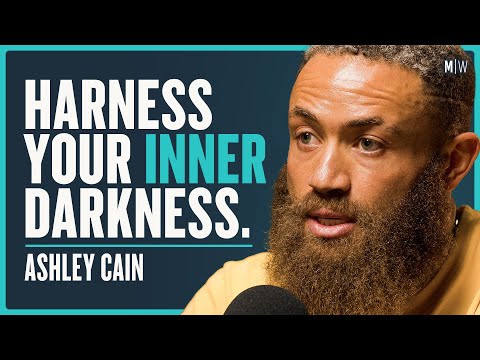
How To Overcome The Toughest Moment Of Your Life - Ashley Cain
Ashley Cain (guest), Chris Williamson (host)
In this episode of Modern Wisdom, featuring Ashley Cain and Chris Williamson, How To Overcome The Toughest Moment Of Your Life - Ashley Cain explores turning Unimaginable Grief Into Relentless Purpose: Ashley Cain’s Journey Former reality TV star Ashley Cain recounts the diagnosis, treatment, and eventual death of his baby daughter Azaylia from an aggressive, rare leukemia, describing it as the most traumatic experience a human can endure.
Turning Unimaginable Grief Into Relentless Purpose: Ashley Cain’s Journey
Former reality TV star Ashley Cain recounts the diagnosis, treatment, and eventual death of his baby daughter Azaylia from an aggressive, rare leukemia, describing it as the most traumatic experience a human can endure.
He explains how he and Azaylia’s mother created a hopeful, energetic environment in hospital, mobilized huge public support for treatment, and later faced the shattering moment of taking her home to die.
After her death, Ashley plunged into alcohol and suicidal ideation before transforming his grief into extreme endurance challenges and The Azaylia Foundation, dedicated to childhood cancer research and support.
Throughout, he reflects on grief, mental health, faith, self-worth, and why he now lives an intense, purpose-driven life aimed at honoring his daughter and helping others.
Key Takeaways
Grief doesn’t shrink; you grow stronger around it.
Ashley rejects the idea that grief ‘gets easier,’ arguing instead that the pain remains but people can expand their capacity to live with it by engaging with—not avoiding—their emotions.
Get the full analysis with uListen AI
Controlling the environment is powerful when you can’t control outcomes.
Facing a disease he couldn’t cure, Ashley focused on making the hospital room ‘Club 100’—a space of smiles, energy, and belief—so his daughter only ever felt love and positivity.
Get the full analysis with uListen AI
Hope and purpose can be rebuilt even after suicidal despair.
He describes a serious suicide attempt interrupted by police, which became a turning point; he chose afterward to confront fear (getting a skydiving license) and double down on his mission instead of ending his life.
Get the full analysis with uListen AI
Extreme physical challenges can transmute emotional pain into fuel.
Ultramarathons, long-distance cycles, and brutal kayak races are not distractions for him; they are moments where physical suffering helps him feel closest to his daughter and gives structure to his grief.
Get the full analysis with uListen AI
Self-worth grows from consistently ‘showing up,’ not chasing happiness.
Ashley believes in competence and fulfillment over a vague idea of constant happiness, arguing that doing what’s necessary every day builds self-respect and stabilizes mental health.
Get the full analysis with uListen AI
Talking openly about the dead and about grief is healing.
He urges bereaved people to say their loved ones’ names and share memories, and encourages friends not to avoid the topic; silence can worsen isolation, while conversation honors the person lost.
Get the full analysis with uListen AI
Purpose can emerge directly from the deepest pain.
From writing his daughter’s eulogy to founding The Azaylia Foundation and planning global endurance feats, he has built a life where his pain, faith, and love for his daughter explicitly drive his actions.
Get the full analysis with uListen AI
Notable Quotes
“I never want the pain of losing my daughter to go away because that pain is the only time I truly feel love.”
— Ashley Cain
“You could have locked me in a cell for the rest of my life… do not take my daughter.”
— Ashley Cain
“Grief doesn’t get easier. The circle of grief stays the same; we just grow stronger around it.”
— Ashley Cain
“I’m not running away from anything. I’m running directly and head-on into all of my pain.”
— Ashley Cain
“I’m not chasing happiness. I’ve become competent in doing what’s necessary, and that gives me fulfillment.”
— Ashley Cain
Questions Answered in This Episode
How do you know when extreme productivity and challenge are healthy processing versus avoidance of stillness and emotion?
Former reality TV star Ashley Cain recounts the diagnosis, treatment, and eventual death of his baby daughter Azaylia from an aggressive, rare leukemia, describing it as the most traumatic experience a human can endure.
Get the full analysis with uListen AI
What practical steps can someone newly bereaved take in the first weeks to begin ‘growing around’ their grief rather than numbing it?
He explains how he and Azaylia’s mother created a hopeful, energetic environment in hospital, mobilized huge public support for treatment, and later faced the shattering moment of taking her home to die.
Get the full analysis with uListen AI
How did your faith specifically shape decisions you made during Azaylia’s illness and after her passing?
After her death, Ashley plunged into alcohol and suicidal ideation before transforming his grief into extreme endurance challenges and The Azaylia Foundation, dedicated to childhood cancer research and support.
Get the full analysis with uListen AI
What safeguards do you and your team put in place to protect your mental health while you continually immerse yourself in childhood cancer and grief?
Throughout, he reflects on grief, mental health, faith, self-worth, and why he now lives an intense, purpose-driven life aimed at honoring his daughter and helping others.
Get the full analysis with uListen AI
If you could redesign how hospitals support parents of terminally ill children, what would you change based on your experience?
Get the full analysis with uListen AI
Transcript Preview
You wish for so many things, don't you? You think, "I want that house. I want that car. I'd love to go on that holiday. I wish I could lose weight. I wanna look good. I want that woman. I want that man." Imagine that your only wish in the world wasn't anymore that you want your baby to live. Or when your baby dies, you want her in your arms and you want it to be peaceful. Imagine that's the one thing that you're wishing for in this world. That's all I could hope for. That was my new hope. (wind blowing)
Ashley Kane, welcome to the show.
Thank you for having me.
The last time that we were together, in person, was TupTup Palace VIP, in Newcastle. A very long time ago.
You're joking?
Last time that we were together.
Wow.
A lot of things have changed-
(laughs)
... over the last few years. When we first became friends, you were coming out the back of doing reality TV, did Ex On The Beach. Uh, you were starting businesses and doing a bunch of other things. We haven't caught up since then. What's happened with life?
(sighs) I'd say, the Ashley Kane that you know has disappeared, vanished, evaporated. Um, what's happened with life? I'd say that I've probably gone through the most traumatic experience that I believe that a human being could, you know. I always thought I was living the life before. I thought for a guy in his twenties, it didn't get much better. Until I had my beautiful daughter, Azalea. When I had that little girl, she made me understand what life truly was. The crazy thing about it was, you know, two months into becoming a daddy, something I always wanted to be, something I looked forward to, something that actually made my life feel complete for once, uh, I found out my daughter had been diagnosed with AML, leukemia. Finding out that the most beautiful thing you've ever created, the most precious and valuable thing to you, has got a life-threatening illness, not just a life-threatening illness, but one of the most rare and aggressive forms of ca- cancer known, especially in a child that young, is something that not only breaks your heart but feels like it takes your soul away. I didn't really know what to do at that point, you know. I feel like I felt quite ashamed when I found out that my daughter got diagnosed.
Why?
Well, I'll paint a picture. We went to hospital, you know. She got rushed into hospital in an ambulance. We suspected there wasn't something right, you know. Um, from probably two weeks into her being born, she had like a stuffy nose. Um, it was like cold/flu symptoms, but it was during COVID, you know, so you couldn't just go to the doctor's. Um, the doctors said it'd be cold or flu. You know, get, um, one of those things that you put up a baby's nose and suck the snot out. My grandma from the Caribbean wouldn't allow that. She said, you know, "Put your mouth under her nose and suck it out yourself." Um, so that's what, what I did. It didn't seem to, to budge. Then we found out that her stomach was getting quite hard, bloated. We thought it could be constipation or colic. That's what the doctor said. So we went with the doctors, you know. But there's something about, um, a parent's instincts that, that tells you when your child isn't right. Then one morning, my partner at the time, Sophia, she found, um, a raised lump on Azalea's stomach. It was like a bruise. When we told the doctors about that, they kind of insisted that she needs to go to hospital. We rang 111, they sent an ambulance out straight away. So when we got to hospital at the time, um, you know, she was having blood tests, which any parent will tell you, when their baby has to have blood tests, is not nice. You're thinking that's kind of the worst it's gonna get. But I, I felt and I suspected that there wasn't something right. Um, when we were waiting for the news, it was crazy but something in my head told me to stand up. Even though I knew that I was gonna get told something, me standing up would give me a sign that I knew how bad it was before they had to open their mouths. Because I knew if it was bad news, they'd tell me to sit down. So I stood up and I waited and I waited. And when this team of doctors came in, the first thing they told me to do was sit down, take a seat. Then they told me that Azalea had AML, leukemia. It was very aggressive. She had a white cell count of 200 at eight months old. Yeah. Um, and at that point, I went into a state of shock. You know, I was upset. It felt like the world went into slow motion.... had no gauge of kind of s- I had no spacial awareness. I had no gauge of what was really in front of me, what wasn't, of reality, if you would say. That's what the embarrassing part was. You know, I didn't know how to take it. Then my life changed, you know? From then on, from then, hearing that, we got rushed straight into Birmingham Children's Hospital. But we didn't go home. We didn't go home to get clothes. We didn't go home to pack anything. We went straight to Birmingham Children's Hospital during COVID. Azaylia went straight into, um, intensive care. They didn't think she'd make it through the next day, two days. Um, I was in a room probably a quarter, a third of the size of this. I was sleeping on a space on the floor probably about this wide. Um, wasn't allowed to go outside to the shops, wasn't allowed to see family, friends, 'cause it was COVID. And that's when my journey in life really started.
Install uListen to search the full transcript and get AI-powered insights
Get Full TranscriptGet more from every podcast
AI summaries, searchable transcripts, and fact-checking. Free forever.
Add to Chrome