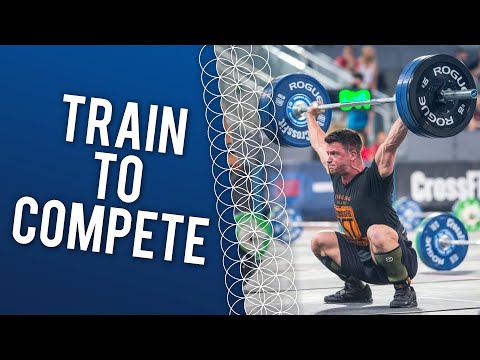
Understanding Fitness As A Competitor | Steven Fawcett | Modern Wisdom Podcast 155
Steven Fawcett (guest), Chris Williamson (host), Narrator, Narrator, Narrator
In this episode of Modern Wisdom, featuring Steven Fawcett and Chris Williamson, Understanding Fitness As A Competitor | Steven Fawcett | Modern Wisdom Podcast 155 explores elite CrossFit Success Demands Specialization, Smart Competing, And Self-Awareness Steven Fawcett explains how progressing from general CrossFit to elite competition requires moving away from constant metcons toward periodized, highly intentional training in separate domains (strength, conditioning, gymnastics).
Elite CrossFit Success Demands Specialization, Smart Competing, And Self-Awareness
Steven Fawcett explains how progressing from general CrossFit to elite competition requires moving away from constant metcons toward periodized, highly intentional training in separate domains (strength, conditioning, gymnastics).
He emphasizes that athletes must understand their goals—whether they train mainly for fun and frequent comps or to reach their absolute performance ceiling—and align competition frequency, recovery, and lifestyle accordingly.
Much of JST Compete’s edge comes from doing “small things” right with professionalism: equipment use, session structure, technique detail, recovery, and education so athletes can make informed decisions for themselves.
They also discuss mindset, post‑competition slumps, balancing coaching with competing, and how life priorities (business, family, health) should dictate when to push and when to step back from training.
Key Takeaways
General CrossFit only takes you so far; serious competitors must specialize.
After 6–24 months of regular classes, if lifts, fitness, and gymnastics plateau, it’s time to separate strength, conditioning, and skill work into focused blocks, build each separately, then recombine into competition-style workouts.
Get the full analysis with uListen AI
Periodized, repeated work beats random metcons for long-term progress.
Elite training is often “constantly repeated,” not constantly varied: you develop rowing, running, lifting, and gymnastics capacities in isolation with progressive overload, then integrate them closer to competition instead of constantly sending metcons.
Get the full analysis with uListen AI
Limit competitions if you want real improvement; more isn’t better.
Each comp plus its taper and recovery can cost a month of true training; Fawcett suggests most serious athletes cap at about three comps a year, clustered together, to protect 6–8 months of uninterrupted development time.
Get the full analysis with uListen AI
Clarify your ‘why’ before setting your training and competing cadence.
Decide if you mainly want fun weekends with friends or to reach your maximum potential; frequent local comps and qualifiers are fine if you accept slower progress, but they are incompatible with pushing your absolute performance ceiling.
Get the full analysis with uListen AI
Small technical and lifestyle details compound into a big competitive edge.
Examples include limiting lifting shoes and belts so your raw strength improves, resetting deadlifts instead of touch-and-go, timing meals and supplements, and treating sessions with professionalism—all “inches” that add up to yards and miles over time.
Get the full analysis with uListen AI
Coaches who train alongside athletes can accelerate learning and buy-in.
Fawcett finds athletes progress faster when he’s in the trenches with them—demonstrating decisions about shoes, pacing, or warm-ups—because they observe and ask why, rather than just following a distant coach’s written instructions.
Get the full analysis with uListen AI
Expect and plan for post-competition slumps—physical and psychological.
Massive adrenaline, attention, and stress followed by normal life creates a real comedown; planning genuine time off, not scheduling immediate new goals, and recognizing this as normal helps protect mental health and long-term motivation.
Get the full analysis with uListen AI
Notable Quotes
“Everyone who starts CrossFit can just do regular CrossFit for maybe six months, maybe two years and continually get better… then it’s time to stop, separate them, work on them individually.”
— Steven Fawcett
“An elite athlete’s training is rarely constantly varied. If anything, it’s just constantly repeated.”
— Steven Fawcett
“You need to decide why you train and why you compete. Are you doing it to get to the highest physical level you can, or because you just enjoy competing every few weeks?”
— Steven Fawcett
“It’s doing a lot of little things the right way… we call them inches. Done for six months, that’s when it starts to snowball into yards and miles.”
— Steven Fawcett
“A qualifier is competition. You need to decide what’s really important and not just get sucked into the hype of every event and good bit of marketing.”
— Steven Fawcett
Questions Answered in This Episode
How can I objectively tell when it’s time to move from class-based CrossFit to a more periodized, specialized training approach?
Steven Fawcett explains how progressing from general CrossFit to elite competition requires moving away from constant metcons toward periodized, highly intentional training in separate domains (strength, conditioning, gymnastics).
Get the full analysis with uListen AI
If I currently compete in local comps every couple of months, what would a realistic transition plan look like to shift toward a ‘three meaningful comps per year’ model?
He emphasizes that athletes must understand their goals—whether they train mainly for fun and frequent comps or to reach their absolute performance ceiling—and align competition frequency, recovery, and lifestyle accordingly.
Get the full analysis with uListen AI
Which of my current training habits—equipment use, session structure, or recovery—are likely “inches” that are silently holding my progress back?
Much of JST Compete’s edge comes from doing “small things” right with professionalism: equipment use, session structure, technique detail, recovery, and education so athletes can make informed decisions for themselves.
Get the full analysis with uListen AI
How can I work with my coach to better individualize my competition mindset—either getting more focused or more relaxed between events—based on my personality?
They also discuss mindset, post‑competition slumps, balancing coaching with competing, and how life priorities (business, family, health) should dictate when to push and when to step back from training.
Get the full analysis with uListen AI
What signs should I watch for that indicate I’m experiencing a post-competition comedown or long-term burnout rather than just normal fatigue, and how should I adjust training when that happens?
Get the full analysis with uListen AI
Transcript Preview
Everyone who starts CrossFit can just do regular CrossFit for six months or maybe two years and continually get better. Your body is, has been exposed to CrossFit. It knows what it's about and then ... And you will also know what it is, and then start looking to maybe fine-tune areas. But yeah, anyone that's looking to, to compete at any level, if you've got to a point where your lifts have stayed at a certain level, you don't feel like getting much fitter, your gymnastics isn't getting much better, and you're doing all those things in like ... it's all bundled up in like one session, then it's time to stop, separate them, work on them individually. Work on your weight lifting, work on your, your condition, work on your gymnastics. Build them all up separately, and then bring it back together.
(wind sound effect) Steve Fossett in the building.
Woo!
How are you, man?
Good. Thank you. Thanks for having me on. Well, thanks for traveling to Wigan to, uh ...
It's beautiful.
(laughs)
Look at this. In the, in the dungeon.
I know. This is my little, uh, man cave.
It's cool, man.
It is very cool.
Yous come back from Miami.
Yes, it was-
How was it?
Uh, yeah. Such a good time. Such a good time. I've been back for a week or so now, but it ... In terms of competitions, um, probably the most fun that I've, I've, I've ever had.
Why?
Um, probably a couple of things. Mixture of who I, who I was with, who was around. There was, uh, obviously I was there competing in a team with, uh, Taylor, uh, Anita, uh, and Mikey, but we also had a little bit of a JST crew going on with Reggie, um, Philip, the Danish lad, Philip Bisquard, um, and the girls as well, so there was Evie and Isla there. So it was a good group of maybe eight or nine of us-
Mm-hmm.
... um, who've all known each other quite a while, so it was good just to go out to Miami, which is somewhere just completely different to-
Mm-hmm.
... Wigan or-
Slightly different to Wigan.
... some nights.
Yeah, a little bit.
Um, and just go and have a good time and, and you know what it's like being around Mikey and Reggie, they just bounce off each other and, uh-
Mm-hmm.
... you know, there's l- kind of laser sharp focus when it's time for, um, the event and the warming up.
Mm-hmm.
And then 10, 15 minutes after, it's just back to, uh, just having a good time. So, it's something that I've not, um, always had that balance of around competition. Sometimes I get myself kind of in the zone and the fun aspect is maybe just kind of like limited because I'm so focused on wanting to compete. Um, so having those guys there was ... it just made it, yeah, really, a really fun experience.
Install uListen to search the full transcript and get AI-powered insights
Get Full TranscriptGet more from every podcast
AI summaries, searchable transcripts, and fact-checking. Free forever.
Add to Chrome