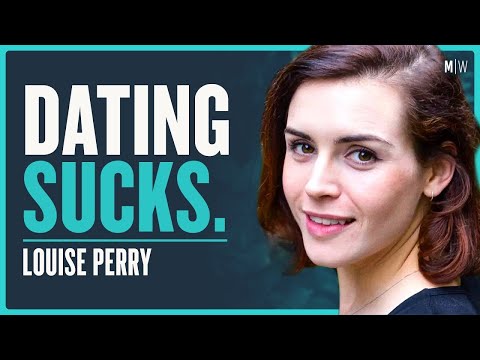
The Real Effects Of “No Strings Attached” - Louise Perry
Louise Perry (guest), Chris Williamson (host)
In this episode of Modern Wisdom, featuring Louise Perry and Chris Williamson, The Real Effects Of “No Strings Attached” - Louise Perry explores louise Perry Dissects Sexual Revolution, Casual Sex, Porn, and Power Louise Perry argues that the sexual revolution, enabled by the pill and changing norms, has disproportionately harmed women and destabilized relationships, despite some real gains in freedom and opportunity.
Louise Perry Dissects Sexual Revolution, Casual Sex, Porn, and Power
Louise Perry argues that the sexual revolution, enabled by the pill and changing norms, has disproportionately harmed women and destabilized relationships, despite some real gains in freedom and opportunity.
She emphasizes deep biological and psychological differences between male and female sexuality, claiming our current culture asks women to suppress their instincts and imitate male-style casual sex, often to their emotional detriment.
Perry and Chris Williamson link hookup culture, porn, OnlyFans, and collapsing monogamy to broader social problems: sexless men, unstable families, increased loneliness, and the erosion of norms that once constrained harmful male behavior.
Ultimately, she defends monogamy and more traditional sexual norms as a form of “sexual socialism” that protects women, children, and lower‑status men, while criticizing liberal and sex‑positive feminism for ignoring costs and embracing market logic around sex.
Key Takeaways
Casual sex culture is a worse deal for women than for men.
Perry argues that men are, on average, more inclined to seek casual sex and bear fewer physical and emotional risks, while women face pregnancy, higher vulnerability to violence, and a greater tendency to bond with sexual partners, making “no strings attached” sex more costly for them.
Get the full analysis with uListen AI
Biological sex differences shape sexuality and can’t simply be ‘socially constructed’ away.
Research and everyday observation point to robust differences: men are more visual, less choosy, and more comfortable with impersonal sex; women have lower sexual-disgust thresholds and stronger instincts to vet partners, reflecting evolutionary pressures around pregnancy and child-rearing.
Get the full analysis with uListen AI
The ideology that ‘sex is just fun’ conflicts with how people actually feel.
Perry calls this ‘sexual disenchantment’: the claim that sex is a casual leisure activity like any other. ...
Get the full analysis with uListen AI
Porn’s design and scale are reshaping male sexuality and sexual norms.
Modern streaming porn functions as a profit-driven superstimulus, pushing users toward ever more intense content and producing issues like erectile dysfunction, desensitization, and the mainstreaming of rougher practices (e. ...
Get the full analysis with uListen AI
OnlyFans and ‘sex work is work’ narratives ignore long-term relational costs.
While a tiny minority of creators make substantial money, most do not, and explicit content is effectively permanent. ...
Get the full analysis with uListen AI
Monogamous marriage acts as ‘sexual socialism’ that stabilizes societies.
Anthropologically, most cultures permit polygyny, where high-status men monopolize mates and low-status men are left out, correlating with violence and instability. ...
Get the full analysis with uListen AI
Liberal/sex-positive feminism often functions as a luxury belief of elites.
Norms that de-stigmatize promiscuity, polyamory, or dissolving chivalry may be survivable for educated, well-resourced people, but Perry and Williamson argue they disproportionately harm working-class women and men, who lack the buffers and informal constraints of elite milieus.
Get the full analysis with uListen AI
Notable Quotes
“If it's really the case that sex work is work, then what is the problem with being asked by your boss to give him a blow job? It's just a service. It's like being asked to do overtime or make a coffee. No one actually thinks that it's just like making a coffee.”
— Louise Perry
“The sexual revolution was kicked off by the pill… and this kind of gave the impression that sex could just be a leisure activity. My argument is that idea suits male interests much more than it does female.”
— Louise Perry
“When motherhood became a biological choice for women, fatherhood became a social choice for men.”
— Louise Perry
“Monogamy has been called sexual socialism… it’s a redistribution strategy, for sure.”
— Louise Perry (with Chris Williamson responding)
“What porn has done to men, which is to teach them that women are to be objectified, is similar in part to what OnlyFans has done to women, which is to teach some women that men are commercial vehicles to be exploited.”
— Chris Williamson
Questions Answered in This Episode
If we accept strong biological sex differences, how should schools, parents, and media realistically adjust the messages they give young people about sex and relationships?
Louise Perry argues that the sexual revolution, enabled by the pill and changing norms, has disproportionately harmed women and destabilized relationships, despite some real gains in freedom and opportunity.
Get the full analysis with uListen AI
In a culture that prizes individual freedom, how far can we or should we go in socially ‘enforcing’ monogamy or stricter sexual norms without becoming authoritarian?
She emphasizes deep biological and psychological differences between male and female sexuality, claiming our current culture asks women to suppress their instincts and imitate male-style casual sex, often to their emotional detriment.
Get the full analysis with uListen AI
What would a genuinely feminist sexual culture look like if it fully acknowledged women’s bonding tendencies, disgust thresholds, and long-term interests instead of asking them to behave like men?
Perry and Chris Williamson link hookup culture, porn, OnlyFans, and collapsing monogamy to broader social problems: sexless men, unstable families, increased loneliness, and the erosion of norms that once constrained harmful male behavior.
Get the full analysis with uListen AI
How can policymakers and platforms practically mitigate the harms of ubiquitous porn and OnlyFans without simply driving them underground or resorting to heavy-handed censorship?
Ultimately, she defends monogamy and more traditional sexual norms as a form of “sexual socialism” that protects women, children, and lower‑status men, while criticizing liberal and sex‑positive feminism for ignoring costs and embracing market logic around sex.
Get the full analysis with uListen AI
To what extent are current dating-market problems—sexless men, hypergamy, rising single motherhood—reversible, and what concrete norms or incentives would actually move the needle?
Get the full analysis with uListen AI
Transcript Preview
If it's really the case that sex work is work, then what is the problem with being asked by your boss to give him a blow job? It's work. It's just a service. It's like being asked to do overtime or make a coffee. No one actually thinks that it's just like making a coffee.
(wind blows) Louise Perry, welcome to the show.
Thank you so much for having me.
Given your political background, how does it feel to have Ben Shapiro quote-tweeting your work?
I, (laughs) I didn't know he had.
Did you not see this?
No.
Let me tell you.
(laughs)
So, there is a tweet that, uh, someone put out a couple of days ago, explaining about how don't kink-shame the naked men doing parades in front of children and twerking in front of cops.
Mm-hmm.
And that was one photo, which was a news story, and the other photo was the chapter list from your book.
(laughs)
Which said things-
Oh, that oh, that's-
... like men and women are different-
No.
... and, uh, loveless sex is not empowering. And it said-
Yep, yep.
... um, uh, "People of the West, choose your future." Something like that.
(laughs) Oh, wow. Okay. That, yeah, okay, that no- that, that explains things. I have a no- I have quite a h- like, a heavy notification filter on on Twitter, so I don't always see everything. Um, the Contents page though completely blew up, like, three months ago, long before the book was published. It had just ... The publisher just put up online the cover, the title, the fact that Kathleen Stock wrote the forward, 'cause she's got a kind of existing reputation among, among her haters, my haters, and the Contents page, and that was enough to have like a several-day Twitter storm-
Why do you think that was?
... by those statements. I mean, I guess because ... I mean, I did, I did write the chapters with the knowledge that they're like, they're simultaneously obvious and also incredibly provocative, which was, which was like precisely my intention. Because to some, 'cause some people read it, I mean, some people read the whole book, s- but some people read the chapter titles in particular, and they're like, "Yeah?" And other people read them as like, fascist, basically. I mean, like, e- like, s- like, so politically outrageous. I mean, I'd say that the response to the book so far, it's only been out for a couple of weeks in the UK and not yet in the States, is, um, like 80% really positive and 20% complete outrage, and not very much in the middle (laughs) .
I think ... Well, what do you think is gonna happen when it comes out in America?
(sighs) That's a good question. I mean, the, the, like, the culture war is more intense in America in every way. It's so similar, I think, to what we have here. I mean, actually I think we import it really, but, um, yeah, I don't know. I mean, I'm, I, like, I did l- That, like, British political context is different from American, right? And I write for the new Statesman Magazine, for instance, which is a, like, traditionally left-wing outlet. Um, I have come from the left, even if I wouldn't necessarily consider myself still a part of the left and so on. So like, I hope that the book doesn't just get treated as, like, yet another socially conservative take on the sex revolution.
Install uListen to search the full transcript and get AI-powered insights
Get Full TranscriptGet more from every podcast
AI summaries, searchable transcripts, and fact-checking. Free forever.
Add to Chrome