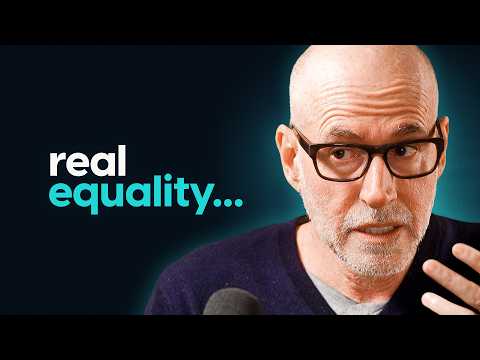
The War On Men Isn’t Helping Anyone - Scott Galloway
Chris Williamson (host), Scott Galloway (guest), Narrator
In this episode of Modern Wisdom, featuring Chris Williamson and Scott Galloway, The War On Men Isn’t Helping Anyone - Scott Galloway explores scott Galloway: Why Demonizing Men Hurts Everyone, Not Just Men Scott Galloway and Chris Williamson discuss the current cultural and political climate around masculinity, arguing that there is a real crisis for young men that is minimized, politicized, or framed as a threat to women. They explore how education, economics, dating dynamics, and online culture have combined to make men less attractive partners, more isolated, and more vulnerable to extremism and despair. Galloway proposes an aspirational model of masculinity built on being a provider, protector, and procreator who creates ‘surplus value’ for others, and he emphasizes the critical role of male role models and national service. They criticize zero-sum identity politics, the performative focus on DEI over class, the misalignment between stated and revealed female preferences, and the way MeToo-era messaging plus porn and social media have sterilized healthy male risk-taking in relationships.
Scott Galloway: Why Demonizing Men Hurts Everyone, Not Just Men
Scott Galloway and Chris Williamson discuss the current cultural and political climate around masculinity, arguing that there is a real crisis for young men that is minimized, politicized, or framed as a threat to women. They explore how education, economics, dating dynamics, and online culture have combined to make men less attractive partners, more isolated, and more vulnerable to extremism and despair. Galloway proposes an aspirational model of masculinity built on being a provider, protector, and procreator who creates ‘surplus value’ for others, and he emphasizes the critical role of male role models and national service. They criticize zero-sum identity politics, the performative focus on DEI over class, the misalignment between stated and revealed female preferences, and the way MeToo-era messaging plus porn and social media have sterilized healthy male risk-taking in relationships.
Key Takeaways
You can’t help young men effectively if you frame them as the problem.
Galloway argues that much progressive rhetoric treats men as the enemy rather than a struggling group, which alienates them and pushes them toward coarser right‑wing visions of masculinity instead of constructive solutions.
Get the full analysis with uListen AI
Male educational decline is real and politically inconvenient to address.
Women now outnumber men roughly 60/40 in college, perform better academically, and drop out less, yet any formal ‘affirmative action’ for men is seen as unacceptable, so universities quietly adjust standards while publicly denying a male-specific problem.
Get the full analysis with uListen AI
Economic stagnation for young men is driving a mating and meaning crisis.
Because women strongly prefer economically viable partners, falling male wealth and opportunity—amplified by tax and policy transfers from young to old—shrinks men’s dating prospects, which in turn fuels loneliness, substance abuse, and susceptibility to conspiracy and resentment.
Get the full analysis with uListen AI
Online culture has suppressed healthy male risk-taking in dating.
MeToo-era messaging plus viral ‘red flag’ and harassment narratives made cautious men even more avoidant, while porn offers low-risk sexual gratification; the result is fewer approaches, fewer relationships, and more room in the market for boundary‑violating men.
Get the full analysis with uListen AI
Masculinity can be a positive “code” built on contribution, not domination.
Galloway frames healthy masculinity as being a provider (economically viable or responsibly contributing), protector (physically and emotionally safeguarding others), and procreator (channeling sexual drive into growth and connection), culminating in creating ‘surplus value’—adding more to others’ lives than you extract.
Get the full analysis with uListen AI
Boys are emotionally more fragile and need intentional male role models.
Data show fatherless boys are more likely to be incarcerated than graduate, and male sexual abuse victims are far more likely to die by suicide; yet men under-participate in mentorship programs like Big Brothers, and cultural suspicion around men with boys further discourages engagement.
Get the full analysis with uListen AI
Policy that lifts all young people often helps men most without backlash.
Galloway favors broad measures like more progressive taxation favoring earned income, mandatory national service, and class-based affirmative action, arguing they would disproportionately benefit struggling young men while remaining politically sellable as gender-neutral youth support.
Get the full analysis with uListen AI
Notable Quotes
“The right recognized the problems facing young men first, but they filled the void with voices that conflated coarseness and cruelty with masculinity.”
— Scott Galloway
“Women aren’t going to continue to thrive and the country won’t continue to prosper as long as young men are flailing.”
— Scott Galloway
“If you don’t know the difference between harassing somebody and expressing interest while making them feel safe, you’ve got bigger problems.”
— Scott Galloway
“Masculinity isn’t the problem. Violence, cruelty, and oppression are the problem—and those are the opposite of masculinity.”
— Scott Galloway
“True equality will be when you can talk about men struggling without a disclaimer at the beginning.”
— Chris Williamson (paraphrasing Douglas Murray’s idea)
Questions Answered in This Episode
How can institutions (schools, media, political parties) acknowledge and address male-specific struggles without triggering zero-sum gender backlash?
Scott Galloway and Chris Williamson discuss the current cultural and political climate around masculinity, arguing that there is a real crisis for young men that is minimized, politicized, or framed as a threat to women. ...
Get the full analysis with uListen AI
What would a practical, modern national service program for both men and women look like, and how would it concretely improve young men’s lives?
Get the full analysis with uListen AI
Where is the line between encouraging male risk-taking in dating and protecting women from genuinely dangerous or disrespectful behavior?
Get the full analysis with uListen AI
How should men navigate the tension between being economically ‘viable’ providers and resisting the feeling that their worth is only based on income?
Get the full analysis with uListen AI
What are realistic, everyday ways for men to adopt Galloway’s ‘provider, protector, procreator, surplus value’ code if they didn’t grow up with strong male role models?
Get the full analysis with uListen AI
Transcript Preview
Scott Galloway, welcome to the show.
It's always great to see you, man. Great to see you-
Bett-
... here in London.
Better to see you in person.
Yeah, that's right.
The first one that we've done, all the time that we've hung out in person and all the podcasts we've done, and those two things have never crossed over.
We've never done a live podcast?
We've never done an in-person podcast. (laughs)
Oh, nice.
We've hung out, and we've recorded, but we've never done the same two things.
Oh, welcome to London, man.
Thank you. You did an interview-
Yeah.
... with BBC Global-
Okay.
... that was titled, Young Men are Struggling: What Does This Mean for Young Women?
Yeah.
This men struggling, women most affected framing is wild to me.
Yeah.
Does that irritate you in the same way as it does me to have to do this weird sort of land acknowledgement to the, the challenges that women face even as we're talking about the problems that men are facing?
I, like, I think it's productive to think of it as a societal problem. Well, moving to solutions, I think the only way you get stuff done here or the most effective way to get stuff done in the lesson is, I've spent the majority of my life struggling with this issue professionally, and that is, I think I'm good at being right. I'm not very good at being effective, and there's a difference.
Okay.
And if you really wanna help young men, and you wanna get, think about starting a conversation that gets programs, and a change in mentality, and a focus on the investments needed to lift up young men, I think it's done more effectively through the context of lifting up all young people. So the basic line is women aren't gonna continue to thrive in the country, isn't gonna continue to prosper as long as young men are flailing. So this needs to be a collective effort.
I, I do understand, and I get, I get the difference between, uh, ideological purity or, um, like, uh, reality-based insight-
Yeah.
... and effective, uh, communication-
Right.
... and press release and stuff like that. I, it, I had this conversation with Richard Reeves as well.
Yeah.
I'm just so sick of this land acknowledgement thing where we have to prostrate ourselves and say-
Yeah.
... "Well, we know that women are... Uh, i- it's only been recent that they got equal access to education and employment, and we must not forget that maternity leave must improve, and we da-da-da-da."
Yeah.
And after we've done all of this work, we can say, "And now we can talk about male mental health, and now we can talk about m- male suicide." It... We don't... Could you imagine if there was a, a video that was titled, Young Women are Struggling: What Does This Mean for Young Men? Like, th- that wouldn't happen. At no point-
Install uListen to search the full transcript and get AI-powered insights
Get Full TranscriptGet more from every podcast
AI summaries, searchable transcripts, and fact-checking. Free forever.
Add to Chrome