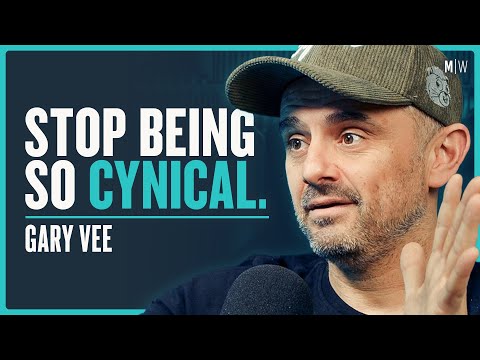
Predicting The Future & Dealing With Hate - Gary Vee
Chris Williamson (host), Gary Vaynerchuk (guest), Narrator, Narrator
In this episode of Modern Wisdom, featuring Chris Williamson and Gary Vaynerchuk, Predicting The Future & Dealing With Hate - Gary Vee explores gary Vee Explains Day-Trading Attention, Authenticity, And Online Growth Gary Vaynerchuk argues that most corporations and creators misunderstand where real attention is and fail to adapt quickly enough to platform and culture shifts, which he calls “day trading attention.”
Gary Vee Explains Day-Trading Attention, Authenticity, And Online Growth
Gary Vaynerchuk argues that most corporations and creators misunderstand where real attention is and fail to adapt quickly enough to platform and culture shifts, which he calls “day trading attention.”
He contrasts boardroom, report-driven marketing with practitioner-level, in-the-dirt understanding of social platforms, and shows how individuals can outmaneuver big brands by mastering social creative across all channels.
For aspiring creators, he emphasizes making content for *others* not for ego, playing the long game of authenticity, and building on passion or expertise while accepting criticism and volatility as the cost of visibility.
The conversation broadens into social media’s impact on society, kids, cynicism, and politics, with Gary insisting social hasn’t made humans worse but has simply exposed what was already there—and that this exposure can lead to a future “renaissance” in self-awareness and accountability.
Key Takeaways
Treat attention like a day trader, not a long-term stockholder.
Platforms, formats, slang, and algorithms change at “nanosecond” speed; the winners are practitioners who adjust daily, not brands and creators who keep using tactics from 4–16 months ago.
Get the full analysis with uListen AI
Stop chasing past attention; go where people *actually* are now.
Most corporations still spend heavily on TV, billboards, and legacy digital because internal reports say they work, even though real attention has shifted to social, short-form, and influencer-driven content.
Get the full analysis with uListen AI
Make content for selfless reasons: ask “what’s in it for them?”
Gary argues most people post to look rich, famous, or impressive; instead, every piece of content should deliver entertainment, education, inspiration, or genuine vulnerability that benefits the audience.
Get the full analysis with uListen AI
Authenticity doesn’t win the sprint, it wins the marathon.
You can “fake it” and win short-term, but in a world that records everything, inconsistency and hypocrisy get exposed over time; the people who stay true to themselves build durable trust and careers.
Get the full analysis with uListen AI
Diversify across platforms and formats or you’ll plateau.
Most strong creators over-index on one or two platforms; Gary claims very few seriously tailor daily content for *all* major channels (TikTok, Reels, Shorts, LinkedIn, X, etc. ...
Get the full analysis with uListen AI
Use passion or expertise as your content fuel.
To sustain volume and quality, build around what you love (e. ...
Get the full analysis with uListen AI
Reframe criticism and cynicism as the cost of attention.
If you want visibility, you must accept judgment; Gary handles hate through empathy (haters are unhappy), humility (he’s “not that important”), and refusing to value strangers’ opinions over his own or his close circle’s.
Get the full analysis with uListen AI
Notable Quotes
“Most companies are trading on potential and historic attention, not actualized attention.”
— Gary Vaynerchuk
“The biggest framework issue in the game is people make content for selfish reasons versus selfless reasons.”
— Gary Vaynerchuk
“Authenticity is not very important short term. It’s incredibly important long term.”
— Gary Vaynerchuk
“You’re only as good as your next post.”
— Gary Vaynerchuk
“Social media hasn’t changed us, it has exposed us.”
— Gary Vaynerchuk
Questions Answered in This Episode
How can a solo creator practically implement “day trading attention” without burning out or needing a big team?
Gary Vaynerchuk argues that most corporations and creators misunderstand where real attention is and fail to adapt quickly enough to platform and culture shifts, which he calls “day trading attention.”
Get the full analysis with uListen AI
If most corporate marketers know they’re buying outdated attention, what would it realistically take to change their behavior?
He contrasts boardroom, report-driven marketing with practitioner-level, in-the-dirt understanding of social platforms, and shows how individuals can outmaneuver big brands by mastering social creative across all channels.
Get the full analysis with uListen AI
How do you personally decide when it’s time to ‘cash in’ on an audience versus continuing to build more equity and trust?
For aspiring creators, he emphasizes making content for *others* not for ego, playing the long game of authenticity, and building on passion or expertise while accepting criticism and volatility as the cost of visibility.
Get the full analysis with uListen AI
In a world of deepfakes and AI-generated personalities, how can viewers reliably assess who is actually authentic?
The conversation broadens into social media’s impact on society, kids, cynicism, and politics, with Gary insisting social hasn’t made humans worse but has simply exposed what was already there—and that this exposure can lead to a future “renaissance” in self-awareness and accountability.
Get the full analysis with uListen AI
What concrete boundaries or practices would you recommend to teenagers (and their parents) to get the upside of social media without the worst mental health downsides?
Get the full analysis with uListen AI
Transcript Preview
What do you think most people don't understand about how attention works?
Hoo. (sighs) How many- h- how long are we in this? This th- this could take the entire show. I, I think that, um, there's many things. I think for the corporate marketer that's watching right now or listening, meaning someone that works at a company, right, not a... Like, an advanced company, the f- let's call it the Fortune 50,000, not even 500, they don't realize that they're living in a academia board room environment on attention. They're trading on potential attention, not actualized attention, historic attention, not actualized attention. They're not day trading attention. They're buying attention of the past, even though I think deep down they know they're not buying it. Meaning, for simple terms for everyone... By the way, hi, everyone. Thanks for having me-
(laughs)
... on the show. The reason most companies still spend an ungodly amount of money on television, outdoor billboards, uh, (laughs) uh, print ads, uh, banner ads, or pre-rolls, or, you know, bad digital stuff is because their internal reports say there's attention there. And so the way corporate works is based on boardroom and fake reports. So I think that whole set, what they don't understand is where the actual attention is. Do I think they know? Do I think the 48-year-old that works at Tesla or BMW or, or, uh, or Mountain Dew, do I think they know? I th- uh, the 62-year-old, do I think they know? I think they actually really know. But I think they also know that if they buy TikTok media, that that hasn't made its way into their media agency conglomerate, their corporation, and it won't show up as ROAS positive, return on investment positive. So what... B- and I think because of that, they're not practitioners. When I went through COVID on Zoom with hundreds of CMOs, 'cause now we had the opportunity to do that, I was not flabbergasted, but I was reminded how most of my great friends and contemporaries in corporate America marketing are so far away from being a practitioner of social media creative, of what's going on with micro-influencers, of my belief that people like yourself with- are going to really disrupt CBG. Because not only have you built organic audiences, how- not only do you know how to make actual content that people wanna watch, but then even when you do advertising, you can outflank them because you understand that the first second of a video on a TikTok or Instagram matter, that the thumbnail matters, that the copy matters, the slang, the terminology, and more importantly, that you know that you'd rather spend your money on social creative media or influencers over so many other behaviors they do. So that's where attention is completely misunderstood in private equity, venture capital, Wall Street, f- corporations, Fortune 5000, Madison Avenue. On the c- on the art world side, all the people that are ha- more than half of the people that are watching right now, emerging influencers, creators, entrepreneurs, hustlers, grinders, the ambitious, I don't think they understand that it's everything, and then thus, they're playing at a seven at... Like, the people that we all see in our feeds, our circles, the Austin, Miami, LA, New York, the crew, I think everyone's at a seven, meaning they might have Instagram or TikTok down. They might be f- doing a podcast. They might be vlogging. They might know who the micro-influencers are. They, they, they've watched m- me from the OG, OG days all the way through all the Beasts and the Pauls and the D'Amelios and the, the Nelk Boys and the Yus and the, uh, like... They've seen it all, uh, but I don't think on a day to day... This is why I called it day trading attention. I don't think te- if I- when I look at the best, the people with millions of followers, I can see that they're still doing 16 months ago tactics, four months ago tactics, whether it's the thumbnail, the copy, the carousel, and definitely for the A players, why they're not A plus, why they're B minus, they don't fuck with LinkedIn enough. They don't fucking, they don't... They either are YouTube Shorts or TikTok or Spotlight Snap or Instagram, and they're not all. There are very few people on Earth, and I'm proud to be one of them, that ha- is actually doing day to day creative organic social on all of them, and I mean all of them, and takes YouTube Short nuances very seriously different than what X, Twitter does. And so for the A players, the B players, the reason they're not A plus is they're not diversified enough against enough platforms, and they're not... Once they hit, they start to get distracted about other things, rightfully so. They expand. They start CPGs. They start going to Coachella and hooking up. They start-
Install uListen to search the full transcript and get AI-powered insights
Get Full TranscriptGet more from every podcast
AI summaries, searchable transcripts, and fact-checking. Free forever.
Add to Chrome