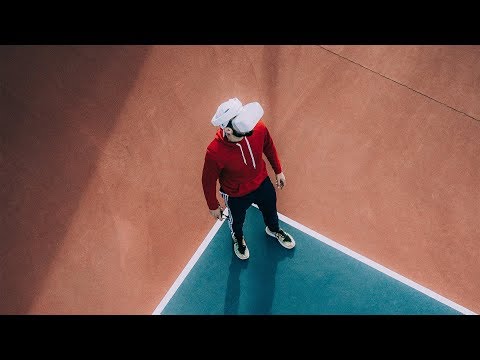
The Future Of Virtual Reality | Dr Sarah Jones | Modern Wisdom Podcast 110
Chris Williamson (host), Dr Sarah Jones (guest), Narrator
In this episode of Modern Wisdom, featuring Chris Williamson and Dr Sarah Jones, The Future Of Virtual Reality | Dr Sarah Jones | Modern Wisdom Podcast 110 explores immersive Storyliving, Not Storytelling: How VR Will Transform Experience Itself Dr. Sarah Jones, the first PhD in immersive storytelling, discusses how virtual and augmented reality shift narratives from 'storytelling' to 'storyliving' by placing users inside experiences rather than in front of screens. She explains why simply porting old formats into new tech (like 360 versions of TV news) fails, and argues creators must design from the experiential perspective first. The conversation covers current hardware (Oculus Quest, Vive, HoloLens), social and location-based VR experiences, and emerging use cases such as empathy-building, journalism, theater and education. They also explore ethical concerns around manipulation, harassment, privacy, and regulation as immersive tech becomes more persuasive and ubiquitous.
Immersive Storyliving, Not Storytelling: How VR Will Transform Experience Itself
Dr. Sarah Jones, the first PhD in immersive storytelling, discusses how virtual and augmented reality shift narratives from 'storytelling' to 'storyliving' by placing users inside experiences rather than in front of screens. She explains why simply porting old formats into new tech (like 360 versions of TV news) fails, and argues creators must design from the experiential perspective first. The conversation covers current hardware (Oculus Quest, Vive, HoloLens), social and location-based VR experiences, and emerging use cases such as empathy-building, journalism, theater and education. They also explore ethical concerns around manipulation, harassment, privacy, and regulation as immersive tech becomes more persuasive and ubiquitous.
Key Takeaways
Design VR from the experience outward, not the story backward.
Jones argues creators must begin by asking, “What experience do I want someone to have in this place? ...
Get the full analysis with uListen AI
Don’t just port old formats into new platforms.
She criticizes early VR attempts like 360 news reports that copied TV-style reporting, missing the chance to rethink framing, audience perspective, and presence when the viewer is placed on the scene.
Get the full analysis with uListen AI
VR removes the frame and hands control to the audience.
In immersive environments there is no fixed frame; different viewers can focus on different elements, experience the piece in divergent ways, and even resist creator cues—demanding a mindset shift for control-oriented directors.
Get the full analysis with uListen AI
Location-based and social VR currently offer the most compelling uses.
Experiences like The VOID or ‘War of the Worlds’ in London combine headsets with actors, sets, haptics, scent, heat, and group dynamics, creating richer, theater-like events than typical at-home headset use.
Get the full analysis with uListen AI
Augmented reality is likely to scale faster than home VR.
Because AR can run on phones and future glasses or lenses, Jones expects everyday uses like education, shared yet personalized screens, and holographic overlays to outpace mass adoption of intrusive, heavy headsets.
Get the full analysis with uListen AI
Immersive media can measurably shift attitudes and behavior.
Studies on homelessness, refugees, and gender-swapping in VR show stronger long-term empathy and behavioral change compared to flat media, which raises both opportunities for prosocial impact and risks of manipulation.
Get the full analysis with uListen AI
We must anticipate harassment, addiction, and regulation issues early.
Social VR already reports high rates of perceived harassment, especially among women, and existing laws lag behind; Jones emphasizes learning from social media’s missteps so immersive spaces don’t repeat them at greater intensity.
Get the full analysis with uListen AI
Notable Quotes
“I usually say it's immersive story living… you live it in whatever way you want, therefore it's story living.”
— Dr. Sarah Jones
“What can I do that I can only do because of this technology?”
— Dr. Sarah Jones
“There is no frame. I can make something and have 10 different people watch it in 10 completely different ways.”
— Dr. Sarah Jones
“We owe it to the tech to make it great and to break it and find new ways of using it.”
— Dr. Sarah Jones
“It comes down to that question of how real is the virtual, really? And if we can’t decipher what’s real and what’s not, that can be just as bad.”
— Dr. Sarah Jones
Questions Answered in This Episode
How should ethical guidelines and regulation evolve to address brain-hacking and behavioral manipulation as immersive tech becomes more persuasive?
Dr. ...
Get the full analysis with uListen AI
What concrete narrative techniques work best for designing experiences that prioritize 'storyliving' rather than linear storytelling?
Get the full analysis with uListen AI
In what domains—education, mental health, training, journalism—does immersive media offer the highest upside compared to traditional formats?
Get the full analysis with uListen AI
How can platforms and designers reduce harassment and protect boundaries in social VR without stifling genuine interaction and anonymity?
Get the full analysis with uListen AI
What might a mainstream, everyday AR future look like in practice when holograms, glasses, or lenses become as common as smartphones?
Get the full analysis with uListen AI
Transcript Preview
(wind blowing) I am joined by Dr. Sarah Jones, and before the podcast we've been nerding out on all of the different gadgets and stuff that we've got floating around our house, so that is going to be the continuation of today's episode. Sarah, welcome to the show.
Thank you very much for having me.
It's a pleasure to have you on. You have the world's first PhD in immersive storytelling.
Correct.
What's that? What, what-
(laughs) Uh, uh-
... what does that mean?
... I'm, I'm sure I won't be the, the, the... I won't be the only one for very long. I'm sure there'll be lots more coming up right behind me, um, with regard to immersive storytelling, and I usually say it's immersive story living, um, as a way to kind of define it a little bit more. But basically, what I do is grab any tech that I can and break it to find a new way of having a story. Um, so story living is all around that kind of immersive experience, um, where it's completely rooted in the experience, in the experiential, so therefore you can't really have a told story. It's not really a directed narrative, um, so you gotta break it apart, and then you live it in whatever way you want, therefore it's story living. Um, so yeah, I, I did my PhD, I got my PhD in story living, um, the first one, um, but yeah, it's pretty good.
That's fun. So, what are some of the examples of, of the, the kind of technologies that you work with?
Um, I've always experimented with, with whatever I can get my hands on, really. So my background was in television journalism, so I was a reporter for, like, 10 years, um, traveled all the way around the world telling stories, and I always wanted to just get closer to those stories. Um, I wanted to find a way of really taking the audience and putting them in the heart of it. So I was right at the start of the mobile phone movement, um, of mobile phone filmmaking, um, and shooting and editing everything on your phones, um, and I found that that could get you closer, um, but it still wasn't close enough 'cause whenever you're watching anything, there's this barrier, and that barrier's the screen, and it's always in the way. Um, and then when I did my first kind of VR experience, I was like, "Ha ha, this is it. Now I can take you, the audience, and I can plonk you in the center of the story, and you're there, and you experience it then yourself." Um, so from all kinds of things, from normal film to, um, AR to VR to 360 film, which is obviously the easiest way to experiment, um, but at the moment, I'm, I'm really fascinated with holograms and what you can do with those. Um, and I haven't made anything decent.
Install uListen to search the full transcript and get AI-powered insights
Get Full TranscriptGet more from every podcast
AI summaries, searchable transcripts, and fact-checking. Free forever.
Add to Chrome