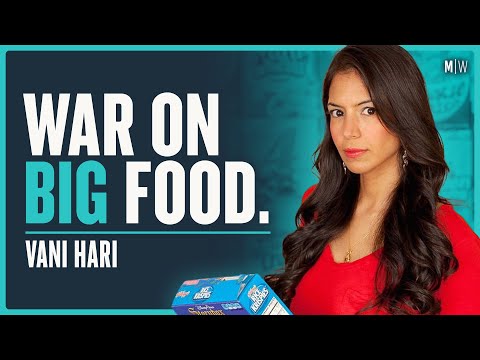
Exposing The Food Industry’s Dangerous Lies - Vani Hari
Chris Williamson (host), Vani Hari (guest)
In this episode of Modern Wisdom, featuring Chris Williamson and Vani Hari, Exposing The Food Industry’s Dangerous Lies - Vani Hari explores activist Vani Hari Exposes Toxic Double Standards In Global Food Supply Vani Hari (“Food Babe”) describes her campaigns against major food corporations, focusing on Kellogg’s continued use of artificial dyes and BHT in U.S. cereals while selling cleaner versions abroad.
Activist Vani Hari Exposes Toxic Double Standards In Global Food Supply
Vani Hari (“Food Babe”) describes her campaigns against major food corporations, focusing on Kellogg’s continued use of artificial dyes and BHT in U.S. cereals while selling cleaner versions abroad.
She argues that many food additives exist primarily to boost profit—making products cheaper, more durable, and hyper‑palatable—rather than to support health, and criticizes the FDA’s lax, industry‑influenced oversight.
Hari details how tobacco-style tactics, front groups, and character assassination are used to silence critics, recounting personal attacks and surveillance she’s faced from industry-linked organizations.
She promotes a practical shift toward “real food”: reading ingredient lists, avoiding seed oils, dyes, and preservatives, cooking simply at home, and treating processed foods as rare exceptions rather than daily staples.
Key Takeaways
Demand the same ingredient standards U.S. companies use abroad.
Brands like Kellogg’s, McDonald’s, and others already manufacture cleaner, dye‑free, lower‑additive products for Europe, Canada, and elsewhere; pressuring them to align U. ...
Get the full analysis with uListen AI
Use ingredient lists as your primary decision tool.
Hari recommends three questions before eating: What are the ingredients? ...
Get the full analysis with uListen AI
Minimize seed oils, high‑fructose corn syrup, and artificial dyes.
She highlights industrial seed oils (canola, soy, corn, cottonseed), HFCS, and dyes like Red 40/Red 3 and preservatives like BHT/TBHQ as major concerns linked to metabolic issues, cancer, endocrine disruption, and immune effects; preferring olive, avocado, coconut oil, butter, and whole sweeteners can significantly reduce exposure.
Get the full analysis with uListen AI
Recognize that many processed foods are engineered to be addictive.
Modern food design borrows from tobacco science—using textures that disappear quickly, bliss‑point flavor profiling, and umbrella labels like “natural flavors” to make you eat more than you intend, overriding normal satiety signals.
Get the full analysis with uListen AI
Don’t assume FDA approval equals rigorous independent safety testing.
Many additives are deemed “Generally Recognized as Safe” (GRAS) using manufacturer‑produced data, often without modern, independent review; some colorings haven’t been meaningfully re‑evaluated in decades despite massive increases in consumption.
Get the full analysis with uListen AI
Treat real‑food eating as a lifestyle, not a temporary “diet.”
Hari argues that elimination or fad diets work mainly because they incidentally cut processed foods; consistently basing your intake on whole, minimally processed foods (with <10% of calories ultra‑processed) is what best sustains weight, energy, and health long term.
Get the full analysis with uListen AI
Plan simple, repeatable meals and default “fast food” at home.
To overcome convenience barriers, she suggests having 5–6 go‑to 30‑minute meals and a daily smoothie built from real ingredients and clean protein, plus carrying simple one‑ingredient snacks (fruit, nuts) to avoid last‑minute fast‑food reliance.
Get the full analysis with uListen AI
Notable Quotes
“We’ve created a toxic soup. Over the last 50 or so years, the majority of food chemicals put into our food supply have been invented for one sole purpose, and that’s to improve the bottom line of the food industry.”
— Vani Hari
“If you can make your product safer, then you should do that, and not doing it is anti‑American, especially when it’s an American company doing this.”
— Vani Hari
“Our entire food system has been weaponized against the human body.”
— Vani Hari
“There is nobody at the FDA testing anything. They actually look at the data that the food companies themselves produce and they just let it be called ‘generally regarded as safe.’”
— Vani Hari
“You will not find out who you are meant to be in this world and give back in the way you’re supposed to until you get your body completely clean of all of these chemicals.”
— Vani Hari
Questions Answered in This Episode
How strong is the independent scientific consensus on the specific health risks of dyes, BHT, and other additives that Hari targets, and where is the evidence still uncertain?
Vani Hari (“Food Babe”) describes her campaigns against major food corporations, focusing on Kellogg’s continued use of artificial dyes and BHT in U. ...
Get the full analysis with uListen AI
What concrete policy or regulatory reforms would most effectively reduce harmful additives without making food unaffordable for low‑income consumers?
She argues that many food additives exist primarily to boost profit—making products cheaper, more durable, and hyper‑palatable—rather than to support health, and criticizes the FDA’s lax, industry‑influenced oversight.
Get the full analysis with uListen AI
How can individuals realistically balance vigilance about ingredients with avoiding health anxiety or perfectionism around food in everyday social situations?
Hari details how tobacco-style tactics, front groups, and character assassination are used to silence critics, recounting personal attacks and surveillance she’s faced from industry-linked organizations.
Get the full analysis with uListen AI
Given that many companies already make cleaner international formulas, what leverage—consumer, legal, or political—has proven most effective in forcing U.S. reformulation?
She promotes a practical shift toward “real food”: reading ingredient lists, avoiding seed oils, dyes, and preservatives, cooking simply at home, and treating processed foods as rare exceptions rather than daily staples.
Get the full analysis with uListen AI
To what extent are rising chronic diseases driven by specific chemicals versus overall dietary patterns, inactivity, and broader lifestyle factors—and how should that shape personal priorities?
Get the full analysis with uListen AI
Transcript Preview
What's happening with you and Kellogg's?
Kellogg's, so two weeks ago, on October 15th, I went to Kellogg's headquarters with 400,000 signatures, took them to Kellogg's front door to ask them to remove artificial food dyes and BHT from their cereals that they produce here in the United States, but don't do this for countries like Canada, all of the countries in Europe, Australia, India. So basically using one set of ingredients here in the United States that are more toxic and harmful towards little children, because artificial food dyes are linked to hyperactivity. They require a warning label, a cigarette-type warning label in Europe when a product has artificial food dyes that says, "May cause adverse effects on activity and attention in children." They've seen that when they study these different artificial food dyes, they contain carcinogens, so they're linked to cancer. They cause autoimmune disorders, eczema, (laughs) asthma, and also the chemical BHT, which is an endocrine disrupting chemical that you find in the lining of cereal bags as a preservative. They use that here in the United States, but they don't use that in other countries. So I've been demanding that Kellogg's sell us the same safer versions of their cereals that they serve in other countries. And I've been doing this for a really long time. Uh, I've been doing it since t- t- for over a decade. In 2015, Kellogg's said that they were gonna make these changes. They got worldwide press about making these changes, they got a lot of praise publicly and through the media when they made this announcement, but then they never did it. They said they would do it by 2018, and instead, they created new cereals to, to hook modern children of today, like Baby Shark and Peeps and Little Mermaid and Elf on the Shelf and, and all of these different trick or treat (laughs) type, uh, cereals to, to, to get people to buy their cereals. And it's really sad because not only did they lie to us, they continue to sell American children an inferior, less safe version of their cereals.
Is it true that they make those cereals in the same factories as the cereals that don't have those same dyes in? Is there any truth to that?
At one point, I believe the Canadian cereal was being produced here in the United States and they were shipping it over, uh, over the border. Uh, I think now they have-
So it's e- evidently they-
... they have a Canadian manufacturer now, uh, a fa- a factory, but, uh, but yeah, (laughs) yeah, that, that was-
They had the capacity to do it. So-
Um-
... you know, we're gonna talk a lot today about some of the more nefarious activities maybe of people's favorite High Street food brands and stuff like that. Why? Why do brands do this? Is it cheaper? Is it laziness? Is it something, uh, g- new world order trying to sterilize the population? What's your, uh, reasoning behind this? What's your justification that you think they're doing it for?
Install uListen to search the full transcript and get AI-powered insights
Get Full TranscriptGet more from every podcast
AI summaries, searchable transcripts, and fact-checking. Free forever.
Add to Chrome