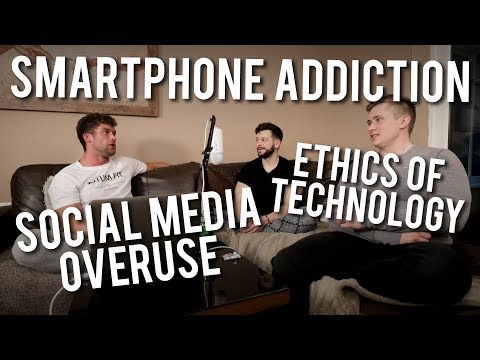
A Hacker In Your Pocket | How Your Smartphone Is Short Circuiting Your Brain
Chris Williamson (host), Jonny (guest), Yusef (guest), Narrator
In this episode of Modern Wisdom, featuring Chris Williamson and Jonny, A Hacker In Your Pocket | How Your Smartphone Is Short Circuiting Your Brain explores smartphones Exploit Your Brain: How Apps Hijack Time And Attention Chris Williamson talks with Yusuf and Johnny about how smartphones and social media are deliberately engineered to hijack human attention using cognitive biases and persuasion tactics. They argue that tech platforms run an arms race for attention, optimizing endlessly for time-on-site rather than user well‑being, and compare notification design to slot machines and gambling psychology. The conversation mixes humor with concern, highlighting addiction-like behaviors, echo chambers, outrage-driven feeds, and the erosion of boredom and introspection. They finish by sharing practical strategies—technical, behavioral, and environmental—for regaining control over phone use and making screen time genuinely “time well spent.”
Smartphones Exploit Your Brain: How Apps Hijack Time And Attention
Chris Williamson talks with Yusuf and Johnny about how smartphones and social media are deliberately engineered to hijack human attention using cognitive biases and persuasion tactics. They argue that tech platforms run an arms race for attention, optimizing endlessly for time-on-site rather than user well‑being, and compare notification design to slot machines and gambling psychology. The conversation mixes humor with concern, highlighting addiction-like behaviors, echo chambers, outrage-driven feeds, and the erosion of boredom and introspection. They finish by sharing practical strategies—technical, behavioral, and environmental—for regaining control over phone use and making screen time genuinely “time well spent.”
Key Takeaways
Your phone is designed to capture you, not to serve you.
Behind every app interaction is a combination of high-powered data analysis and design teams whose economic incentive is to maximize your time on their platform, not your long-term well‑being or goals.
Get the full analysis with uListen AI
Variable rewards make notifications as addictive as slot machines.
Features like delayed notification loading and unpredictable likes or mentions mimic casino-style variable reward schedules, which are proven to drive compulsive behavior and repeated checking.
Get the full analysis with uListen AI
Most people underestimate how much of their life is spent on their phone.
Using tracking apps like Moment or RescueTime reveals that even self-aware users can spend a third of their waking hours on their phones, often on activities they later regret.
Get the full analysis with uListen AI
Outrage and emotionally charged content dominate your feeds by design.
Because angry, polarizing posts generate more clicks and engagement, algorithms preferentially surface them, reinforcing echo chambers and a more negative mental environment over time.
Get the full analysis with uListen AI
Make bad digital choices harder and good ones easier.
Practical steps—moving social apps off the home screen, disabling most notifications, using newsfeed blockers, or even using a ‘dumb’ phone periodically—reduce friction to better habits and increase friction to mindless scrolling.
Get the full analysis with uListen AI
Protect the bookends of your day from your phone.
Keeping the phone away from your bed, using a separate alarm clock, and setting rules like ‘no phone until after morning routines’ prevents your lowest-willpower moments from being hijacked by apps.
Get the full analysis with uListen AI
Boredom and downtime are essential for introspection and mental health.
Constantly filling every idle moment with phone use erodes the quiet periods where self-reflection and deeper thinking occur, which has broader implications for focus, creativity, and emotional balance.
Get the full analysis with uListen AI
Notable Quotes
“Your phone is stealing your time, and that's the one resource that we can't get any of it back.”
— Chris Williamson
“Behind every click of a button, there's a thousand software engineers who have designed the particular route you’ve taken to get you to click on that thing.”
— Chris Williamson
“Manipulating someone to be addicted to using an app or compulsively checking their phone is a war crime in comparison.”
— Chris Williamson
“We require exceptional willpower to stay on task. The rabbit hole you tumble down—that’s by design.”
— Yusuf
“Make the good decision as easy as possible and make the bad decision as hard as possible.”
— Yusuf
Questions Answered in This Episode
How can we realistically measure which parts of our phone use are truly ‘time well spent’ versus subconsciously manipulated?
Chris Williamson talks with Yusuf and Johnny about how smartphones and social media are deliberately engineered to hijack human attention using cognitive biases and persuasion tactics. ...
Get the full analysis with uListen AI
What structural or regulatory changes, if any, should be imposed on tech companies that profit from maximizing time-on-device?
Get the full analysis with uListen AI
How does constant exposure to outrage-driven content reshape our beliefs, mood, and sense of reality over months and years?
Get the full analysis with uListen AI
Could deliberately embracing boredom and offline time improve focus and happiness, and how might someone start experimenting with that?
Get the full analysis with uListen AI
What would a smartphone and social media ecosystem look like if it were designed primarily around user well-being instead of ad revenue?
Get the full analysis with uListen AI
Transcript Preview
(wind blowing) Hi, friends. So it's been a couple of weeks since the last episode. I know that I promised (laughs) I was going to do one every single week, and I've, uh, fallen within the first month of that. However, I have a good excuse. I was away in Palma on a yacht and then in Dubai with my dad. It's a hard life, I know. (laughs) This week I'm sitting down with Yusuf and Johnny from Propain Fitness, and this is probably my most anticipated episode to date. When I say "mine," I mean by myself, not by anybody else. Um, we're gonna be discussing the ethical use of technology and how social networks, social media manipulates our cognitive biases and uses unseen persuasion techniques to keep you on site. Now all of this might sound a little tinfoil-hatty, but I promise you it's not. It is, as far as I'm concerned, probably one of the biggest and most important issues that we've got going on at the moment if you think about how ubiquitous phone use is amongst everybody on the planet. The Cambridge Analytica scandal which recently came out where it turned out that some users on Facebook's data had been illegally acquired and manipulated caused absolute uproar. And all that was happening there was people were being targeted with ads, and some of their data had been stolen. Your phone is stealing your time, and that's the one resource that we can't get any of it back. That, to me, is a much bigger scandal that needs to be spoken about. Our phones are with us more than any partner, any friend, any family member, any pet, probably any other item that we own. They're with us every single step of the way, and they're possessions that we cherish to a degree and that we live our lives through. They're a window between us and the world. They mediate our experience of the external world. And they manipulate our experience and our judgment of other people, both celebrity and friend. It's something that we put an awful lot of faith into. And yet our brains are being hacked by billion-dollar companies, and behind every press of every button on your phone, there is a team of software engineers who have manipulated you into pressing that particular button in order to keep you on site because they need your attention because that is how the money is made on that particular platform. (inhales) So hopefully you'll come out of this understanding the tactics that are being used to keep you on your phone. You'll be more aware of why and how this is happening. And also we will give you some tips and some strategies that you can implement to mitigate the amount of time that you get trapped within your phone. So without further ado, here we go.
I think someone was selling a dildo on Facebook Marketplace yesterday. Rampant Rabbit.
Who, that, did you, is that the thing where you said-
Install uListen to search the full transcript and get AI-powered insights
Get Full TranscriptGet more from every podcast
AI summaries, searchable transcripts, and fact-checking. Free forever.
Add to Chrome