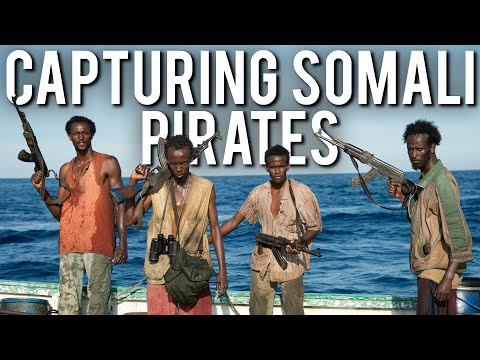
Lessons From Afghanistan & Capturing Somali Pirates | Roderic Yapp | Modern Wisdom Podcast 133
Roderic Yapp (guest), Chris Williamson (host)
In this episode of Modern Wisdom, featuring Roderic Yapp and Chris Williamson, Lessons From Afghanistan & Capturing Somali Pirates | Roderic Yapp | Modern Wisdom Podcast 133 explores war Lessons, Somali Pirates, And Leadership Principles For Modern Life Former Royal Marines officer Roderic Yapp recounts his experiences in Afghanistan, Libya, and anti-piracy operations off Somalia, and how they reshaped his understanding of human nature, risk, and culture. He describes harrowing incentives-gone-wrong in Afghanistan and the stark realities of ungoverned places where survival overrides Western moral assumptions.
War Lessons, Somali Pirates, And Leadership Principles For Modern Life
Former Royal Marines officer Roderic Yapp recounts his experiences in Afghanistan, Libya, and anti-piracy operations off Somalia, and how they reshaped his understanding of human nature, risk, and culture. He describes harrowing incentives-gone-wrong in Afghanistan and the stark realities of ungoverned places where survival overrides Western moral assumptions.
Yapp explains Somali piracy as a rational business model rather than fanatical extremism, detailing how pirates operate, how ships are taken and retaken, and how incentives (including European prison conditions) subtly shape behavior.
The conversation then pivots to leadership and organizational life: the power of accountability, clear intent, standards, and truly knowing your people, contrasted with disengagement and poor promotion practices in the corporate world.
Throughout, Yapp and host Chris Williamson explore broader themes of historical context, moral judgment, gratitude for modern Western life, and the difficulty of holding both appreciation and ambition for improvement at the same time.
Key Takeaways
Be extremely careful what you incentivize and measure.
The U. ...
Get the full analysis with uListen AI
Context can radically change what people are willing to do.
Yapp argues that many who insist they ‘could never kill’ would act violently to protect a loved one, and that in fragile environments survival pressures push ordinary people toward actions that look monstrous from a safe, affluent context.
Get the full analysis with uListen AI
Somali piracy is fundamentally an economic business model, not fanaticism.
Pirates weigh risk versus reward and target vulnerable ships with low freeboard, no armed guards, and poor defenses; when the risk becomes too high due to security measures, attacks drop, underscoring that incentives drive their behavior.
Get the full analysis with uListen AI
Real leadership is about intent and enabling others, not control.
In the Marines, leaders set a clear end state and leave the ‘how’ to subordinates, preserving initiative and unpredictability; in business, too many ‘leaders’ remain doers instead of focusing on improving team performance.
Get the full analysis with uListen AI
Accountability and standards dramatically change team performance.
Yapp misses the military’s culture where commitments are reliably kept, standards of behavior are enforced peer-to-peer, and the group’s needs consistently outrank individual comfort—conditions that are rare but transformative in corporate life.
Get the full analysis with uListen AI
You cannot effectively lead people you don’t genuinely know.
Most managers know little about their team members’ backgrounds, ambitions, or lives, which silently signals that they don’t care; Yapp recommends structured conversations to understand people’s goals so leaders can align opportunities with them.
Get the full analysis with uListen AI
We must hold two truths: life is better than ever, and still improvable.
While data show massive global progress in poverty, violence, and health, Williamson and Yapp argue that we still have a duty to scrutinize current failings by today’s standards, not only by comparison to worse places or times.
Get the full analysis with uListen AI
Notable Quotes
“It's an accident of history to be born in the UK and how lucky I am.”
— Roderic Yapp
“Be very careful what you measure and the way in which you incentivize people.”
— Roderic Yapp
“Given the right situation, people are capable of some fairly unpleasant and violent things.”
— Roderic Yapp
“You don’t get to decide whether you’re a good leader or not, other people do.”
— Roderic Yapp
“We are living in the best time that there ever has been… whilst we can be better.”
— Chris Williamson
Questions Answered in This Episode
How should policymakers design humanitarian or compensation programs in conflict zones to avoid the kind of perverse incentives described in Afghanistan?
Former Royal Marines officer Roderic Yapp recounts his experiences in Afghanistan, Libya, and anti-piracy operations off Somalia, and how they reshaped his understanding of human nature, risk, and culture. ...
Get the full analysis with uListen AI
To what extent should our moral judgments of people in places like Afghanistan or Somalia be tempered by viewing them as living in a different ‘historical era’ rather than just a different geography?
Yapp explains Somali piracy as a rational business model rather than fanatical extremism, detailing how pirates operate, how ships are taken and retaken, and how incentives (including European prison conditions) subtly shape behavior.
Get the full analysis with uListen AI
What practical steps can a typical manager take in the next 30 days to import military-style accountability and clarity of intent into a non-military organization?
The conversation then pivots to leadership and organizational life: the power of accountability, clear intent, standards, and truly knowing your people, contrasted with disengagement and poor promotion practices in the corporate world.
Get the full analysis with uListen AI
How can societies encourage honest, exploratory discussion on sensitive topics without participants living in fear of permanent public backlash from old statements or half-formed ideas?
Throughout, Yapp and host Chris Williamson explore broader themes of historical context, moral judgment, gratitude for modern Western life, and the difficulty of holding both appreciation and ambition for improvement at the same time.
Get the full analysis with uListen AI
If 85% of workers are disengaged, is the core problem individual misfit, poor leadership, structural flaws in modern work, or some combination—and how might each be addressed?
Get the full analysis with uListen AI
Transcript Preview
If we got into a firefight and some civilians got injured, we would allow them to come into the base. We'd patch them up and we'd give them US dollars. Um, and so it's sort of, sort of a really kind of blunt compensation tool. And this was kind of when I really early on learnt that lesson of be very careful what you measure and the way in which you incentivize people. Because after a while, we started to get the same girl coming in over and over again, and the boss sort of sat us down and said, you know, "You guys haven't been in a firefight. There's been no contact in the area in the last sort of few days. Am I right in thinking that?" And I was like, "Yeah, 100%, nothing. No fights with the Taliban." He said, "Okay. So why is this girl coming in with fresh gunshot wounds?" On closer inspection, we realized that they're not 5.56 rounds, they're 7.62, so it's not our ... it's unlikely to be our weapon systems that are causing these. And what we found out was that this girl's family were effectively shooting her, bringing her in, and using her as a cash cow to make money. And then when we realized the game was up and we weren't doing this anymore, they shot her with an RPG, and she came in with no lower jaw. And I remember thinking, like, couple of things. A, it's an accident of history to be born in the UK and how lucky I am, and B, I don't ******* understand this place.
(wind blowing) I'm joined by Roderick Yapp, former Royal Marines Officer, now moved into business, so we're gonna be talking about some of your background today. Also, about how that's translated across into this new, the new world that you've stepped into. One that's even more dangerous, even more vicious (laughs) than the one that you were in before. Roderick-
(laughs)
... welcome to the show.
Thanks very much, Chris. Very happy to be here.
Looking forward to speaking to you. So, give us a bit of background. What- what's your heritage? Where do you come from, and what did you do?
So, um, my first career was as an officer in the Royal Marines. Um, I left university in 2003, 2004, struggling to remember now, um, really with an aspiration to do sort of something completely different, um, and I remember ... There were a number of reasons that sort of, you know, caused me to go down that route, but fundamentally it really was sort of seeking a challenge and trying to do something that was different, um, and I've found in life that, you know, if you, if you're faced with a series of sort of paths, choose the one that's the most difficult, because then you're gonna learn the most about yourself, um, and ultimately, that's- that's what I chose to do. So I joined up in 2005. I served for seven years, um, and was lucky enough to go to Afghanistan, um, got civilians out of Libya in 2011 during the Arab Spring, and then towards the end of my time, specialized in counter-piracy and did a couple of tours off the coast of, uh, Somalia and the Indian Ocean. So, uh, had an absolutely fantastic time, um, left when I turned 30 for a sort of number of reasons, ch- primarily kind of domestic, got married in my final year, didn't really wanna be an absent parent, um, and have since then, um, been working in the corporate world before starting my own business.
Install uListen to search the full transcript and get AI-powered insights
Get Full TranscriptGet more from every podcast
AI summaries, searchable transcripts, and fact-checking. Free forever.
Add to Chrome