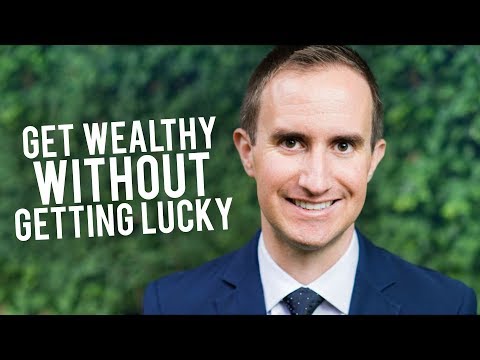
How To Create & Manage Your Personal Wealth | Morgan Housel | Modern Wisdom Podcast 142
Morgan Housel (guest), Chris Williamson (host)
In this episode of Modern Wisdom, featuring Morgan Housel and Chris Williamson, How To Create & Manage Your Personal Wealth | Morgan Housel | Modern Wisdom Podcast 142 explores morgan Housel Redefines Wealth: Time, Freedom, Not Flashy Ferraris Morgan Housel argues that the deepest value of wealth is not status or luxury goods, but the ability to control your time—doing what you want, when you want, with whom you want.
Morgan Housel Redefines Wealth: Time, Freedom, Not Flashy Ferraris
Morgan Housel argues that the deepest value of wealth is not status or luxury goods, but the ability to control your time—doing what you want, when you want, with whom you want.
He distinguishes being ‘rich’ (high income) from being ‘wealthy’ (substantial unspent assets and savings), emphasizing that wealth is mostly what you don’t see: the car, house, or lifestyle you could afford but choose not to buy.
The conversation explores how luck, upbringing, ego, and social context shape our financial outcomes and spending habits, and why living below your means is more powerful than chasing higher income.
They also cover Bitcoin and investing psychology, explaining why emotional resilience, long time horizons, and accepting volatility as the ‘price of admission’ matter more than forecasts or market predictions.
Key Takeaways
Define wealth as control over your time, not possessions.
Lasting happiness from money comes less from owning luxury goods and more from waking up able to decide how you spend your day—wealth is most powerful when it buys autonomy and flexibility.
Get the full analysis with uListen AI
Distinguish being rich from being truly wealthy.
Rich is a high income; wealthy is having assets and savings you haven’t spent. ...
Get the full analysis with uListen AI
Remember that real wealth is what you don’t see.
We tend to copy visible consumption (cars, houses, clothes) but cannot see the unspent money. ...
Get the full analysis with uListen AI
Consciously live below your means to build a safety margin.
The most powerful financial lever is spending less than you earn, regardless of income level. ...
Get the full analysis with uListen AI
Accept luck and starting position as huge, often invisible factors.
Family background, education, early opportunities, and sheer randomness (good and bad) heavily influence financial outcomes. ...
Get the full analysis with uListen AI
Treat volatility as the price of admission for higher returns.
In investing, you are paid to endure uncertainty and drawdowns. ...
Get the full analysis with uListen AI
Align investments with what you can emotionally hold through downturns.
Owning assets you understand and even ‘love’ increases your odds of staying invested during bear markets, which is far more important than finding perfect forecasts, hot tips, or complex strategies.
Get the full analysis with uListen AI
Notable Quotes
“What wealth can really do for you… is use it to control your time: to do what you want, when you want, with who you want, for as long as you want.”
— Morgan Housel
“Wealth is the Ferrari that you did not buy. It’s the square footage of your house that you didn’t choose.”
— Morgan Housel
“Camping is fun. Being homeless is miserable. The difference is that one is a choice and one is being forced.”
— Morgan Housel (via his mother-in-law’s example)
“Rich is a big income; wealthy is assets in the bank you can spend in the future.”
— Morgan Housel
“In any asset, you get paid to deal with uncertainty. That’s the price of admission in investing.”
— Morgan Housel
Questions Answered in This Episode
If I defined wealth primarily as control of my time, how would that change my career and spending decisions over the next five years?
Morgan Housel argues that the deepest value of wealth is not status or luxury goods, but the ability to control your time—doing what you want, when you want, with whom you want.
Get the full analysis with uListen AI
Which parts of my lifestyle today are driven by ego, status, or mimicking others rather than my genuine preferences?
He distinguishes being ‘rich’ (high income) from being ‘wealthy’ (substantial unspent assets and savings), emphasizing that wealth is mostly what you don’t see: the car, house, or lifestyle you could afford but choose not to buy.
Get the full analysis with uListen AI
How big is the gap between what I need to spend to feel content and how much my income could realistically fall—and what can I do to widen that gap?
The conversation explores how luck, upbringing, ego, and social context shape our financial outcomes and spending habits, and why living below your means is more powerful than chasing higher income.
Get the full analysis with uListen AI
Am I investing in assets I understand well enough, and believe in strongly enough, to hold through a 30–50% drop without panicking?
They also cover Bitcoin and investing psychology, explaining why emotional resilience, long time horizons, and accepting volatility as the ‘price of admission’ matter more than forecasts or market predictions.
Get the full analysis with uListen AI
How might acknowledging the role of luck and starting position in my financial life change the way I set goals, judge my progress, or view other people’s wealth or poverty?
Get the full analysis with uListen AI
Transcript Preview
And I think at the highest level, what I've thought about in terms of wealth, and that I really believe in terms of wealth and- and studying this stuff for so many years, and studying other wealthy people and thinking about money myself, is I think what wealth can really do for you that will legitimately make most people happy is to the extent that you can use wealth to control your time. To give yourself options, to let you do what you want, when you want, with who you want, for as long as you want to. That is wealth's great power.
Mr. Morgan Housel in the building. How are you, man?
I'm- I'm good. Thanks for having me. I'm excited to be here. Thanks, Chris.
Yeah. Me too. Me too. We're talking wealth today, right? Everyone- everyone wants it, but I don't know how to get it.
It's- it's very elusive.
(laughs)
And it's not even that people don't know how t- to get it. I think it's a lot of people don't even think about defining what it is or what it's gonna mean to them, or what it could do for them, or why they want it. I think a lo- there's just a natural urge to want more of it, but answering the question why, it seems like a funny question to a lot of people. Like, of course I wanna be wealthy. Why- why would you even ask? But you start getting these like more philosophical questions of like, why do you wanna be wealthy? Is it a status thing? Is it because you want more stuff? Is it because you want more control over your time? Is it because you think it's gonna erase problems that, you know, that you currently have in your life? If you had more money, those problems would go away? And I think there's a lot of different elements to that. And I think at the highest level, what I've thought about in terms of wealth, and that I really believe in terms of wealth and- and studying this stuff for so many years, and studying other wealthy people and thinking about money myself, is I think what wealth can really do for you that will legitimately make most people happy, is to the extent that you can use wealth to control your time. To give yourself options, to let you do what you want, when you want, with who you want, for as long as you want to. That is wealth's great power that it can do for us. But that's usually not what people think about wealth wanting to do for them. Usually what they think about it is, more stuff. Bigger house, nicer car, better clothes, maybe some travel whatnot. And there's nothing wrong with that. I like fancy cars, I like big homes, I like it all. Um, but we just have so much evidence. It's almost- it's- it's- it's almost cliché at this point to say, you know, buying the bigger house and the fancier car will make people happy. We have a lot of evidence on that. That there's this hedonic treadmill that people, when they're anticipating getting the Ferrari, that's really exciting. But then they actually get it and they say, "Eh, it's just a car. It's just got a steering wheel and whatnot." And there's a- a lot of different elements to that. I think what's really ... This is something I learned when I used to be a valet at a- at a fancy hotel in Los Angeles when I was in college. These people would come in driving their Ferraris, and I would look at the- I would look at the car and be like, "Wow, that's ... Wouldn't it be cool if I had that car? Wouldn't it be cool if I was driving that Ferrari?" And it took me a while to realize the irony of that thought, which was that those people drove in and I never said, "Wow, that driver, the guy driving the Ferrari, he is really cool. He must be impressive." As an observer, I just said, "I wanna be in that car." I didn't care about the driver.
Install uListen to search the full transcript and get AI-powered insights
Get Full TranscriptGet more from every podcast
AI summaries, searchable transcripts, and fact-checking. Free forever.
Add to Chrome