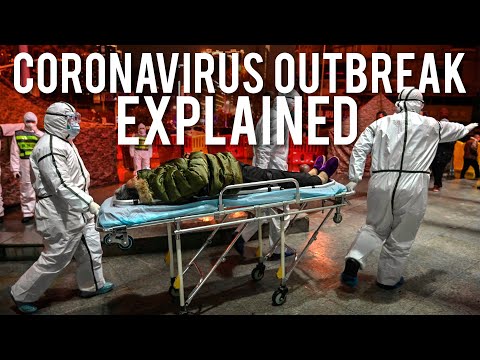
Just How Bad Is COVID-19? | Dr Eric Feigl-Ding | Modern Wisdom Podcast 149
Dr Eric Feigl-Ding (guest), Chris Williamson (host)
In this episode of Modern Wisdom, featuring Dr Eric Feigl-Ding and Chris Williamson, Just How Bad Is COVID-19? | Dr Eric Feigl-Ding | Modern Wisdom Podcast 149 explores epidemiologist Explains Why COVID-19 Is Far Worse Than Flu Dr. Eric Feigl-Ding, an epidemiologist and public health scientist, explains the nature of SARS‑CoV‑2, why it’s so hard to control, and how it differs fundamentally from seasonal flu and earlier coronaviruses like SARS and MERS.
Epidemiologist Explains Why COVID-19 Is Far Worse Than Flu
Dr. Eric Feigl-Ding, an epidemiologist and public health scientist, explains the nature of SARS‑CoV‑2, why it’s so hard to control, and how it differs fundamentally from seasonal flu and earlier coronaviruses like SARS and MERS.
He debunks bioweapon and “just the flu” myths, covers transmission dynamics, mortality estimates, asymptomatic spread, incubation periods, and the severe strain on healthcare systems caused by long, serious cases.
The discussion explores practical personal precautions, the limits of testing and masks, prospects for vaccines and antivirals, and why social distancing and measured preparation (“slow buying,” not panic buying) are crucial.
Feigl-Ding emphasizes that containment is giving way to mitigation in many regions, and that public understanding, behavior change, and clear communication are as important as medical interventions.
Key Takeaways
COVID‑19 is not “just the flu” and is significantly more lethal.
Unlike flu, there is no pre-existing immunity or vaccine, its estimated mortality is roughly 1–3% vs. ...
Get the full analysis with uListen AI
Asymptomatic and pre‑symptomatic transmission make containment extremely difficult.
People can shed virus before they feel ill, so traditional “find, trace, and quarantine after symptoms” methods that worked for SARS are far less effective with COVID‑19, pushing countries toward mitigation strategies.
Get the full analysis with uListen AI
Healthcare systems are at serious risk of being overwhelmed.
Around 20% of known cases become severe or critical with illness lasting 3–6 weeks, occupying ICU beds and ventilators for long periods and stretching even well-resourced systems like Korea and China.
Get the full analysis with uListen AI
Current mortality estimates are pulled in opposite directions by under-diagnosis and outcome lag.
Many mild or asymptomatic infections are never tested (which would lower fatality ratios), but most current patients haven’t yet reached recovery or death (which tends to raise early-point estimates), so final fatality rates remain uncertain but clearly higher than flu.
Get the full analysis with uListen AI
Testing and masks help, but both have important limitations.
PCR tests can miss a large fraction of true positives (many false negatives), including at discharge, and standard surgical masks mainly protect others from your droplets rather than reliably shielding you from inhalation; N95s work better but require proper fit and are scarce.
Get the full analysis with uListen AI
Everyday behavior changes meaningfully reduce risk of infection and transmission.
Avoid handshakes and crowds, limit public transport where possible, don’t touch your face, be cautious with high-touch surfaces, favor social distancing, and stock about two weeks of essentials gradually rather than panic buying.
Get the full analysis with uListen AI
Vaccines and antivirals are promising but not near-term solutions.
A vaccine is at least 12–18 months away and would still need high effectiveness to push R below 1; repurposed antivirals may show results sooner but still require months of trials, so non-pharmaceutical interventions remain central for now.
Get the full analysis with uListen AI
Notable Quotes
“A virus that kills more and kills faster is actually easier to control than a virus that kills slower, kills less, and spreads asymptomatically.”
— Dr. Eric Feigl-Ding
“It’s not just the flu because no one has immunity to this coronavirus and we have no vaccine whatsoever.”
— Dr. Eric Feigl-Ding
“For this virus, the reproductive number is two to four additional people. That is one of the fastest exponential rises you can find for something with no vaccine.”
— Dr. Eric Feigl-Ding
“Just because it’s mild for you doesn’t make this virus any better for the general population.”
— Dr. Eric Feigl-Ding
“Don’t panic buy, slow buy. Prepare with about two weeks of food and water, but don’t create the very shortages you’re afraid of.”
— Dr. Eric Feigl-Ding
Questions Answered in This Episode
How should governments decide when to shift from containment to broad mitigation, and what metrics best signal that tipping point?
Dr. ...
Get the full analysis with uListen AI
Given the high rate of false negatives in current tests, what protocols should be in place before discharging or de‑quarantining patients?
He debunks bioweapon and “just the flu” myths, covers transmission dynamics, mortality estimates, asymptomatic spread, incubation periods, and the severe strain on healthcare systems caused by long, serious cases.
Get the full analysis with uListen AI
What ethical and practical trade‑offs arise when recommending mass social distancing that disrupts economies, education, and daily life?
The discussion explores practical personal precautions, the limits of testing and masks, prospects for vaccines and antivirals, and why social distancing and measured preparation (“slow buying,” not panic buying) are crucial.
Get the full analysis with uListen AI
How can public health communicators balance warning people early and forcefully with avoiding panic and counterproductive behaviors like hoarding?
Feigl-Ding emphasizes that containment is giving way to mitigation in many regions, and that public understanding, behavior change, and clear communication are as important as medical interventions.
Get the full analysis with uListen AI
What long‑term changes to healthcare capacity, surveillance, and global coordination does this pandemic suggest we should implement after it subsides?
Get the full analysis with uListen AI
Transcript Preview
So again, altogether this virus is ... it's, it's a mean little sucker. In certain ways, you know, SARS and MERS, which have much higher mortality, SARS at 10% mortality, MERS at like, um, 50 or 30%, and Ebola has 50%. A virus that kills more and kills faster is actually easier to control than a virus that kills slower, kills less, and spreads asymptomatically. So again, all these reasons why it's just so difficult. (whooshing sound)
Eric, welcome to the show, man.
Thank you. Happy to be here.
Pleasure to have you on. This must feel like a war zone for you at the moment.
Yeah, this epidemic, it's been raging. Um, I think the world woke up to it somewhere in late January, um, but it's, it's gotten really, really bad since. When we, just when we think it couldn't get worse, it's gotten worse. Um, like just yesterday, the total mortality, the total number of deaths outside of China actually exceeded the daily deaths inside of China. Like the curves have crossed, so now the epidemic is actually worse outside of China and it's not stopping.
(sighs) Well, I'm glad that I've got a hold of yourself so that you can try and, uh, give us some signal to cut through the noise that everyone has been seeing online. I recently saw Shane Parrish who's doing the same thing. He's got some coronavirus experts on. And, um, the most common question that people are asking is, is to do with trying to work out where the bullshit ends and the information begins, right? So, um, before we get started, who, who are you? Why, why should we listen to you?
Yeah, so I'm a public health scientist. I've been, uh, a faculty at Harvard for many years and, um, actually I resigned my faculty to run for Congress, but that's a different story. Um, but I, I, I really enjoy, uh, science communication and, you know, public policy and advocacy and especially raising alarm about this. My doctorate was in epidemiology, so the science of epidemics, and although I, I did other chronic disease epidemi, not, you know, infectious diseases epi, it's still in my wheelhouse. And I think sometimes in the world, you know, getting a message out there is something that many scientists are not good at. They know so much in their technical area that, that translating it for the world and making the masses listen, um, is something that's not usually taught and so it's something I really enjoy. And especially for this, um, pandemic now, I think waking people up and waking them up early before the tsunami hits is something we have to do in public health and we have to do way better. So this is why I'm tweeting nonstop about this COVID-19 and trying to make everyone listen.
I get it. Yeah, it's, um, it's interesting that some of the people that are the best qualified to tell us the technicalities and the specifics about what's happening perhaps aren't the best qualified to communicate that out, right? And that's, I, I, I get what you mean when you say about that. So, okay, let's start. What is coronavirus and what's COVID-19? Is that the same thing?
Install uListen to search the full transcript and get AI-powered insights
Get Full TranscriptGet more from every podcast
AI summaries, searchable transcripts, and fact-checking. Free forever.
Add to Chrome