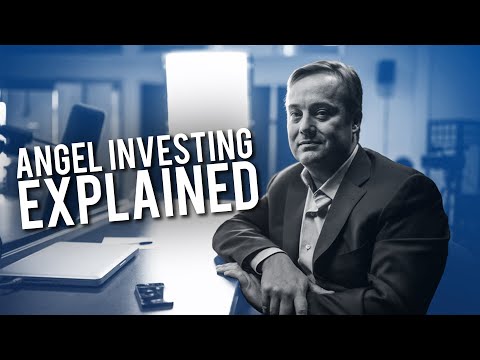
Jason Calacanis | How Does Angel Investing Work? | Modern Wisdom 154
Jason Calacanis (guest), Chris Williamson (host)
In this episode of Modern Wisdom, featuring Jason Calacanis and Chris Williamson, Jason Calacanis | How Does Angel Investing Work? | Modern Wisdom 154 explores jason Calacanis Explains Angel Investing, Chaos, and Founder Psychology Jason Calacanis joins Chris Williamson to unpack how angel investing and venture capital actually work, contrasting scalable tech startups with traditional small businesses.
Jason Calacanis Explains Angel Investing, Chaos, and Founder Psychology
Jason Calacanis joins Chris Williamson to unpack how angel investing and venture capital actually work, contrasting scalable tech startups with traditional small businesses.
He explains portfolio dynamics, survivorship bias, and why investors must embrace chaos while focusing most of their energy on struggling companies rather than winners.
They discuss what makes great podcasters and founders, the collapse of traditional media versus long-form podcasts, and the importance of self-knowledge and superpowers in building companies.
Calacanis also shares his personal background, leadership philosophy, and the future of tech in areas like robotics, housing, and education.
Key Takeaways
Venture capital is for extreme outliers, not normal businesses.
Calacanis likens VC to rocket fuel: it only makes sense for companies with a tiny chance of becoming massive (Uber, Google, Airbnb), not for steady, service-based or local businesses that can thrive without outside capital.
Get the full analysis with uListen AI
Portfolio math means most startup investments fail—but one can pay for all.
In a typical portfolio, 6 of 10 companies go to zero, a few return partial capital, and 1 may return 30x or more; investors must accept high failure rates and place many bets without knowing which will win.
Get the full analysis with uListen AI
Investors spend most of their time on failing, not winning, companies.
Calacanis notes that around 90% of his time goes into the chaotic, struggling startups—helping them find plans, people, and focus—while successful ones mostly require oversight, not intervention.
Get the full analysis with uListen AI
Great founders are defined more by grit and focus than by type.
Introvert vs. ...
Get the full analysis with uListen AI
Authentic, independent voices are winning as traditional media erodes trust.
He argues podcasts are booming because audiences and high-profile guests want nuance, time, and unedited context—something outlets chasing clicks, outrage, and partisan narratives no longer reliably provide.
Get the full analysis with uListen AI
Knowing and leveraging your ‘superpower’ is key to scaling impact.
Calacanis frames success as identifying what you do uniquely well (e. ...
Get the full analysis with uListen AI
The biggest future tech gains may come from “under-technologized” sectors.
He’s particularly interested in robotics outside factories, modular housing, and outcome-focused education models (like income-share programming schools or niche learning platforms) that can radically lower cost and improve access.
Get the full analysis with uListen AI
Notable Quotes
“Life is pretty simple. Just find the best people you can, invest in them, support the heck out of them. If it doesn’t work out and they did a good job, then bet on them again.”
— Jason Calacanis
“Venture capital is like rocket fuel. You wouldn’t put rocket fuel on a Vespa.”
— Jason Calacanis
“One way to think about this job is 99% of my time is spent on the failed companies.”
— Jason Calacanis
“The founders that succeed most often are the ones who are self-possessed and don’t give up.”
— Jason Calacanis
“Podcasting is a reaction to link-baiting, SEO-driven content, content farming, and just the collapse of newspapers and magazines.”
— Jason Calacanis
Questions Answered in This Episode
How can an aspiring angel investor practically start building a high-quality deal flow network without pre-existing status in tech?
Jason Calacanis joins Chris Williamson to unpack how angel investing and venture capital actually work, contrasting scalable tech startups with traditional small businesses.
Get the full analysis with uListen AI
Given the high failure rate, what concrete criteria does Jason now use to say ‘no’ quickly to founders or ideas?
He explains portfolio dynamics, survivorship bias, and why investors must embrace chaos while focusing most of their energy on struggling companies rather than winners.
Get the full analysis with uListen AI
How should a first-time founder decide whether their idea is truly ‘venture-scale’ or better suited to being a profitable small/medium business?
They discuss what makes great podcasters and founders, the collapse of traditional media versus long-form podcasts, and the importance of self-knowledge and superpowers in building companies.
Get the full analysis with uListen AI
If journalism is structurally incentivized toward outrage and partisanship, what realistic reforms or new models could restore trust?
Calacanis also shares his personal background, leadership philosophy, and the future of tech in areas like robotics, housing, and education.
Get the full analysis with uListen AI
For someone early in their career, what’s the best way to identify and validate their ‘superpower’ and design a path that compounds it?
Get the full analysis with uListen AI
Transcript Preview
... it would be like walking up to the, to the betting window and being like, "I, I, yeah, I'm gonna place a bet on this team," and, uh, you, you pick the wrong team-
Mm-hmm. Mm-hmm.
... than you intended. They give you the slip. Your team loses, you go to rip up the slip and you look that y- "Oh, I made a mistake? Oh, I bet on the other team? Oh, I won?"
Fun-fucking-tastic.
"Oh, okay. Great."
(laughs)
"Fantastic," right? Like, literally, that's the job of an investor. You just don't know which ones are gonna win, so you just basically treat everybody who's in your portfolio amazing. You try to just be as supportive as possible. Um, which is, you know... Again, it's like life is pretty simple. Just find the best people you can, invest in them, support the heck out of them. If it doesn't work out and they did a good job, then bet on them again.
Jason Calacanis in the building. How are you?
What what?
How you doing? Fantastic.
Thanks for having me on the pod.
You are in the most beautiful studio that I think I've ever seen.
Yeah. And you're in your, and you're in your bedroom.
I am. That is true.
With a lighthouse poster.
With a what? (laughs)
With a lighthouse poster behind you. I see it.
With a lighthouse poster indeed, that is.
Yeah.
But you know, we're all s- we're all starting somewhere.
With a wave crashing around it.
Well, it's very, it's chaos, right? What were we talking about just before we started? There's some chaos going on here.
Chaos. Well, wait. W- where is that lighthouse?
I'm not sure. I'm not sure.
Does it have some specific meaning?
(laughs) No, no, I'm not...
What would Freud say about picking a lighthouse on the edge of ex- human existence that's being pummeled by giant waves? What would that say about a man who puts that as the first thing he sees when he wakes up and the last thing he sees when he goes to bed?
Can you tell that I'm an-
You a bit of a loner?
Can you tell that I'm an only child, Jason?
It, it does scream, "I'm alone at the edge of existence," yes.
Can you tell that I'm th-
But maybe you're opting into it. See, that's the thing about lighthouse operators. They're opting into it. Nobody's forcing them. It's not a jail. So there's a certain type of person who wants that solitude.
Jason, you-
Who wants that, that gig.
Incredibly, uh, incredibly perceptive, my friend.
There you go. All right. Well, welcome to this week in Freud.
(laughs)
Uh, okay. Go ahead with the show, man. Don't let me take it over in the first 30 seconds.
Install uListen to search the full transcript and get AI-powered insights
Get Full TranscriptGet more from every podcast
AI summaries, searchable transcripts, and fact-checking. Free forever.
Add to Chrome