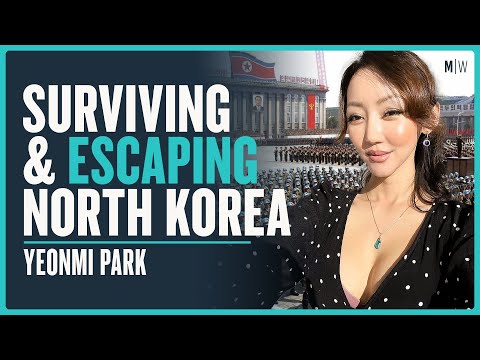
What It's Actually Like Living In North Korea - Yeonmi Park | Modern Wisdom Podcast 356
Yeonmi Park (guest), Chris Williamson (host)
In this episode of Modern Wisdom, featuring Yeonmi Park and Chris Williamson, What It's Actually Like Living In North Korea - Yeonmi Park | Modern Wisdom Podcast 356 explores north Korean Defector Exposes Life Inside a Modern-Day Slave State Yeonmi Park recounts her experiences growing up in North Korea, describing it as a nationwide concentration camp enforced through hunger, fear, and a rigid caste system. She details daily life dominated by forced labor, political indoctrination, and the complete absence of personal autonomy or concepts like 'I' or individual rights. The conversation explores the Kim family’s hereditary dictatorship, methods of repression including prison camps, executions, and overseas slave labor, plus North Korea’s revenue streams from drugs, weapons, and human trafficking. Park and Williamson also discuss China’s enabling role, global indifference to ongoing slavery and genocide, and the fragility of Western freedoms amid rising self-hatred and censorship.
North Korean Defector Exposes Life Inside a Modern-Day Slave State
Yeonmi Park recounts her experiences growing up in North Korea, describing it as a nationwide concentration camp enforced through hunger, fear, and a rigid caste system. She details daily life dominated by forced labor, political indoctrination, and the complete absence of personal autonomy or concepts like 'I' or individual rights. The conversation explores the Kim family’s hereditary dictatorship, methods of repression including prison camps, executions, and overseas slave labor, plus North Korea’s revenue streams from drugs, weapons, and human trafficking. Park and Williamson also discuss China’s enabling role, global indifference to ongoing slavery and genocide, and the fragility of Western freedoms amid rising self-hatred and censorship.
Key Takeaways
Total control starts with destroying individual autonomy and language.
In North Korea, people cannot plan their own day, set an alarm, or even use the word “I” in the way we do; the state assigns schedules, work, education, and even partners, erasing any sense of personal agency.
Get the full analysis with uListen AI
A rigid caste system predetermines your life before birth.
Your status is fixed based on your ancestors’ behavior during war and colonization, dictating your job, location, rations, and prospects; marrying “down” permanently lowers you, and there is no marrying “up.”
Get the full analysis with uListen AI
Hunger is used deliberately as a political control tool.
The regime refuses foreign aid and systematically underfeeds the population so that people stay focused on surviving the next meal instead of contemplating resistance, rights, or political alternatives.
Get the full analysis with uListen AI
Repression is maintained through extreme punishment and hereditary guilt.
Minor ‘political’ infractions—like damaging a newspaper with Kim’s image—can lead to life in political prison camps for three generations, with average survival of only months and widespread use of inmates in lethal nuclear and chemical work.
Get the full analysis with uListen AI
North Korea finances itself through global crime and slavery.
The state exports meth and opium, sells missiles and nuclear know‑how, rents out slave laborers and entertainers abroad, runs regime brothels for foreign tourists, and even kidnaps foreign nationals for specialized skills or spy training.
Get the full analysis with uListen AI
China is a key enabler of North Korean and wider human rights abuses.
China repatriates defectors to near-certain torture or execution, uses North Koreans and minorities like Uyghurs for organ harvesting and forced labor, and shields Pyongyang diplomatically while benefiting from economic ties with the West.
Get the full analysis with uListen AI
Western self-hatred and censorship create a dangerous blind spot.
Park argues that intense focus on historical grievances and domestic identity battles, alongside commercial dependence on China, leads media, corporations, and cultural elites to ignore or downplay ongoing mass slavery and repression abroad.
Get the full analysis with uListen AI
Notable Quotes
““Entire country became a concentration camp.””
— Yeonmi Park
““In North Korea, you can never plan your day… We don’t own ourselves.””
— Yeonmi Park
““The reason why you marry in North Korea is not about expressing your love… but because you want to serve the party better.””
— Yeonmi Park
““It’s very difficult to think about putting a revolution together when all that you need to worry about is your next meal.””
— Chris Williamson
““This is the only country I saw that people hate the country but want to be here.””
— Yeonmi Park (on the United States)
Questions Answered in This Episode
How can individuals in free countries meaningfully support North Korean defectors without endangering them or their families?
Yeonmi Park recounts her experiences growing up in North Korea, describing it as a nationwide concentration camp enforced through hunger, fear, and a rigid caste system. ...
Get the full analysis with uListen AI
What mechanisms could realistically hold regimes like North Korea and China accountable for crimes such as forced labor, organ harvesting, and genocide?
Get the full analysis with uListen AI
To what extent are Western corporations and institutions complicit in sustaining these regimes through trade, investment, and censorship of criticism?
Get the full analysis with uListen AI
How does growing up without concepts like 'I', 'freedom', or 'human rights' shape a person’s psychology even after they escape?
Get the full analysis with uListen AI
What warning signs in Western societies today resemble early patterns seen in totalitarian systems like North Korea’s or other historical dictatorships?
Get the full analysis with uListen AI
Transcript Preview
He put the, this like high electricity on the, the wire fences of entire border, put the machine guns with the guards every 10 meters, and then on top of that, he buries landmines on the entire border. So, entire country became a concentration camp. So, last year only two people escaped to South Korea and then they-
In the whole year, the entirety of the year, two people made it out? (wind blows) Yeonmi Park, welcome to the show.
Thank you for having me, Chris.
Looking back now, does it feel like a dream when you think about your time living in North Korea?
Totally. (laughs) You know, uh, when I was watching this movie called Inception, right, there's a very confusing part, you don't know what is dream anymore. And so when I dream, interestingly enough, I am still in North Korea. And this is the one thing that all the North Koreans share. After they've been escape, when they dream, they are still in North Korea. So, when we wake up, we still think we are in North Korea. Sometimes we have to remind each other it's not. And so I learned, like, how to pinch myself. That's why I heard, like, if you pinch and if it painful, that's like you know it's reality. And so I do pinch myself a lot, many, many days.
What were you dreaming about when you were in North Korea?
The themes are very similar, right? Like, always how do we find food, you know?
Mm-hmm.
Begging the neighbors, going around town, and also thinking about escape. How are we gonna escape? There is flood happening in the summertime. The guards is watching and always looking for ways to survive. It's never a bad, like, cheer and having a happy moment. Or sometimes, like, I go back North Korea and my neighbors are recognizing me, that I'm the enemy, and they try to punish me. So, always like that kind of dream, like running away, you know? Mm-hmm.
Isn't it weird that while you were there, you were dreaming of being away-
Yeah.
... and while you're here, you're now dreaming of being back? It's kind of like you can never leave, in a way.
No. I don't think it's possible. Yeah. I don't know what it is, but all North Koreans have that same theme. I asked every North Korean that I meet, and they always say the same thing. So, something about it, I don't know why. I can... I don't know what other dissidents do, like the people who escaped Cuba or Venezuela if they do the same thing. But at least when it comes to North Koreans, we somehow are not able to live our, you know, North Korean in our dreams.
What's the closest that you've been back to North Korea? Have you been to the DMZ?
I have not been to DMZ but I've been to very close North Korea during the balloon launches. I don't know if you heard about it. There are NGOs that we, uh, use balloons and sending leaflets to North Korea, and it pops it in the North Korean sky. So, inside the leaflets we have, you know, like, you know, talking about how Kims are dictators. So, doing those balloon launch, we had to go really near the border-
Install uListen to search the full transcript and get AI-powered insights
Get Full TranscriptGet more from every podcast
AI summaries, searchable transcripts, and fact-checking. Free forever.
Add to Chrome