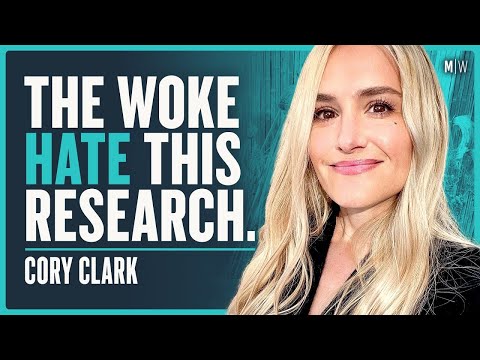
5 Topics In Psychology That We’re Not Allowed To Talk About - Dr Cory Clark
Chris Williamson (host), Cory Clark (guest)
In this episode of Modern Wisdom, featuring Chris Williamson and Cory Clark, 5 Topics In Psychology That We’re Not Allowed To Talk About - Dr Cory Clark explores are Men The New Underdogs? Psychology, Gender, And Censorship Examined Chris Williamson and Dr. Cory Clark discuss evidence that, in many modern Western contexts, people show a pro-female bias while public narratives still focus almost exclusively on misogyny and anti-female discrimination. Clark outlines research suggesting that hiring and evaluative biases have flipped in favor of women since around 2009, and that both the public and academics systematically misperceive this shift. They explore how rising female dominance in academia appears to correlate with greater emphasis on harm-avoidance, inclusion, and censorship over truth-seeking and academic freedom. The conversation broadens into evolutionary psychology, political bias, and how moral grandstanding and fear of offense may be degrading scientific integrity and public trust in science.
Are Men The New Underdogs? Psychology, Gender, And Censorship Examined
Chris Williamson and Dr. Cory Clark discuss evidence that, in many modern Western contexts, people show a pro-female bias while public narratives still focus almost exclusively on misogyny and anti-female discrimination. Clark outlines research suggesting that hiring and evaluative biases have flipped in favor of women since around 2009, and that both the public and academics systematically misperceive this shift. They explore how rising female dominance in academia appears to correlate with greater emphasis on harm-avoidance, inclusion, and censorship over truth-seeking and academic freedom. The conversation broadens into evolutionary psychology, political bias, and how moral grandstanding and fear of offense may be degrading scientific integrity and public trust in science.
Key Takeaways
Pro-female bias is common in Western contexts despite persistent misogyny narratives.
Clark cites research showing people often like women more, punish them less, and rate women-favoring or equal-gender findings as more acceptable than male-favoring ones, yet public discourse fixates on anti-female sexism and largely ignores anti-male biases.
Get the full analysis with uListen AI
Hiring and evaluative biases appear to have flipped toward women in many domains.
Audit studies of job applications indicate that biases that once favored men—especially in male-stereotyped fields—often now favor women, while biases that historically favored women still do; however, laypeople and academics typically believe women are still being discriminated against.
Get the full analysis with uListen AI
Women’s growing dominance in academia is reshaping institutional priorities.
Women now outnumber men at undergraduate, graduate, and faculty levels; survey data show female academics are more likely than men to prioritize harm prevention, inclusion, and egalitarian outcomes over free speech, academic freedom, and pure truth-seeking.
Get the full analysis with uListen AI
Controversial findings are self-censored, producing a distorted sense of consensus.
In Clark’s survey of psychology professors, those who believe taboo conclusions (e. ...
Get the full analysis with uListen AI
Moral concerns are increasingly used to justify censoring valid research.
Major journals have adopted policies to reject or retract work that might “undermine the dignity” of groups, and professors (especially women) are more supportive of ostracizing, not hiring, or not publishing scholars whose evolutionary or genetic findings favor men or whites over women or minorities.
Get the full analysis with uListen AI
Well‑intentioned harm‑avoidance can create greater long‑term harm and erode trust in science.
By suppressing uncomfortable but potentially true findings (e. ...
Get the full analysis with uListen AI
Paternalistic protection of “vulnerable” groups can itself be condescending and prejudiced.
The hosts argue that progressive elites often assume minorities and women cannot handle offense or difficult facts, leading to asymmetrical joking norms, speech restrictions, and racial/gender double standards that infantilize the very groups they claim to defend.
Get the full analysis with uListen AI
Notable Quotes
“Put simply, men are relatively more interested in advancing what is empirically correct, and women are relatively more interested in advancing what is morally desirable.”
— Dr. Cory Clark
“The people who think these controversial conclusions are true are the ones self‑censoring, which means what we hear publicly is systematically distorted.”
— Dr. Cory Clark
“If science isn’t about understanding what’s happening in the world and accurately making predictions, I don’t understand what we’re doing here. Why don’t we just write fiction?”
— Chris Williamson
“We’re ignoring a potential disparity that potentially could be fixed by something, and we’ll just never look for the thing that could fix it.”
— Dr. Cory Clark
“It’s almost like everybody is shadowboxing against an imaginary hegemon… ‘Allow me to step in. You don’t know what’s right for you. I will be your savior.’”
— Chris Williamson
Questions Answered in This Episode
How can academia balance legitimate concerns about harm and dignity with the need for open inquiry and uncomfortable truths?
Chris Williamson and Dr. ...
Get the full analysis with uListen AI
What concrete mechanisms might enable more academics who privately value truth-first norms to speak publicly without career suicide?
Get the full analysis with uListen AI
If media framing (gamma bias) distorts perceptions of sexism, what would a more balanced coverage of male and female advantages look like in practice?
Get the full analysis with uListen AI
To what extent should evolutionary and genetic explanations for group differences be treated differently from social or cultural explanations in public discourse and policy?
Get the full analysis with uListen AI
Are there institutional designs or quotas that could prevent any one gender or ideology from dominating key truth-seeking institutions like universities and journals?
Get the full analysis with uListen AI
Transcript Preview
Is pervasive misogyny a myth?
(laughs) Uh, I have claimed that it is. (laughs) Yeah, I think, um ... I, I don't wanna say it was necessarily always a myth. I ... Just before we got in here, I was talking about how I was treated in Cairo. (laughs)
Yeah. Tell that story.
I c- ... Oh, I was just at the airport and I was getting onto an elevator. I was there first. I hit the button, I started to step on, and these two guys walk up and they're like, "No! No!" And they waved to me to get off. And then I got off and they got on and they went up (laughs) and I had to take the next one. Um, so that kind of thing exists in places in the world still in 2023. Um, but in the US, uh, you're not getting much of that anymore and, in fact, you're getting quite a bit of the opposite. So I wrote this paper ... I think this ... Is this a Quillette article, I think? Yeah, yeah, yeah. A year or two ago, um, that reviewed a lot of the recent, uh, research on looking at gender biases in psychology, and a lot of the time you see exactly (laughs) the opposite. So people are biased in favor of women across a lot of different domains. They often treat women better than men. They like women better than they like men. Women get punished less than men for the same things. Um, when there's a scientific finding that portrays men better than women, people are biased against it in relation to scientific evidence that portrays women better than men. So people want women to be better than men. Um, and so this idea that society is sexist against women and we have to be vigilant about potential harm to women, um, I think potentially actually stems from the very fact that we care so much more about women than (laughs) we do about men. And when we discover these biases against men, no one really cares and they don't make the headlines. Um, so yeah. Uh, I would say it is largely a myth in modern Western societies, yes.
Is it really possible to answer this question about whether society is more biased against men than women?
That's a good question, and I would say, probably no. Like, practically, it would be really hard to measure all of the different contexts, um, where people potentially could be biased. Uh, so like, some scholars have looked at potential bias against men and women in academia, and they see, for example, it's possible students are slightly biased against women in their teaching evaluations, although hard to know because a lot of these are real evaluations, so it could just be that th- that w- h- (laughs) maybe women aren't as nice teachers, I don't know. Um, um, so people have tried to, like, look at which domains do people have a bias against women or against men. It would be hard to look at everything all at once and say, uh, which direction. But one thing that's been happening that I've seen across a few papers now, including one of my own papers that's coming out, is that a lot of these biases actually used to favor men, like, for example, in hiring for male stereotypical jobs. It really was the case that people used to be discriminating against women in those jobs. Um, and a lot of these things seem to have flipped around 20, 2009. (laughs) So a lot of the biases that used to favor men now favor women, and a lot of the biases that always favor women still favor women. So I do think, uh ... I, I don't know if we can say on whole who gets treated worse relative to the other gender, um, but certainly, it seems to be the trajectory that biases are increasingly in fav- favoring women and then people just don't seem to care as much about that as when they, uh, seem to go against women.
Install uListen to search the full transcript and get AI-powered insights
Get Full TranscriptGet more from every podcast
AI summaries, searchable transcripts, and fact-checking. Free forever.
Add to Chrome