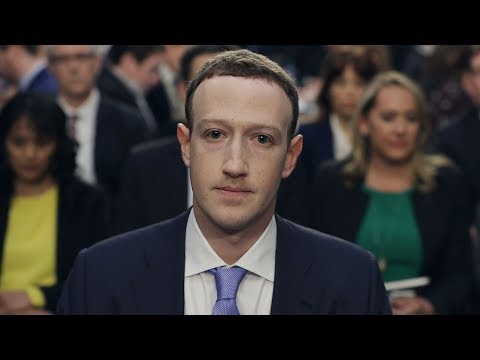
Is Facebook Zucked? | Roger McNamee
Roger McNamee (guest), Chris Williamson (host), Narrator, Narrator
In this episode of Modern Wisdom, featuring Roger McNamee and Chris Williamson, Is Facebook Zucked? | Roger McNamee explores insider-Turned-Whistleblower Exposes Facebook, Google, And Surveillance Capitalism’s Threat Roger McNamee, an early Facebook advisor and veteran Silicon Valley investor, recounts how he went from helping Mark Zuckerberg reject a $1B buyout to becoming an activist warning about Facebook and Big Tech’s societal harms.
Insider-Turned-Whistleblower Exposes Facebook, Google, And Surveillance Capitalism’s Threat
Roger McNamee, an early Facebook advisor and veteran Silicon Valley investor, recounts how he went from helping Mark Zuckerberg reject a $1B buyout to becoming an activist warning about Facebook and Big Tech’s societal harms.
He argues that companies like Facebook and Google run on “surveillance capitalism”: converting every aspect of human experience into data, building “data voodoo dolls” of individuals, and using them to manipulate behavior for profit.
McNamee connects this model to threats against democracy, civil rights, public health, and individual agency, citing Brexit, the 2016 U.S. election, ethnic cleansing in Myanmar, and radicalization and misinformation on social media.
He calls for democratic debate, new legal boundaries, employee whistleblowing, and practical user shifts (e.g., towards Apple’s privacy-centric tools) to realign technology with human empowerment rather than behavioral control.
Key Takeaways
Understand that your digital profile is far richer than what you knowingly share.
Platforms aggregate data from credit cards, phones, email, loyalty cards, location, and third-party brokers to build a “data voodoo doll” of you, which is then used to shape what you see and do—far beyond the posts or searches you think you’re consenting to.
Get the full analysis with uListen AI
Recognize that platform incentives prioritize monetization over your interests.
Search results, feeds, maps routes, and recommendations are optimized to maximize engagement and revenue (including paid ‘footfall’ to businesses), not to give you neutral information or the best route, undermining your ability to make unconstrained choices.
Get the full analysis with uListen AI
See social and political crises as downstream of the same business model.
Addiction, polarization, election interference, radicalization, bullying, teen mental health issues, and even genocidal violence are all linked to the engagement-driven, data-extractive logic of surveillance capitalism rather than being isolated problems.
Get the full analysis with uListen AI
Advocate for clear legal boundaries around data collection and platform responsibility.
McNamee argues we need rules akin to environmental regulation: if platforms’ systems facilitate harms like civil-rights violations, democratic disruption, or public-health crises, they should face real liability and limits, not just small ‘cost of doing business’ fines.
Get the full analysis with uListen AI
Leverage privacy-centric tools and ecosystems where possible.
He recommends moving from Android to iOS when feasible, using Apple Maps, Apple Pay, and the upcoming ‘Sign in with Apple,’ plus tools like DuckDuckGo and tracker blockers, to reduce data leakage while still enjoying modern digital services.
Get the full analysis with uListen AI
Be cautious about fully buying into any single ecosystem.
Even if you keep using major platforms, avoiding their full stack (e. ...
Get the full analysis with uListen AI
Press politicians and insiders to act, not just complain as users.
McNamee stresses that real change requires political will and employee courage—users should demand privacy and accountability from elected officials, while workers inside tech firms can catalyze reform, as seen in past internal revolts at companies like Uber and Google.
Get the full analysis with uListen AI
Notable Quotes
“They’re not picking things that you like so much as they’re picking things that they believe they can monetize.”
— Roger McNamee
“What they’re doing is they’re creating a data voodoo doll.”
— Roger McNamee (crediting Tristan Harris’s phrase)
“If you convert all human experience into data… something’s gotta give. In fact, two things have to give. One of them is democracy, and the other one is free will and individual choice.”
— Roger McNamee
“Google is playing God. They’re making choices for you, and because you trust them as an honest broker, it doesn’t occur to you that they don’t have your best interests at heart.”
— Roger McNamee
“It’s your life. You get to make your own choices. Well, I want to make sure that you get to make your own choices.”
— Roger McNamee
Questions Answered in This Episode
If surveillance capitalism is as entrenched as McNamee suggests, what realistic regulatory or market forces could actually change Big Tech’s behavior without destroying the services people value?
Roger McNamee, an early Facebook advisor and veteran Silicon Valley investor, recounts how he went from helping Mark Zuckerberg reject a $1B buyout to becoming an activist warning about Facebook and Big Tech’s societal harms.
Get the full analysis with uListen AI
To what extent are users truly complicit in this system, and how much responsibility lies with individuals versus corporations and governments?
He argues that companies like Facebook and Google run on “surveillance capitalism”: converting every aspect of human experience into data, building “data voodoo dolls” of individuals, and using them to manipulate behavior for profit.
Get the full analysis with uListen AI
How can employees inside companies like Facebook, Google, Amazon, or Microsoft effectively push for reform without sacrificing their careers?
McNamee connects this model to threats against democracy, civil rights, public health, and individual agency, citing Brexit, the 2016 U. ...
Get the full analysis with uListen AI
Are privacy-centric approaches like Apple’s genuinely sustainable business models, or will shareholder pressure eventually push them toward more data extraction too?
He calls for democratic debate, new legal boundaries, employee whistleblowing, and practical user shifts (e. ...
Get the full analysis with uListen AI
What would a positive, empowering alternative to today’s surveillance-driven platforms look like in practice—for social media, search, maps, and smart cities?
Get the full analysis with uListen AI
Transcript Preview
Most people do not realize the degree to which the choices that they're making are being influenced by people that they're not even aware of, and how, when you're going to s- the search results on Google or to your news feed on Instagram or Facebook, they're not picking things that you like so much as they're picking things that they believe they can monetize. And this is a really important distinction, because what they're doing is they're creating a data voodoo doll. Tristan's ... It's a great phrase Tristan came up with, "data voodoo doll." They're gathering data. We think we give them a little data. The thing you have to understand is that data that we're giving them, that's a vanishingly small percentage of what they have, because in real life, we touch electronic systems all over the place. Every time we use a credit card, every time we go to the bank. Any medical thing generates a digital record. Our phone tracks where we are in real time. Any time we send an email on or to a Gmail or Microsoft email account, when we use a shared online application like Google Docs or Office 365, there's a digital trail from all these things. And all of that data is available to Google, Microsoft, Facebook, Amazon, and they create this data voodoo doll, and every time you do a search, every time you look at your news feed, you have to, in your head, realize, "Oh my God, these guys are using that data voodoo doll to manipulate the choices that are available to me."
My Facebook reach is declining by the second after I've had Professor David Carroll first and now Roger McNamee joining me on Modern Wisdom. Roger, welcome to the show.
It is such a pleasure to be here, Chris.
Really excited to have you on today. Very timely with the release of The Great Hack on Netflix and this resurgence of interest in Facebook and Cambridge Analytica. Can you tell the listeners who don't know who you are a little bit of background-
Sure.
... about yourself, please?
So, I first came to Silicon Valley in 1982 as an investment analyst, right before the personal computer industry began. And I was lucky enough to be part of the most important firms investing, first in public tech stocks in the '80s, then part of Kleiner Perkins, which was ... became the biggest venture capital firm in Silicon Valley during the '90s, the heyday of the internet. I was in their office the day that Marc Andreessen brought in the idea that became Netscape, the day that Jeff Bezos brought in the idea that became Amazon, the day that Larry and Sergey brought in Google. I started a firm with Bono in 2003 called Elevation, and in 2006, a 22-year-old entrepreneur came into my office with a crisis. His name was Mark Zuckerberg. I helped him navigate the crisis, and for a period of three years thereafter was one of his advisors. And that is the context for my conversation with you here today, that from 2006 to approximately 2016, I was a huge fan of Facebook, and then at the beginning of 2016, I started to see things going wrong on Facebook, which really violated my sense of what the company was about. I thought Facebook was a force for good. And it began in the US presidential primaries in the Democratic Party in 2016. It then included issues related to Black Lives Matter, a protest group in the United States, and then Brexit happened in June of 2016. And at that was the point at which I realized that the same algorithms, the same business model that makes Facebook so great for marketers, those same tools could be manipulated and used to undermine democracy. And at that point, I started to realize I needed to do something. I started looking for allies and couldn't find any. I was finally able to persuade a tech blog to let me write an opinion piece about this in September of 2016, and while I was writing it, more news came out, civil rights violations on Facebook, and then our intelligence agencies said the Russians were trying to interfere in the US election. So I sent the draft of the opinion piece to Mark Zuckerberg and Sheryl Sandberg, my friends, to warn them. I thought something was really catastrophically wrong with the product, and they were not particularly supportive.
Install uListen to search the full transcript and get AI-powered insights
Get Full TranscriptGet more from every podcast
AI summaries, searchable transcripts, and fact-checking. Free forever.
Add to Chrome