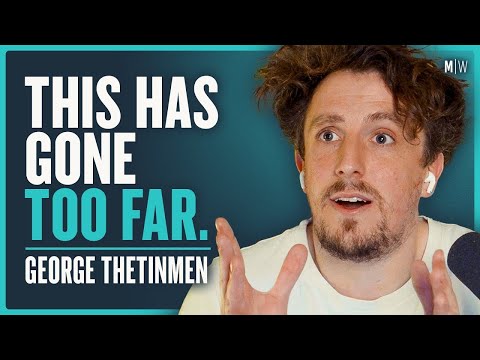
The Truth About The Patriarchy: Men Don't Benefit Anymore - George TheTinMen
Chris Williamson (host), George TheTinMen (guest)
In this episode of Modern Wisdom, featuring Chris Williamson and George TheTinMen, The Truth About The Patriarchy: Men Don't Benefit Anymore - George TheTinMen explores are Men Really Privileged? Rethinking Male Loneliness, Rights, Violence, Power George from TheTinMen and Chris Williamson explore how contemporary culture systematically downplays male suffering while exaggerating male privilege. They discuss male loneliness, the need for male-only spaces, and asymmetric reactions to men’s mental health, sexuality, violence, and bodily autonomy. The conversation covers online female spaces that become toxic toward men, legal and data blind spots around male victims of abuse and sexual assault, and structural biases in family courts, prisons, and hiring. They argue for a more balanced, evidence-based, and compassionate conversation that recognizes both male and female vulnerabilities without framing everything through a simplistic patriarchy lens.
Are Men Really Privileged? Rethinking Male Loneliness, Rights, Violence, Power
George from TheTinMen and Chris Williamson explore how contemporary culture systematically downplays male suffering while exaggerating male privilege. They discuss male loneliness, the need for male-only spaces, and asymmetric reactions to men’s mental health, sexuality, violence, and bodily autonomy. The conversation covers online female spaces that become toxic toward men, legal and data blind spots around male victims of abuse and sexual assault, and structural biases in family courts, prisons, and hiring. They argue for a more balanced, evidence-based, and compassionate conversation that recognizes both male and female vulnerabilities without framing everything through a simplistic patriarchy lens.
Key Takeaways
Male-only spaces are crucial for men’s mental health but often stigmatized.
Dunbar’s finding that men benefit from two ‘guy nights’ a week sparked backlash framed as selfishness, showing how poorly male loneliness is understood and how easily benign male bonding gets recast as neglect or toxicity.
Get the full analysis with uListen AI
Online women-only groups can become deeply abusive toward men.
Communities like ‘Are We Dating The Same Guy’ and some feminist forums began as safety tools but evolved into doxxing, coordinated shaming, ‘loyalty tests,’ and harassment, illustrating how female relational aggression can scale into real-world harm, even suicide and homicide.
Get the full analysis with uListen AI
Current legal definitions and statistics systematically erase male victims.
In the UK, only penis–vagina penetration counts as rape, so women cannot legally be rapists, and male prison sexual assaults or ‘forced-to-penetrate’ cases are often excluded from official rape data, distorting public understanding of who suffers sexual violence.
Get the full analysis with uListen AI
Domestic violence is often bilateral and not purely a ‘men versus women’ issue.
Research shows about half of abusive relationships involve both partners, and where abuse is one-sided a large share is female-only; yet discourse and policy focus almost exclusively on male perpetrators, ignoring male victims, lesbian couples, and abuse-driven male suicides.
Get the full analysis with uListen AI
Men face structural disadvantages in reproduction and parenting rights.
After conception, men have virtually no say over becoming fathers but are legally bound to support children, even in some rape cases, and family courts rarely start from a presumption of equal custody—especially harming unmarried fathers.
Get the full analysis with uListen AI
Male body image issues and harmful interventions are growing and under-discussed.
Men increasingly suffer body dysmorphia around height, hair, and penis size, driving uptake of extreme procedures like leg-lengthening and risky penile implants, while public narratives still pretend men don’t face body shaming.
Get the full analysis with uListen AI
Media and politics exhibit ‘gamma bias’ and male disposability.
Male heroism and victimhood (e. ...
Get the full analysis with uListen AI
Notable Quotes
“People are happy to talk about male suffering, but only in the context of it being the man doing it to himself.”
— George (TheTinMen)
“If you were to say that brunch with the girls is part of a misandrist conspiracy, it would be ridiculous. But boys’ night gets treated like a threat.”
— Chris Williamson
“We keep talking about being mental health advocates, but the incel problem is the men’s mental health crisis on steroids. If you can’t talk about them compassionately, I don’t know if you’re really a mental health advocate at all.”
— George (TheTinMen)
“Human beings are defined by their ability to surpass nature. Using tribal reproductive logic to justify male disposability is just reinforcing a problem we should be overcoming.”
— George (TheTinMen)
“Most people do care; they just don’t know. Once they see the data about men and boys, everything changes.”
— George (TheTinMen)
Questions Answered in This Episode
How can societies support male-only spaces for friendship and vulnerability without triggering fears about exclusion or toxicity?
George from TheTinMen and Chris Williamson explore how contemporary culture systematically downplays male suffering while exaggerating male privilege. ...
Get the full analysis with uListen AI
What legal reforms would be necessary to properly recognize and protect male victims of domestic and sexual violence, while still safeguarding women?
Get the full analysis with uListen AI
Where is the ethical line between personal dating preferences and genuine biphobia or prejudice, especially against bisexual men?
Get the full analysis with uListen AI
How should we balance women’s reproductive autonomy with any potential ‘paper abortion’ or opt-out rights for men?
Get the full analysis with uListen AI
What practical steps could policymakers and media take to reduce ‘gamma bias’ and male disposability in coverage of war, crime, and activism?
Get the full analysis with uListen AI
Transcript Preview
What happened when Robin Dunbar's new study came out about men needing two guy nights per week in order to stay healthy?
I, I saw it mentioned a, a bunch of times on various social media channels, and it was basically saying that men need two guy nights a week just for, for their, for their health and their mental health. Um, obviously male suicide is a massive issue, especially in Western society, and one of the most sort of key factors in male suicide is male loneliness, male isolation. So he, he was looking into that and he found that two nights a week for guys is, uh, sort of the am- ample amount. And then, as social media normally does, it sort of kicks off, everyone goes crazy, you know, everyone's whining, making it about themselves, and everyone found the idea of two guy nights a week for men just too intolerable. And then they wanted to know how many, how many nights per woman, it's got to be seven at least, and all I want is time alone. And maybe it's great if they go so you don't have to spend time with them. And honestly, the comments on each of his posts were all the same, just a bunch of whiny narcissists making it about themselves and just totally ignoring the fact that male suicide is a massive issue, male loneliness is a key part of that. And um, I'm sure you've seen the comments for yourself, Kris.
Yeah, some of my favorites, "And this is why women don't want to have their babies." "This article was written by a man-child." "Everyone caters to men enough as it is, we're tired of hearing you whining." "The world is your playground and you still cry all the time."
This is, this is like really great to sort of self-select, because th- those women are all taking themselves out of men's lives, and we all appreciate that too. Like we, I do, like those are, they all sound like really horrible people. And people were just sort of, they painted in a picture of their own creation, they were like, "Oh, you don't want to spend ch- time with your children or your wives." And no one said anything about children, not talking about fathers, they're talking about men as a general group. And the point was lost completely of male isolation and loneliness is a massive issue right now, and there's nothing wrong with wanting to spend a bit of time with your mates. It doesn't necessarily mean you have to be at a pub, could be playing computer games, it could be like this, uh, it's just the idea of men talking and sharing time together is a really, really important issue. And unfortunately, just the mere mention of that is too much for some people to handle.
Can you steel man the other side? What's the best interpretation of why people had a problem with men getting two nights a week to themselves?
Install uListen to search the full transcript and get AI-powered insights
Get Full TranscriptGet more from every podcast
AI summaries, searchable transcripts, and fact-checking. Free forever.
Add to Chrome