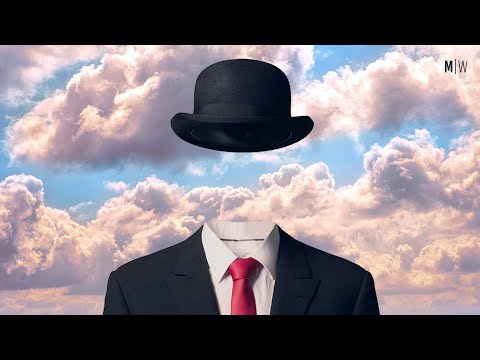
What It Feels Like To Be Headless - Richard Lang | Modern Wisdom Podcast 336
Richard Lang (guest), Chris Williamson (host)
In this episode of Modern Wisdom, featuring Richard Lang and Chris Williamson, What It Feels Like To Be Headless - Richard Lang | Modern Wisdom Podcast 336 explores discovering ‘Headlessness’: Seeing Yourself As Space For The World Richard Lang discusses “The Headless Way,” a direct, experiential method of seeing that, in first-person experience, one is not a headed, bounded object but open, empty space in which the world appears. Drawing on the work of Douglas Harding, he explains simple visual and attention-based experiments (pointing, spinning, mirror use) that reveal this headless perspective and contrast it with the socially learned, image-based sense of self. Lang emphasizes that this shift is immediately verifiable, non-hierarchical, and surprisingly playful, yet has profound implications for self-consciousness, stress, relationships, and fear of death. The conversation repeatedly returns to the idea that we are simultaneously “nothing at center” and “everything we see,” and that living from this realization brings a stable sense of home, stillness, and unconditional okay-ness amid life’s chaos.
Discovering ‘Headlessness’: Seeing Yourself As Space For The World
Richard Lang discusses “The Headless Way,” a direct, experiential method of seeing that, in first-person experience, one is not a headed, bounded object but open, empty space in which the world appears. Drawing on the work of Douglas Harding, he explains simple visual and attention-based experiments (pointing, spinning, mirror use) that reveal this headless perspective and contrast it with the socially learned, image-based sense of self. Lang emphasizes that this shift is immediately verifiable, non-hierarchical, and surprisingly playful, yet has profound implications for self-consciousness, stress, relationships, and fear of death. The conversation repeatedly returns to the idea that we are simultaneously “nothing at center” and “everything we see,” and that living from this realization brings a stable sense of home, stillness, and unconditional okay-ness amid life’s chaos.
Key Takeaways
Directly test what you are by looking, not by believing.
Lang insists that The Headless Way is empirical: instead of accepting inherited ideas about being a person with a head, you literally look back at where your face is supposed to be and notice only open, contentless space full of the world.
Get the full analysis with uListen AI
Use simple experiments to reveal your ‘headless’ nature.
Pointing back at your face, turning on the spot, noticing the oval visual field, or using a mirror/phone all expose that from the first-person perspective you are a clear, still, edgeless space in which sensations, thoughts, and the world appear.
Get the full analysis with uListen AI
Recognize the difference between what you look like and what you are.
Social feedback, mirrors, and language teach you to identify with an external image (“a person with a head”), but in immediate experience you are not an object in the world; you are the capacity in which the world shows up.
Get the full analysis with uListen AI
Relate to others as ‘face to no-face’ to deepen presence and warmth.
Seeing that you have the other person’s face instead of your own—“trading faces”—puts your imagined self-image out of the way, making you naturally more attentive, welcoming, and less self-conscious in relationships.
Get the full analysis with uListen AI
Use headlessness to dis-identify from stress, thoughts, and labels.
When you notice that tension, movement, and thoughts appear in a central still, stress-free space, you stop being wholly defined by inner chatter or external judgments, which reduces anxiety and softens negative self-labeling.
Get the full analysis with uListen AI
Balance your human ‘time-bound’ identity with your timeless center.
The approach doesn’t deny that you’re a finite person who will die; it adds awareness that, at center, you are changeless and outside time, which provides a stabilizing counterweight to fear of death and life’s volatility.
Get the full analysis with uListen AI
Cultivate this seeing as a habit and share it in community.
The initial recognition is easy; the transformative aspect comes from repeatedly returning to headless seeing in daily activities and, if desired, exploring it with others in non-hierarchical groups, as Lang’s community does.
Get the full analysis with uListen AI
Notable Quotes
“My own direct experience is face to no face, so I say I’ve got your face instead of mine.”
— Richard Lang
“You have been under the deep conviction that you are what you look like… but now pause and look for yourself and take seriously what you actually experience.”
— Richard Lang
“At center, you for yourself are not a thing. You’re no-thing full of everything.”
— Richard Lang
“It’s kind of trying to get used to having won the lottery.”
— Richard Lang
“As Richard, I’m not all right. But as who I really am, I’m all right, thanks.”
— Richard Lang
Questions Answered in This Episode
How might adopting the headless perspective change the way I experience social anxiety or self-consciousness in everyday interactions?
Richard Lang discusses “The Headless Way,” a direct, experiential method of seeing that, in first-person experience, one is not a headed, bounded object but open, empty space in which the world appears. ...
Get the full analysis with uListen AI
What practical obstacles do people most often encounter when trying to live from headlessness rather than merely understanding it intellectually?
Get the full analysis with uListen AI
How does The Headless Way compare with other non-dual or contemplative traditions like Advaita Vedanta or Zen in terms of method and outcomes?
Get the full analysis with uListen AI
Can this way of seeing be integrated into high-pressure, performance-driven environments (work, sports, public speaking) without diminishing motivation or ambition?
Get the full analysis with uListen AI
What evidence, beyond personal testimony, could help skeptics take this ‘headless’ perspective seriously as more than a perceptual trick or word game?
Get the full analysis with uListen AI
Transcript Preview
You have been under the deep conviction that you are what you look like, with a head. All right, you've got that going, but now pause and look for yourself and take seriously what you actually experience. There isn't anything here except space for the whole world.
Sam Harris says that the implications of The Headless Way provide insights into the nature of the mind, which he considers to be among the most important things that he's ever learned. Why do you think that the realization of not-self is so impactful?
Because it's true. It's just the simple truth. I mean, I'm looking at you, Chris, and I know some people are just listening, but you can imagine, but I see your face, I don't see mine. And I know from the outside we're face-to-face, I understand that, but my own direct experience is face to no face, so I say I've got your face instead of mine. I'm built open for you, and that is verifiable now. I'm not going by what someone has told me, I'm actually just looking and enjoying having your face, and you've got mine, you see, so we call it trading faces. So that is available, it's verifiable, uh, and it's loving actually because you're seeing that you're built open to others and, uh, welcoming the world in your open space here. And all the viewer or listener has to do is, is look for, for their own face, notice you can't see it, you see a bit of your nose coming out of nowhere and there are sensations, right? But they don't add up to this, uh, to a, being inside a, a head. So I, I hardly use the word non-dual. I, I just, um, it, it... That seems to sort of... Because I like the dual as well, you see? Uh, it's important to remain aware of yourself as separate, you see? Well, we've got that, we don't really have to work on that. (laughs) Now, now we, uh, return back to our own point of view and see, you know, are you looking out of two eyes or one opening, you see? And there's one opening and, and y- you can't miss that, I think. You can't actually see your head and you can't do it wrong 'cause you can't sort of half see your headlessness. (laughs) And, uh, y- you know. So, uh, and, uh, The Headless Way, uh, it really started with Douglas Harding back in the 1940s and he was asking the question, "Who am I?" And finally... And he realized, well, there's this model you were mentioning, so, uh, for those who can't see, it's a model with layers. And, uh, Douglas designed this and it shows you that at a certain range, you see, this is you at center, the no-thing, emptiness, your no face, and then at a certain range, six feet, you're a person, but further away, you know, you're a, a city and then a planet and a star and a galaxy or closer to your cells, you see? So this is w- this is verifiable. If someone looked at you and said, you said, "What am I?" I say, "Well, from here, you're Chris, but if I went way up, you'd be the planet Earth. And if I came in close to you, you'd be cells." Now, the question is, what is at the center of all these layers? What are you really? And you're the only one there, you see? I'm pointing right at you. The on- you're the only one there, so you're the only one that can see. But as close as anyone can get, you're almost nothing.
Install uListen to search the full transcript and get AI-powered insights
Get Full TranscriptGet more from every podcast
AI summaries, searchable transcripts, and fact-checking. Free forever.
Add to Chrome