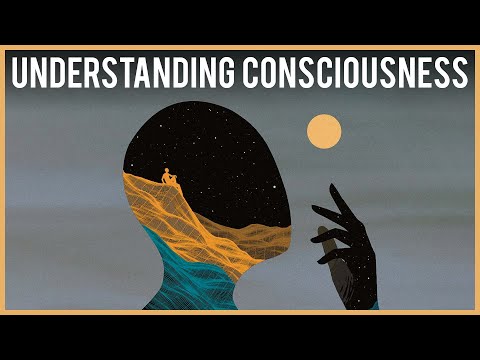
What Is Consciousness? - Philip Goff | Modern Wisdom Podcast #272
Philip Goff (guest), Chris Williamson (host), Narrator
In this episode of Modern Wisdom, featuring Philip Goff and Chris Williamson, What Is Consciousness? - Philip Goff | Modern Wisdom Podcast #272 explores philosopher Philip Goff Rebuilds Science To Finally Explain Consciousness Chris Williamson and philosopher Philip Goff discuss why consciousness is not just another scientific puzzle but a radically different kind of problem, since it is not publicly observable and known only from first‑person experience. Goff critiques both materialism (the idea that consciousness is just brain activity) and dualism (a non‑physical mind separate from the body) as ultimately unsatisfying. He then lays out his preferred view, panpsychism, where consciousness is the intrinsic nature of matter and physics only describes what matter does, not what it is. The conversation widens into implications for AI, meaning, spirituality, and how rethinking consciousness might help address modern alienation and the “disenchanted” scientific worldview.
Philosopher Philip Goff Rebuilds Science To Finally Explain Consciousness
Chris Williamson and philosopher Philip Goff discuss why consciousness is not just another scientific puzzle but a radically different kind of problem, since it is not publicly observable and known only from first‑person experience. Goff critiques both materialism (the idea that consciousness is just brain activity) and dualism (a non‑physical mind separate from the body) as ultimately unsatisfying. He then lays out his preferred view, panpsychism, where consciousness is the intrinsic nature of matter and physics only describes what matter does, not what it is. The conversation widens into implications for AI, meaning, spirituality, and how rethinking consciousness might help address modern alienation and the “disenchanted” scientific worldview.
Key Takeaways
Consciousness is epistemically private and not publicly observable.
Unlike particles or fields postulated to explain external data, consciousness is only known directly from first‑person experience, which means standard scientific methods aimed at public observation and measurement hit a fundamental limit.
Get the full analysis with uListen AI
Materialism cannot capture qualitative experience with purely quantitative tools.
Physics and neuroscience describe the brain in mathematical, quantitative terms, but experiences like the redness of red or the taste of mint are qualitative; Goff argues you cannot derive these qualities from a purely quantitative vocabulary.
Get the full analysis with uListen AI
Dualism introduces an inelegant split in nature without clear advantage.
Postulating a separate non‑physical realm of consciousness tied to the brain by special laws makes reality more complex and disunified, and it’s unclear we have empirical grounds strong enough to justify that extra ontology.
Get the full analysis with uListen AI
Panpsychism offers a “middle way” by identifying consciousness as matter’s intrinsic nature.
Building on Russell and Eddington, Goff suggests physics only tells us what matter does (behavior), not what it is in itself; he proposes that the intrinsic nature of matter is constituted by simple forms of experience, scaling up in brains.
Get the full analysis with uListen AI
The main challenge for panpsychism is the ‘combination problem.’
Panpsychists must explain how countless simple micro‑experiences combine into a unified macro‑consciousness like a human mind—a different and, Goff thinks, more tractable problem than creating consciousness from non‑experiential matter.
Get the full analysis with uListen AI
Consciousness and intelligence are distinct, especially in discussions of AI.
A system can be highly intelligent and behaviorally sophisticated yet lack any inner experience; whether artificial systems become conscious is an empirical question about their physical organization, not a guaranteed by‑product of intelligence.
Get the full analysis with uListen AI
Our current ‘disenchanted’ scientific worldview may fuel modern alienation.
If the official story of reality has no place for the most evident aspect of our lives—felt experience—it can create a deep sense of not belonging; Goff sees panpsychism as a way to reconcile scientific knowledge with lived consciousness and restore meaning.
Get the full analysis with uListen AI
Notable Quotes
“If it wasn’t for the fact that we experience it, the universe would give us no clues that consciousness exists.”
— Chris Williamson (paraphrasing a quote Goff endorses)
“Physical science is amazing, but it’s been amazing precisely since Galileo designed it to exclude consciousness.”
— Philip Goff
“Our official scientific worldview tells us that all that’s really going on in your head is electrochemical signaling. I think that’s equivalent to saying those qualities you encounter in your experience don’t really exist.”
— Philip Goff
“Either you say consciousness doesn’t exist—it’s an illusion—or you say we need to rethink science.”
— Philip Goff
“There’s nothing but consciousness; physics describes what consciousness does.”
— Philip Goff
Questions Answered in This Episode
If consciousness is the intrinsic nature of matter, how could we ever empirically distinguish panpsychism from more traditional materialist views?
Chris Williamson and philosopher Philip Goff discuss why consciousness is not just another scientific puzzle but a radically different kind of problem, since it is not publicly observable and known only from first‑person experience. ...
Get the full analysis with uListen AI
Does embracing panpsychism change how we should think about moral status for non‑human entities—animals, plants, or even artificial systems?
Get the full analysis with uListen AI
How might a ‘new science of consciousness’ differ methodologically from current neuroscience and psychology in practice?
Get the full analysis with uListen AI
Can the combination problem for panpsychism really be solved without sneaking in something functionally similar to materialism or dualism?
Get the full analysis with uListen AI
In what concrete ways could integrating consciousness into our scientific worldview alleviate modern feelings of alienation and meaninglessness?
Get the full analysis with uListen AI
Transcript Preview
Consciousness is not publicly observable. Right? You can't look inside my head and see my feelings and experiences. We know about consciousness not from observation experiment, but just from our immediate awareness of our feelings. If I'm in pain, I'm just directly aware of my pain. You can't get at it. Science is used to dealing with unobservables, but there's an important difference. In- in all these other cases, we postulate unobservables in order to explain what we can observe. That the whole explanatory enterprise is explaining publicly observable data. In the case of consciousness, the thing we are trying to explain is not publicly observable, and that is just a totally different explanatory enterprise, and I think it really constrains our capacity to deal with it experimentally. (wind blows)
We're only a couple of miles away from each other and yet, I've had to use the internet to communicate. If you reached out of your window, I could probably just shout- shout the podcast to you-
(laughs) .
... I think just stick a recorder in the middle of it.
Ah, it's a crazy times we're living in. Some future time, we'll have to get together.
It is indeed. Uh, you're a philosopher. What are you doing talking about consciousness? Isn't this the job of a neuroscientist or a biologist? Like, why are you here?
Excellent question. Yeah. So I guess, yeah. I mean, there's- it's broadly agreed that there's some big profound challenges surrounding consciousness. You know, we- w- despite our scientific understanding of the brain, we don't have even the beginnings of an explanation of how complicated electrochemical signaling could somehow produce this inner s- subjective world of colors, and sounds, and smells, and tastes. So a lot of- most people are on board with that now. But in line with what you've just said, I mean, a very common reaction is to say, "Okay, it is a problem, but let's just plug away with our standard ways of investigating the brain and, you know, we'll crack it." Um, so I don't think that's right. I don't think this is just another scientific problem. I think there's number of ways in which the problem of consciousness is radically different from any other scientific problem, and that our current scientific approach is really not, on its own at least, fully equipped to deal with it. So should I say more about that?
Why is it different?
Okay, so here's- here's the most straightforward point. Consciousness is not publicly observable. Right? You can't look inside my head and see my feelings and experiences. We know about consciousness not from observation experiment but just from our immediate awareness of our feelings. If I'm in pain, I'm just directly aware of my pain. You can't get at it. Uh, but I- I'm directly aware of it. Now, science is used to dealing with unobservables. Right? Fundamental particles, for example, can't be directly observed. But there's an important difference. In- in all these other cases, we postulate unobservables in order to explain what- what we can observe. So fundamental particles are postulated part of the standard model of particle physics that, you know, explains a huge lot of publicly observable data. So that the whole explanatory enterprise is explaining publicly observable data. In the case of consciousness, the thing we are trying to explain is not publicly observable, and that is just a totally different explanatory enterprise, and I think it really constrains our capacity to deal with it experimentally. So yeah-
Install uListen to search the full transcript and get AI-powered insights
Get Full TranscriptGet more from every podcast
AI summaries, searchable transcripts, and fact-checking. Free forever.
Add to Chrome