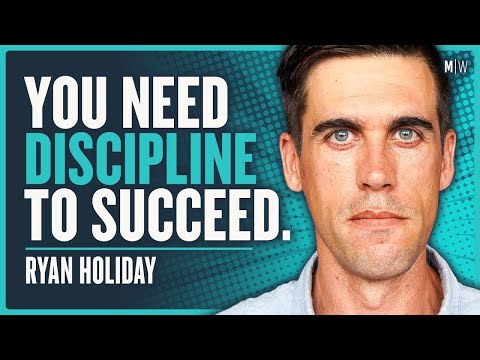
Profound Lessons From Stoic Philosophy - Ryan Holiday
Ryan Holiday (guest), Chris Williamson (host)
In this episode of Modern Wisdom, featuring Ryan Holiday and Chris Williamson, Profound Lessons From Stoic Philosophy - Ryan Holiday explores ryan Holiday Reveals Stoic Discipline As Key To Lasting Success Ryan Holiday and Chris Williamson explore how Stoic philosophy reframes ambition, discipline, and success as long-term, inner-directed pursuits rather than quick wins or external validation.
Ryan Holiday Reveals Stoic Discipline As Key To Lasting Success
Ryan Holiday and Chris Williamson explore how Stoic philosophy reframes ambition, discipline, and success as long-term, inner-directed pursuits rather than quick wins or external validation.
They argue that most downfalls are self‑inflicted—especially after success—and that the real differentiator is sanity, self‑mastery, and the ability to play a sustainable long game.
Holiday emphasizes clarity of direction, building an “inner citadel,” and loving the craft itself so you can withstand algorithmic luck, fame, and inevitable troughs of despair.
Throughout, they contrast flash‑in‑the‑pan achievement with durable excellence, showing how discipline must be flexible, humane, and oriented toward a life you actually want to live.
Key Takeaways
Clarity of direction prevents success from taking you off course.
If you don’t know what you want your life and work to look like, you default to money or social comparison. ...
Get the full analysis with uListen AI
Most big failures are self‑inflicted, especially after success.
Holiday notes that people often derail not because competitors beat them, but because ego, entitlement, or complacency creep in right after a win. ...
Get the full analysis with uListen AI
Play the long game: aim for sustainability, not peak‑now performance.
Short, extreme pushes (like punishing challenges or all‑out sprints) can create burnout and post‑success collapse. ...
Get the full analysis with uListen AI
Discipline must serve something: define what you’re being disciplined for.
Without a clear aim—be it writing, family, public service, or something else—discipline degenerates into busywork or self‑punishment. ...
Get the full analysis with uListen AI
Do only what only you can do; delegate the rest.
As you gain responsibility and success, discipline includes ruthlessly identifying essential vs inessential tasks. ...
Get the full analysis with uListen AI
Aim for “more often than not,” not perfection.
Rigid, all‑or‑nothing standards make people brittle and prone to snapping back into worse habits after intense challenges. ...
Get the full analysis with uListen AI
Build an inner citadel: rely on internal standards over external outcomes.
Stoicism teaches cultivating an inner fortress of principles and self‑respect that you can retreat to when life is difficult. ...
Get the full analysis with uListen AI
Notable Quotes
“If you don't know what port you're sailing towards, no wind is favorable.”
— Ryan Holiday (quoting the Stoics)
“Most failures are self‑inflicted, and they often come right after some form of success.”
— Ryan Holiday
“Freedom is better defined as the opportunity for self‑discipline.”
— Ryan Holiday (quoting Dwight Eisenhower)
“Discipline is not a form of self‑flagellation. You should love it.”
— Ryan Holiday
“Do you want to be fast now, or do you want to be fast later?”
— Ryan Holiday (quoting Kate Courtney’s coach)
Questions Answered in This Episode
How do I concretely define the “port” I’m sailing toward in my own life so my discipline has a clear direction?
Ryan Holiday and Chris Williamson explore how Stoic philosophy reframes ambition, discipline, and success as long-term, inner-directed pursuits rather than quick wins or external validation.
Get the full analysis with uListen AI
Where in my recent successes have I let ego, entitlement, or complacency creep in, and how could I re‑tighten my discipline there?
They argue that most downfalls are self‑inflicted—especially after success—and that the real differentiator is sanity, self‑mastery, and the ability to play a sustainable long game.
Get the full analysis with uListen AI
What are one or two tasks I’m still clinging to that someone else could do, and what uniquely high‑leverage work would that free me to focus on?
Holiday emphasizes clarity of direction, building an “inner citadel,” and loving the craft itself so you can withstand algorithmic luck, fame, and inevitable troughs of despair.
Get the full analysis with uListen AI
In what ways am I using extreme, short‑term challenges as a substitute for building sustainable, long‑term habits?
Throughout, they contrast flash‑in‑the‑pan achievement with durable excellence, showing how discipline must be flexible, humane, and oriented toward a life you actually want to live.
Get the full analysis with uListen AI
What past adversities or “heads on the wall” can I deliberately revisit to strengthen my inner citadel the next time I hit a trough of despair?
Get the full analysis with uListen AI
Transcript Preview
If you don't know what's important to you, what kind of work you want to do, what you want your life to look like, you end up defaulting to one of two things: what pays most, or what are other people doing? You can end up very far from what you actually want, and you'll only know that when you get there. So you have to have a very clear sense of, like, where you're trying to go, or these things, these opportunities are chances to get super off track. (wind blowing)
You've got this quote that I referenced a couple of weeks ago. "Be quiet, work hard, and stay healthy. It's not ambition or skill that is going to set you apart, but sanity."
Yeah. (laughs)
What's that?
Uh, well, I find, uh, as a former, like, sort of young person going places, that when I am hiring someone or I'm looking for someone, like, that could... I wanna, like, mentor or help or whatever, it's not like how talented you are or what your background is. But it... Like, the first test is like... (laughs) I just had to find this. Like, is this person fucking nuts or not? You know what I mean? Like, does this person have their shit together or not? And so I, I think we often think a lot about, like, getting better at what we do, like the craft of the thing, which is really important. But then when you look at, like, why did this person make it and this person not make it, it's usually, you know, very... some stark divergence where they started making bad decisions, they, you know, started being very egotistical, they had this shot and they blew it. You know, it's not, it's not like in sports where you're like, "This guy's just faster than that person." It's some other thing that usually sort of prevents a person from reaching everything they're capable of reaching.
Is there an element in there as well about playing a long game?
Yeah, for sure. For sure. Definitely. I mean, one of the hard parts about having sort of potential and ambition is that it burns sort of very hot and bright. And, you know, if what you... If you wanna be established, you wanna do it for a long time, you have to figure out how, yeah, to play a long game, to not blow yourself up, to not... It's like, how do you care about it very deeply but not sweat it so much that it's like a liability?
Needs to be sustainable, man.
Yeah.
Yeah. I, I play with this all the time, and a lot of the guys that I see that have flash-in-the-pan successes on the internet are very similar.
Yeah. Well, look, and we live in an environment where algorithmically you can just be given a huge gift. You can just sort of blow up, right? And so that really has nothing to do with whether you deserve it or not. But then once you have it, the question is, can you maintain it? Can you do the work necessary? Can you not fuck it up, right? And I think we t- and I... When I talk to groups, I, I usually start with some version of like, you know, like, the biggest enemy in this room is not, like, what the other people are doing. It's not the economy. It's not, like, gatekeepers. Like, the person who determines, like, how this is gonna go is you, really. Like, for the most part, most failures are self-inflicted, or most big mistakes are self-inflicted, and they often come, like, right after some form of success. That's kind of the most dangerous point. That's when we overreach. That's when we go- it goes to our head. That's when we... You know, it's like, it's in that moment of success or triumph or whatever that, like, you need the most discipline. But there is the highest justification for slacking on said discipline, right?
Install uListen to search the full transcript and get AI-powered insights
Get Full TranscriptGet more from every podcast
AI summaries, searchable transcripts, and fact-checking. Free forever.
Add to Chrome