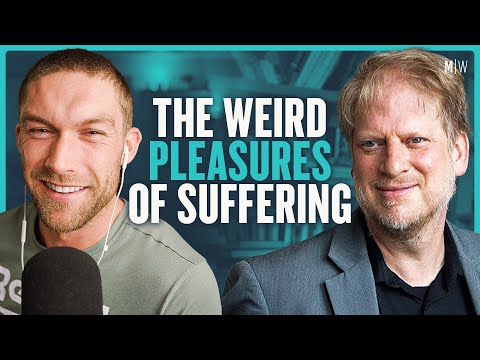
Why Pain & Suffering Are Necessary For A Good Life - Paul Bloom
Paul Bloom (guest), Chris Williamson (host)
In this episode of Modern Wisdom, featuring Paul Bloom and Chris Williamson, Why Pain & Suffering Are Necessary For A Good Life - Paul Bloom explores why Chosen Suffering Makes Life Deeper, Richer, And More Meaningful Paul Bloom discusses themes from his book *The Sweet Spot*, arguing that humans don’t just seek pleasure; we also deeply want meaning, morality, and mastery—and the right kinds of suffering are often essential to those goals.
Why Chosen Suffering Makes Life Deeper, Richer, And More Meaningful
Paul Bloom discusses themes from his book *The Sweet Spot*, arguing that humans don’t just seek pleasure; we also deeply want meaning, morality, and mastery—and the right kinds of suffering are often essential to those goals.
He distinguishes between chosen and unchosen suffering, showing how voluntary difficulty can enhance pleasure (through contrast, signaling, flow, and escape from self) and is built into meaningful pursuits like work, parenting, and creative projects.
Bloom and Chris Williamson explore how narrative, status, money, religion, and memory shape our experience of pain and happiness, including why we enjoy horror and sad movies, why effort can be attractive, and how we mis-remember experiences.
They conclude that directly chasing happiness is often counterproductive; instead, committing to challenging, purposeful activities—accepting risk and struggle—tends to yield both meaning and genuine, durable satisfaction.
Key Takeaways
Treat pleasure as one goal among several, not the only one.
Bloom’s “motivational pluralism” suggests we should consciously balance pleasure with meaning and morality; a life aimed solely at feeling good often ends up empty or dissatisfying when we step back and evaluate it.
Get the full analysis with uListen AI
Seek the right kinds of chosen difficulty to deepen your life.
Activities like hard workouts, demanding writing, parenting, or starting a business are meaningful precisely because they involve risk of failure, effort, and struggle—without that, they feel trivial or boring.
Get the full analysis with uListen AI
Use contrast and sequencing to make pleasures richer.
Brief, voluntary discomfort (a hot sauna before a cold plunge, spicy food before a cool drink, narrative suffering before narrative payoff) amplifies subsequent pleasure; we also prefer lives and stories that get better over time.
Get the full analysis with uListen AI
Do hard, important tasks early to avoid the ‘anxiety cost.’
Putting off key daily actions (writing, workouts, meditation) forces you to mentally carry them all day; completing them early removes dread and gives a lingering sense of accomplishment and self-respect.
Get the full analysis with uListen AI
Cultivate flow by engaging in challenging but manageable activities.
Tasks that are hard enough to demand full attention—but not so hard they create panic—produce immersive “flow” states; these often aren’t pleasant in the moment but are deeply satisfying and central to a good life.
Get the full analysis with uListen AI
Be cautious about forcing meaning onto unchosen suffering.
Telling yourself or others that “everything happens for a reason” can sometimes comfort, but it can also encourage cruelty, passivity, and victim-blaming; often the most honest stance is acknowledging bad luck and offering support.
Get the full analysis with uListen AI
Aim for a life you can respect in retrospect, not just enjoy now.
Because we carry our remembered life story far longer than any single experience, prioritizing projects and commitments you’ll be proud of later (rather than pure short-term fun) tends to create both meaning and enduring happiness.
Get the full analysis with uListen AI
Notable Quotes
“People want more than one thing. We want pleasure, but we also want morality. We want meaning.”
— Paul Bloom
“You don’t want to fail. But on the other hand, the chance of failure has to be part and parcel of the thing.”
— Paul Bloom
“Hell is where you get everything you want.”
— Paul Bloom (summarizing a Twilight Zone story)
“A meaningful life is positively correlated with low GDP, not high GDP… struggle and meaning are intertwined.”
— Paul Bloom
“Happiness and pleasure is a goal, but it’s the kind of goal you get while you’re doing other things.”
— Paul Bloom
Questions Answered in This Episode
How can I practically identify which forms of suffering in my life are meaningful and chosen versus harmful and unchosen—and adjust accordingly?
Paul Bloom discusses themes from his book *The Sweet Spot*, arguing that humans don’t just seek pleasure; we also deeply want meaning, morality, and mastery—and the right kinds of suffering are often essential to those goals.
Get the full analysis with uListen AI
What specific activities could I add or increase that are difficult but likely to create flow and long-term meaning rather than just short-term pleasure?
He distinguishes between chosen and unchosen suffering, showing how voluntary difficulty can enhance pleasure (through contrast, signaling, flow, and escape from self) and is built into meaningful pursuits like work, parenting, and creative projects.
Get the full analysis with uListen AI
In what ways might my own narratives about past pain be either helping me grow or trapping me in unhelpful beliefs like “everything happens for a reason”?
Bloom and Chris Williamson explore how narrative, status, money, religion, and memory shape our experience of pain and happiness, including why we enjoy horror and sad movies, why effort can be attractive, and how we mis-remember experiences.
Get the full analysis with uListen AI
How should I balance maximizing day-to-day felt happiness with building a life story I’ll respect and find meaningful in retrospect?
They conclude that directly chasing happiness is often counterproductive; instead, committing to challenging, purposeful activities—accepting risk and struggle—tends to yield both meaning and genuine, durable satisfaction.
Get the full analysis with uListen AI
Given what we know about status, money, and happiness, how much should I really prioritize earning more versus investing in relationships, service, and creative work?
Get the full analysis with uListen AI
Transcript Preview
... I wanna run a marathon, and I'm really hoping to get blisters and to get ill and to, to fail or whatever. It's not like that at all. I don't think people court suffering in that sort of way. But at the same time, people know that if it didn't have the possibility of failure and difficulty and struggle, it wouldn't be seen as meaningful. You don't want to fail. But on the other hand, the chance of failure has to be part and parcel of the thing. (air whooshing)
Paul Bloom, welcome to the show.
Thanks for having me back.
My pleasure, man. Why are we talking about suffering today?
I have come out with a new book, uh, called, uh, The Sweet Spot: Uh, The Pleasures of Suffering and the Search for Meaning. And it is a topic which I have been occupied by for many years, and I think it's absolutely fascinating. I think suffering connects to all sorts of ... provides some nice explanations for some very odd and puzzling behavior, connects to movies, connects to sex, connects to purpose and life. And, um, and it just ... And I think it also just tells us some interesting things about human nature.
What's the c-
So, you're on, you're on a man, you're on a man to talk to about this.
(laughs) Yeah, true. What's the, uh, core message of the book?
Um, well, when I started the book, I, I was interested in puzzles about, um, what, what psychologists call benign masochism. So why do people like spicy foods or hot baths or, um, scary movies or sad movies and all of that? And I was just focusing on a role of, of, um, explaining the message was gonna be here's why we use pain and suffering to, to increase some kind of pleasure in our lives. But as I began to do this more and more and look at this and read philosophers, read psychologists, I began to realize a lot of the suffering we choose isn't in the service of pleasure, but in the service of other goals, like meaning and morality. So in, in pretty late into working on the book, I think the message is, um, what you could call motivational pluralism, which is people want more than one thing. We want pleasure, but we also want morality. We want meaning. And that's one bit of the message. The rest of the message is that sometimes chosen suffering of the right sort is just what we need to get us there.
How do you define pleasure, meaning, and morality?
It's a good question. Um ... You could corne- you could start off by defining it in kind of a rough and intuitive way. So roughly, pleasure is things we seek out and we go, make us smile, make us happy, give us a glow. You know, so if, if you're hungry, a hot food Sunday is pleasure for most of us. Uh, you know, sex, being loved, nice artwork, a beautiful walk on a beautiful day. That's pleasure. Um, morality is doing the right thing. And, you know, doing the right thing, which could mean, involve fairness and justice. It could mean helping somebody. It could mean harming somebody. Uh, applying some sort of moral r- moral rule or principle. And meaning is a different animal all together, connected to the other two, but, but meaning is, um, a pursuit connected to ... that has significance, that, uh, takes a while, that influences other people, that involves goals and sub-goals, and most of all requires, um, some degree of difficulty, sometimes physical pain, sometimes anxiety, sometimes suffering. If you have a pursuit and you find it easy and natural and fun, it probably isn't a meaningful one. It could be a fun one. So, you know, a fun pursuit is eating some M&Ms, going for a nice walk. A meaningful pursuit could be raising children, starting a business, uh, going to war. A moral pursuit could be helping a friend in trouble, you know, trying to punish somebody who did something wrong, trying to, to fight for justice. And they're all related, but they take you in different directions.
Install uListen to search the full transcript and get AI-powered insights
Get Full TranscriptGet more from every podcast
AI summaries, searchable transcripts, and fact-checking. Free forever.
Add to Chrome