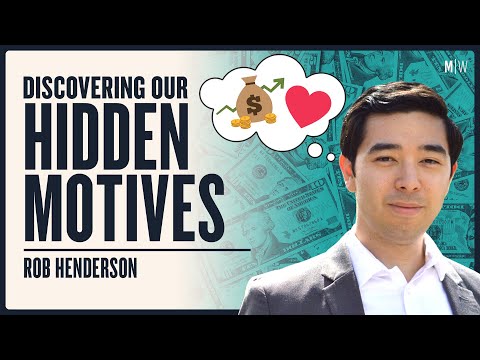
Signalling - Why You Do The Things You Do - Rob Henderson | Modern Wisdom Podcast 292
Rob Henderson (guest), Chris Williamson (host), Narrator
In this episode of Modern Wisdom, featuring Rob Henderson and Chris Williamson, Signalling - Why You Do The Things You Do - Rob Henderson | Modern Wisdom Podcast 292 explores why Signaling Drives Status, Envy, and Our Hidden Social Motives Chris Williamson and Rob Henderson explore signaling theory—how humans constantly send social information, mostly unconsciously—drawing on evolutionary psychology, economics, and anthropology.
Why Signaling Drives Status, Envy, and Our Hidden Social Motives
Chris Williamson and Rob Henderson explore signaling theory—how humans constantly send social information, mostly unconsciously—drawing on evolutionary psychology, economics, and anthropology.
They show how status-seeking underlies everyday behaviors from cars, education, and clothes to online outrage, authenticity, and even plastic surgery in the Zoom era.
The conversation connects signaling to dominance vs. prestige, envy and schadenfreude, in‑group/out‑group dynamics, and why social pain feels as real as physical pain.
They also discuss counter-signaling, how modern civilization changed hierarchy and punishment, and why our stated motives are often prettier than our real ones.
Key Takeaways
You are always signaling, whether you intend to or not.
Everything from how you dress and talk to what you buy or post online leaks information that others use to infer traits like competence, resources, and personality—even when you believe you’re “not signaling.”
Get the full analysis with uListen AI
Costly signals work because they’re hard to fake and tied to real traits.
Luxury cars, elite degrees, or extreme risk-taking mirror biological signals like peacock tails and gazelle stotting—only individuals with underlying health, resources, or ability can reliably produce and sustain them.
Get the full analysis with uListen AI
Prestige-based status matters more for wellbeing than money alone.
Research shows respect and admiration from peers (sociometric status) are more strongly linked to self-esteem and life satisfaction than socioeconomic status, so cultivating competence and being well-liked has deep psychological payoffs.
Get the full analysis with uListen AI
Envy and schadenfreude are strongest toward similar, nearby rivals.
People experience the most malicious joy at misfortunes of same-sex, similar-status peers—likely because they are direct competitors for mates, allies, and opportunities—so managing comparisons with close peers is crucial.
Get the full analysis with uListen AI
Counter-signaling lets the highly secure signal status by breaking norms.
Top universities’ professors dropping titles or tech elites wearing hoodies exemplify counter-signaling: when your base status is already obvious, dressing down or simplifying language can itself become a mark of high status.
Get the full analysis with uListen AI
Social pain is neurologically similar to physical pain and often remembered more intensely.
Rejection, humiliation, and exclusion activate the same brain regions as physical pain, and people more vividly recall social hurts than broken bones, which explains the deep fear of public embarrassment and social judgment.
Get the full analysis with uListen AI
Modern “conspicuous authenticity” is itself a sophisticated status move.
Openly sharing vulnerabilities, trauma, and inner work signals security and trustworthiness in an affluent, safe society—functioning as the latest phase of status competition after conspicuous leisure, consumption, and nonconformity.
Get the full analysis with uListen AI
Notable Quotes
“There’s no escaping the signaling game. Even saying, ‘I don’t care what people think about me,’ is a signal.”
— Rob Henderson
“We’re always signaling, and why you think you do what you do might not really be why you do it.”
— Chris Williamson (paraphrasing the idea with Rob Henderson)
“Social status based on respect and admiration has a stronger relationship with wellbeing than socioeconomic status.”
— Rob Henderson
“We don’t do things just because they feel good. That feeling good has to have some kind of social payoff.”
— Rob Henderson
“If we are built to hide ugly motives and substitute pretty ones, we should suspect that our actual motives are uglier than we think.”
— Rob Henderson quoting Robin Hanson
Questions Answered in This Episode
How can individuals become more honest with themselves about their real, often status-driven motives without becoming paralyzed by self-doubt?
Chris Williamson and Rob Henderson explore signaling theory—how humans constantly send social information, mostly unconsciously—drawing on evolutionary psychology, economics, and anthropology.
Get the full analysis with uListen AI
In practical terms, how can someone deliberately shift from dominance-based to prestige-based status seeking in their career or social life?
They show how status-seeking underlies everyday behaviors from cars, education, and clothes to online outrage, authenticity, and even plastic surgery in the Zoom era.
Get the full analysis with uListen AI
What are some everyday counter-signals people might use to communicate security and confidence without appearing try-hard or performative?
The conversation connects signaling to dominance vs. ...
Get the full analysis with uListen AI
Given that social pain is so powerful, how should schools, workplaces, and online platforms rethink how they handle public criticism and shame?
They also discuss counter-signaling, how modern civilization changed hierarchy and punishment, and why our stated motives are often prettier than our real ones.
Get the full analysis with uListen AI
As conspicuous authenticity becomes a status game, how can we distinguish genuinely vulnerable sharing from strategically curated ‘vulnerability’?
Get the full analysis with uListen AI
Transcript Preview
What researchers have found is that people will experience, you know, what's called schadenfreude, which is pleasure at the suffering of others. But they feel schadenfreude the most when they see someone experience a misfortune who's similar to themselves. We kind of feel more schadenfreude for people who are the same gender as us. So some researchers speculate, oh, this is because if someone is roughly on your level, they are a sexual competitor or maybe a competitor for friends, for allies. And so it might feel good to see them sort of slip up a little bit.
Is everyone signaling all of the time?
Well, yes. Uh, everyone is signaling all of the time, but people don't necessarily know they're signaling, and they're not necessarily consciously signaling all of the time. But however, uh, we are sending information about ourselves at all times, which is sort of the classic academic definition of, of signaling.
What ... How, how would you define it? Someone's new to the topic. What's signaling?
Well, signaling is basically, uh, we, we're all constantly leaking information about ourselves, uh, from the way we talk, the way we dress, uh, the kinds of work that we do, the activities that we choose to engage in. Uh, signals are information that other people sort of pick up based on what they see and what, what kind of information they're inferring from, from our behaviors and so forth.
But the interesting thing about that is not all of the signals, in fact, probably most of the signals are unconscious.
Right. Yeah. I think that ... Well, this is basically borne out by the academic research, is that this is not something that we are, you know, sort of sitting down and, you know, calculating and deliberating, "How am I gonna send information about myself? What kind of information do I want to send?" And even when we do do those things, uh, we're often not even aware of the information that we, we are sending. So for example, if I want to buy like, a fancy car, I'm not thinking to myself, like, "Oh, this is really gonna impress my friends, and it's gonna give me a hot partner, and it's gonna make me look great to my coworkers," or something. Uh, often, it's just like, "This car makes me feel good, and so I want to buy this car." But you know, as a lot of evolutionary psychology research indicates, we don't do things just because they feel good. That feeling good has to have some kind of social payoff, some kind of evolutionary benefit, uh, if you reach back far enough, why that feel- why that feeling good is actually something, uh, you know, that we feel that is so positive.
Is there a golden rule of signaling? Is it like, just why you do what you do might not really be why you do it?
Uh, the golden r- golden rule of signaling. I mean, well, I mean, the first would be sort of related to your first question, I think, which is that, uh, the golden rule is that we're, we're always signaling, and that there's no escaping the signaling game. I've noticed sometimes when I talk about signaling with people, they think like, "Well, I don't do that." Like, "That's, that's silly." Like, you know, "This just sounds like people trying to impress each other or whatever. I'm not, I'm not into that." But even by saying that, you're communicating something about yourself. So there, there's no sort of escaping that signaling game. If I tell you, like, "I don't care what people think about me," you have learned something about me. I have emitted a signal, and now you're, "Oh, you're one of those guys who don't care. Okay, you're that kinda guy." Right? So there's no escaping that. Um, do, do you, do you have a, a sort of rule about, uh, signaling?
Install uListen to search the full transcript and get AI-powered insights
Get Full TranscriptGet more from every podcast
AI summaries, searchable transcripts, and fact-checking. Free forever.
Add to Chrome