Does Anyone Care About Men's Mental Health? - Matt Rudd
Matt Rudd (guest), Chris Williamson (host), Narrator
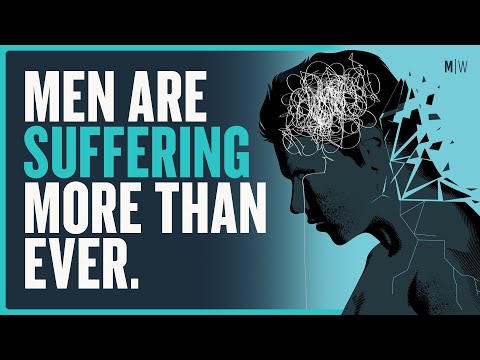
In this episode of Modern Wisdom, featuring Matt Rudd and Chris Williamson, Does Anyone Care About Men's Mental Health? - Matt Rudd explores midlife Men, Silent Struggles: Rethinking Success, Masculinity, and Meaning Chris Williamson and author/journalist Matt Rudd explore why so many ostensibly successful midlife men feel unhappy, anxious, and directionless despite having met society’s traditional milestones. They discuss the “happiness U‑curve,” where life satisfaction bottoms out in the 40s before rising later, and why many men experience not dramatic crises but quiet “midlife doldrums” of fear, overwork, and emotional suppression.
Midlife Men, Silent Struggles: Rethinking Success, Masculinity, and Meaning
Chris Williamson and author/journalist Matt Rudd explore why so many ostensibly successful midlife men feel unhappy, anxious, and directionless despite having met society’s traditional milestones. They discuss the “happiness U‑curve,” where life satisfaction bottoms out in the 40s before rising later, and why many men experience not dramatic crises but quiet “midlife doldrums” of fear, overwork, and emotional suppression.
The conversation critiques cultural scripts for men: relentless pursuit of status and money, fear of seeming weak, the pressure to always ‘keep going,’ and a system built by men that now fails them, especially around work, family, and mental health. They examine how schooling, social expectations, technology, and materialism shape male identity, often crowding out reflection, relationships, and genuine contentment.
Both emphasize the importance of men talking honestly to each other, rebalancing work and family roles, and redefining what ‘success’ means beyond conventional achievement. They argue change happens both structurally (e.g., parental leave, hybrid work) and individually through small daily practices—pausing, being present, caring less about external validation, and starting the ‘inner work’ earlier in life.
Key Takeaways
Midlife malaise is common, subtle, and often overlooked.
Many men don’t experience a dramatic ‘midlife crisis’ but a long, low-grade dissatisfaction—sleeplessness, catastrophizing, aimlessness—after ticking all the boxes (career, marriage, kids) without ever pausing to ask what they actually want.
Get the full analysis with uListen AI
Fear and shame keep men grinding instead of reflecting.
Men often avoid introspection because they fear dropping the ‘spinning plates’ of work and family; questioning meaning feels indulgent and dangerous, so they default to plowing on, even when miserable.
Get the full analysis with uListen AI
Talking honestly with other men is a powerful unlock.
Once men push past embarrassment and have serious—not just banter—conversations, they quickly discover others are struggling too, which reduces isolation and makes it easier to access further support or tools.
Get the full analysis with uListen AI
Success scripts built into schooling and culture narrow men’s lives.
From early education focused on grades and careers, boys are pushed toward linear achievement rather than holistic development; they’re rewarded for compliance and output, not for understanding themselves or building emotional skills.
Get the full analysis with uListen AI
Material success has rapidly diminishing returns on happiness.
Status, money, possessions, followers, or conquests don’t deliver sustained wellbeing beyond a modest threshold; men who can be content with ‘enough’ enjoy a huge competitive advantage in happiness over those locked into endless accumulation.
Get the full analysis with uListen AI
Work–family structures need to change for men as well as women.
While women have been supported into the workplace, men haven’t been equivalently supported into the home; policies like generous shared parental leave and flexible or hybrid work improve both family bonds and productivity.
Get the full analysis with uListen AI
Small daily pauses and presence practices compound over time.
Simple habits—like 15–20 minutes of walking or sitting under a tree without a phone—don’t fix life overnight but gradually train men to worry less, live more in the present, and loosen the grip of constant worst‑case thinking.
Get the full analysis with uListen AI
Notable Quotes
“It wasn’t a crisis, it was more like midlife doldrums, which I think is much more common.”
— Matt Rudd
“Men see it as indulgent to try and seek help for themselves because we’re conditioned from a very young age to be strong and to be successful and not to fail.”
— Matt Rudd
“People can become sedated by comfort; life’s not that good, but it’s not that bad either.”
— Chris Williamson
“If it’s not working for us, then it’s not working for anyone.”
— Matt Rudd
“Most of the guys that I know that are unreservedly chasing accomplishments and women really should be looked on with pity.”
— Chris Williamson
Questions Answered in This Episode
In what ways have you personally internalized the idea that pausing to reflect on your life is ‘indulgent’ or ‘weak’?
Chris Williamson and author/journalist Matt Rudd explore why so many ostensibly successful midlife men feel unhappy, anxious, and directionless despite having met society’s traditional milestones. ...
Get the full analysis with uListen AI
How might your definition of success change if you stopped benchmarking against peers’ careers, possessions, or follower counts?
The conversation critiques cultural scripts for men: relentless pursuit of status and money, fear of seeming weak, the pressure to always ‘keep going,’ and a system built by men that now fails them, especially around work, family, and mental health. ...
Get the full analysis with uListen AI
What specific conversations with male friends are you currently avoiding—and what might happen if you pushed past the awkwardness and had them?
Both emphasize the importance of men talking honestly to each other, rebalancing work and family roles, and redefining what ‘success’ means beyond conventional achievement. ...
Get the full analysis with uListen AI
If you could redesign school for boys, what would you add or remove to better prepare them for emotional and relational life, not just work?
Get the full analysis with uListen AI
What small, daily practice could you introduce to create mental space (e.g., a phone‑free walk or ‘doing nothing’ time), and what resistance do you feel to actually doing it?
Get the full analysis with uListen AI
Transcript Preview
What are you gonna do when you leave school? Are you gonna do a degree? And if you do a degree, how useful is that gonna be and what job are you gonna ... You know, there's this pressure to keep going. And that's all wrapped up with a focus on you have to be a success, particularly as a bloke, not what is it you actually want to do with your life.
(wind blowing) Matt Rudd, welcome to the show.
Thanks for having me, Chris. It's good to be here.
Does life get any easier as you get older in your experience?
No. Thanks for having me. It's been great to be here. Speak to you next time. (laughs)
(laughs) Life doesn't get easier as you get older.
Once you want ... Mm, I think, well, people get happier when they're a lot older. That's the thing. You know about the happiness curve. So, the low point is in your 40s, and then, where you hit rock bottom, and then things start to pick up again when you don't care so much about stuff. So I'm looking forward to my 60th birthday because that's peak happiness.
Why do you think that is? Why is this a U-shaped curve?
Well, that's, that's the whole, that's the whole book, isn't it? It's why, why is it, you know, the points where you've achieved everything if you're lucky that, you know, society expects to you, you to do. Why is it that just at that point, you're, you're extremely unhappy, or not extremely unhappy, quite unhappy? I mean, I, it's, there's a lot of reasons. I think, I think the, the main one in my own experience was, you know, I'd done all these five-year plans. I'd been, you know, done the exams, done, gone to university, gone up the, you know, uh, job ladder, climbed the career ladder, and got married, had kids, all the traditional stuff. And then I kind of popped my head up at the age of 43 and just didn't know what to do next. And I was waking up in the middle of the night. I was catastrophizing, uh, couldn't sleep, and it just got worse and worse. And, and what was interesting, I think you have your own experience. It sounds like, you know, you had quite a few extreme things going on, but for me, it was, it wasn't a crisis, it was more like doldrums, mid-life doldrums, which I think is much more common. If you have a full-blown, blown crisis, you're forced to kind of confront what's going on and, and, and try to change things. But for most of us, it's a kind of struggling on scenario.
That's something that I think about an awful lot, that if you hit rock bottom, there's only one place to go from there. It's one of the reasons why when you watch a movie and the hero falls from grace and then he's drinking and in the gutter and stuff, there's a, a certain amount of romanticism around that because you know that there's only one direction for him to go from there. And the same as anybody that's gone to the gym, if you try and three-quarter squat and then go up from there, it's pretty difficult. But if you bounce out of the bottom, it's actually relatively easy. And I think that you have this in life too, that people can become sedated by comfort, that life's not that good, but it's not that bad either. You don't have the activation energy to actually kick you out of the bottom of whatever you're dealing with. And yeah, that sort of, uh, sedation by comfort, complacency, like not giving up the average for the good or the good for the great, I think that's where a lot of people find themselves.
Install uListen to search the full transcript and get AI-powered insights
Get Full TranscriptGet more from every podcast
AI summaries, searchable transcripts, and fact-checking. Free forever.
Add to Chrome