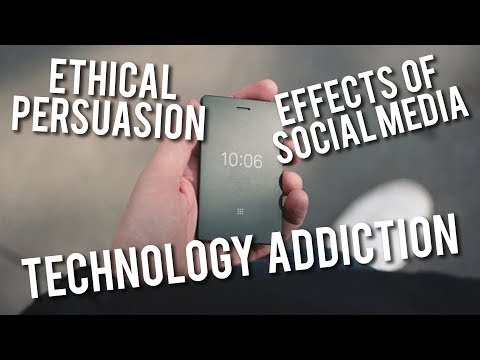
Reducing Smartphone Addiction | The Light Phone
Chris Williamson (host), Kaiwei Tang (guest), Narrator
In this episode of Modern Wisdom, featuring Chris Williamson and Kaiwei Tang, Reducing Smartphone Addiction | The Light Phone explores designing Distraction-Free Phones To Reclaim Attention From Smartphone Addiction Chris Williamson interviews Light Phone CEO Kai Wei about how modern smartphones and app business models exploit human attention and fuel compulsive usage.
Designing Distraction-Free Phones To Reclaim Attention From Smartphone Addiction
Chris Williamson interviews Light Phone CEO Kai Wei about how modern smartphones and app business models exploit human attention and fuel compulsive usage.
They discuss research showing how temporarily removing smartphones increases presence, mindfulness, and perceived quality of life, and how boredom is necessary for creativity and self-reflection.
Kai explains the philosophy and design of the Light Phone and Light Phone 2—minimalist, purposefully limited devices meant to serve as tools rather than addictive platforms.
The conversation explores whether we can or should solve the problem of too much technology with more technology, and positions Light Phone as a lifestyle choice that helps people consciously rebalance their relationship with screens.
Key Takeaways
Intentionally remove your smartphone for defined periods to reset your attention.
Light Phone’s research showed that after 20–60 minutes of initial anxiety and FOMO, people became more observant, present, and later described those phoneless hours as the best parts of their week.
Get the full analysis with uListen AI
Use a dedicated object or device to cue better tech habits.
Kai argues that humans respond to physical symbols—like religious items or special tools—so a purpose-built minimalist phone can more effectively trigger “off-screen” behavior than willpower or settings alone.
Get the full analysis with uListen AI
Protect boredom as a valuable state instead of instantly numbing it with your phone.
Boredom forces you to confront your own thoughts, which is where creativity, self-inquiry, and emotional processing happen; constant phone use short-circuits that process.
Get the full analysis with uListen AI
Recognize that most apps are optimized for time-on-screen, not your wellbeing.
Because their business models depend on attention, apps are intentionally designed to be enticing at every step, making humans—by nature vulnerable—more likely to overuse them.
Get the full analysis with uListen AI
Match your tech to the situation, like you match clothes to occasions.
Instead of carrying a full-featured ‘toolbox’ smartphone everywhere, you can choose a simpler “screwdriver” (like the Light Phone) for walks, family time, or deep work where only calls or basic messaging are truly needed.
Get the full analysis with uListen AI
Reduce the ambient presence of your smartphone in social settings.
Studies Kai cites show that simply having a smartphone visible on the table degrades conversation quality, as both people subconsciously anticipate interruptions and split their attention.
Get the full analysis with uListen AI
Be critical of how social media shapes self-comparison and mood.
The discussion highlights that feeds show a curated ‘best-of’ reel of others’ lives, which people unfairly compare to the messier reality of their own, fueling anxiety and dissatisfaction.
Get the full analysis with uListen AI
Notable Quotes
“Your phone is essentially a hacker in your pocket.”
— Chris Williamson
“We’re not anti-smartphone or anti-technology. We’re just trying to be more human about how we approach technology.”
— Kai Wei
“Boredom is supposed to be how you’re creative, how you look into yourself and start a conversation with yourself.”
— Kai Wei
“When you go out with a Light Phone, you have no social media, no game, no notification. What are you going to do? What’s important in your life?”
— Kai Wei
“If this is not addiction—when it’s the last thing you see at night and the first thing you see in the morning—what is it?”
— Kai Wei
Questions Answered in This Episode
To what extent can individuals realistically resist the attention economy without broader changes to app business models?
Chris Williamson interviews Light Phone CEO Kai Wei about how modern smartphones and app business models exploit human attention and fuel compulsive usage.
Get the full analysis with uListen AI
How much functionality can a ‘minimalist’ phone add before it starts to recreate the very problems it was meant to solve?
They discuss research showing how temporarily removing smartphones increases presence, mindfulness, and perceived quality of life, and how boredom is necessary for creativity and self-reflection.
Get the full analysis with uListen AI
What personal signals should someone look for to know they’ve crossed from healthy phone use into harmful dependence?
Kai explains the philosophy and design of the Light Phone and Light Phone 2—minimalist, purposefully limited devices meant to serve as tools rather than addictive platforms.
Get the full analysis with uListen AI
Could widespread adoption of devices like the Light Phone meaningfully reduce anxiety and depression rates, or would other factors quickly fill the attention gap?
The conversation explores whether we can or should solve the problem of too much technology with more technology, and positions Light Phone as a lifestyle choice that helps people consciously rebalance their relationship with screens.
Get the full analysis with uListen AI
How might parents use ideas from this conversation to introduce healthier tech habits for their children from an early age?
Get the full analysis with uListen AI
Transcript Preview
(wind blowing) Hi, friends. On last week's episode, we discussed how people can become addicted to social media, how cognitive biases that we don't know even exist in our brains are being manipulated by almost every (laughs) social media that exists, and how your phone is essentially a hacker in your pocket. The feedback this week's been absolutely fantastic. I've got so many tweets and messages from people saying that they are trying to reduce their phone time, and this has helped open their eyes to why it's not necessarily their fault. This week, I'm sitting down with Cai Wei, who is the CEO of thelightphone.com, and they think that they have developed a product which can enable us to spend more time off screen. I do think that there's an important question to be asked here, and it is, can we fix the problem of too much technology with more technology? That's a question you'll have to answer yourself. Also, I do want to say that I was not sponsored or paid to, uh, interview Cai, and I found him off my own back because of how interested I was in the product, and I wanted to hear his philosophy on it. I also want to say (laughs) that I'm considering buying one after my conversation with him, but that's completely independent. So, here we go. Cai Wei. (instrumental music) So, Cai, welcome to Modern Wisdom. Very good to meet you.
Thanks for having me. Please, sure.
Thank you very much for coming on, man. Um, you are CEO of The Light Phone.
Uh, that's correct, yes.
So, I got introduced to the product from a friend who just linked me to it online, and I had a, I had a browse around, and it seemed it's a real, um, a real unique device as far as I can see. For those people who-
Thank you.
... (laughs) those people who, uh, think that technology's sort of moving in one direction, which is more, more functionality, more, uh, integration with our lives, and you guys have come up with a product which kinda goes in the complete opposite direction. Do you think that would be fair to say?
Yeah, I see a lot of, uh, press, um, uh, mention us as anti-smartphone, but, you know, we always wanted to clarify that we're not anti-technology or anti-smartphone. We're just trying to, you know, be more human about how we approach technology, um-
Mm-hmm.
... specifically the smartphone that we all have 24/7.
Yeah. I understand that. So, can you give us some background, background to yourself and how this concept came about?
Yeah, of course. So, um, my background is in design and design research. Um, four years ago, or wait, five years ago, um, I quit my job, um, and joined this incubator that Google started, uh, in New York specifically for designers, just because, you know, they f- th- they think that... The hypothesis that they think designers, uh, when you put designers on the founding table, that w- that product will create it with empathy, uh, can really create social impact. So, we were, uh, my co-founder Joe and I met in this space, and we were encouraged to do mobile app, you know, just like any other startup.
Install uListen to search the full transcript and get AI-powered insights
Get Full TranscriptGet more from every podcast
AI summaries, searchable transcripts, and fact-checking. Free forever.
Add to Chrome