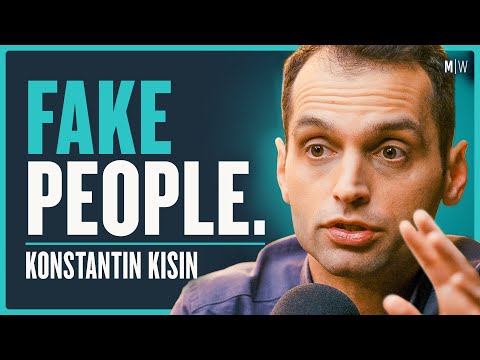
Why Are We Glorifying Insanity? - Konstantin Kisin (4K)
Chris Williamson (host), Konstantin Kisin (guest)
In this episode of Modern Wisdom, featuring Chris Williamson and Konstantin Kisin, Why Are We Glorifying Insanity? - Konstantin Kisin (4K) explores konstantin Kisin Dissects Victim Culture, Masculinity, Media, And Meaning Konstantin Kisin and Chris Williamson examine how online incentives fuel a culture of performative victimhood, virtue signaling, and tribal extremism, and how this distorts both public discourse and personal identity.
Konstantin Kisin Dissects Victim Culture, Masculinity, Media, And Meaning
Konstantin Kisin and Chris Williamson examine how online incentives fuel a culture of performative victimhood, virtue signaling, and tribal extremism, and how this distorts both public discourse and personal identity.
They argue that social media over-rewards outrage, contrarian posturing, and charismatic takes while under-rewarding truth, nuance, and responsibility, leaving many people lost, nihilistic, and susceptible to ideological cults.
A large portion of the discussion focuses on modern masculinity, structural male disadvantages, and why both feminist and manosphere extremes are harming cooperation between men and women, undermining family, and eroding meaning.
They also explore trade-offs in climate policy, free speech, COVID, media ecosystems, and the need to move beyond anti‑woke reaction into building robust institutions, positive visions, and new media organizations.
Key Takeaways
Victimhood has become socially and digitally incentivized, creating more self-identified victims.
Kisin argues that people respond to incentives; when status and attention accrue to those who claim harm, more people adopt victim identities, often performatively, especially online where avatars can conceal privilege.
Get the full analysis with uListen AI
Performative morality often masks personal dysfunction or hypocrisy.
He notes that public hyper-virtue—e. ...
Get the full analysis with uListen AI
Social media structurally rewards outrage, dunking, and extreme tribal beliefs.
Because engagement is driven by anger and conflict, platforms punish moderation and reward absurd loyalty signals to one’s tribe, which polarizes discourse and encourages people to adopt more extreme positions for status.
Get the full analysis with uListen AI
We’ve become ‘trade-off denialists,’ pretending solutions have no costs.
Using climate policy, COVID responses, and social issues, Kisin says we refuse to openly discuss trade-offs—e. ...
Get the full analysis with uListen AI
Both woke and anti‑woke camps now weaponize victimhood; the next step must be positive vision.
Kisin thinks anti‑woke figures have slid into their own “right-wing snowflake-o-sphere,” trading on cancellation narratives; he argues the real task now is articulating what we are for—meaning, responsibility, family, and constructive alternatives.
Get the full analysis with uListen AI
Any ideology that pits men against women is corrosive to society.
He criticizes both some strands of feminism and the manosphere/red-pill world for framing the opposite sex as the enemy, stressing that men and women evolved to collaborate and that the deepest life meaning for most comes from intimate partnership.
Get the full analysis with uListen AI
Free speech has real harms, but censorship is more dangerous long-term.
Kisin insists we must be honest that free expression enables hateful and dangerous speech, yet argues it’s better to keep bad ideas in the open than push them into opaque enclaves, given the power and centralization of modern platforms.
Get the full analysis with uListen AI
Notable Quotes
“If you incentivize victimhood, you're gonna get victims.”
— Konstantin Kisin
“People who are hiding a bunch of shit have to go out and then pretend to be something they're not.”
— Konstantin Kisin
“Any ideology that pits men against women or women against men is toxic and damaging and dangerous and unhealthy.”
— Konstantin Kisin
“We live in a world of trade-off denialism.”
— Konstantin Kisin (attributing the phrase to someone else)
“What men need is to feel powerful and capable… The solution to men's problems is for men to be better.”
— Konstantin Kisin
Questions Answered in This Episode
How can individuals practically resist the online incentives that push them toward performative victimhood or outrage-driven engagement?
Konstantin Kisin and Chris Williamson examine how online incentives fuel a culture of performative victimhood, virtue signaling, and tribal extremism, and how this distorts both public discourse and personal identity.
Get the full analysis with uListen AI
What would a robust, positive, post‑woke vision for culture actually look like in concrete policies and norms?
They argue that social media over-rewards outrage, contrarian posturing, and charismatic takes while under-rewarding truth, nuance, and responsibility, leaving many people lost, nihilistic, and susceptible to ideological cults.
Get the full analysis with uListen AI
How can we advocate for men and boys’ structural disadvantages without slipping into a counter‑victimhood culture?
A large portion of the discussion focuses on modern masculinity, structural male disadvantages, and why both feminist and manosphere extremes are harming cooperation between men and women, undermining family, and eroding meaning.
Get the full analysis with uListen AI
Given the acknowledged harms of free speech and the dangers of censorship, what specific moderation principles should major platforms adopt?
They also explore trade-offs in climate policy, free speech, COVID, media ecosystems, and the need to move beyond anti‑woke reaction into building robust institutions, positive visions, and new media organizations.
Get the full analysis with uListen AI
In a world of information overload and institutional distrust, how should an ordinary person build a reliable personal ‘sense-making’ toolkit?
Get the full analysis with uListen AI
Transcript Preview
One of the things that we've spoken about privately that we haven't yet spoken about publicly is victimhood.
Mm.
And James Cantor came on the show, he's a sex researcher, he gave me this really interesting quote I wanted you to react to. "Shifting from aiding victims to aiding everyone who claims victimhood has led to an awful lot of charlatanism. Shifting from doing good to looking good has led to an awful lot of virtue signaling. That interaction is now Western culture, at least online."
Mm.
What do you think about that?
I think it's true. And if you think about, you know, I believe people respond to incentives. That's fundamentally the driving force of all human behavior, we respond to incentives. If you incentivize victimhood, you're gonna get victims. Uh, and I think online is really the- the shift that happens because the online world rewards it, and it also allows people to fake victimhood in a way that in person you can't really. Like, if you see someone living in a massive house, you go, "Well, you may be a victim in some ways, but you're actually well taken care of here." But online, you can create any avatar you want, and that avatar can be projected onto the online space from a mansion. And that's kinda where we are.
Yeah. The fact that our opinions are more important than our deeds, and our words are scrutinized while our actions are done in private. You know, how many people have we seen over the last few years, Ellen DeGeneres, Lizzo, uh, who's that late night host that just got popped for apparently being a... Jimmy Fallon-
Mm-hmm.
... I think, uh, allegedly has... These people that outwardly are supposed to be champion for the underclass, like, "I'm supporting women of all sizes," or, "I'm supporting people that have different sexual orientations," or, "I do the whatever." Then you find out behind the scenes that they can't even treat a PA with dignity. And I know it- it seems to me like being someone who out front proselytizes about standing up for the- for the underclass is almost becoming a red flag to go, "I probably should scrutinize what's actually going on behind the scenes here."
When I was a standup comedian, in the comedy world there's a golden rule of this: The more a comedian talks about how he's a male feminist on stage, the sleazier he is backstage. That's- it's like a golden rule, never fails, always the same. So, anyone who goes on stage and talks about how brilliant they are, they're always, always, always sleazy and evil behind the scenes. It's just how it works. And I think it's actually, it's a kind of compensatory mechanism. People who are hiding a bunch of shit have to go out and then pretend to be something they're not.
Mm. Their morality sort of stands on the shoulders of this performative bullshit.
Install uListen to search the full transcript and get AI-powered insights
Get Full TranscriptGet more from every podcast
AI summaries, searchable transcripts, and fact-checking. Free forever.
Add to Chrome