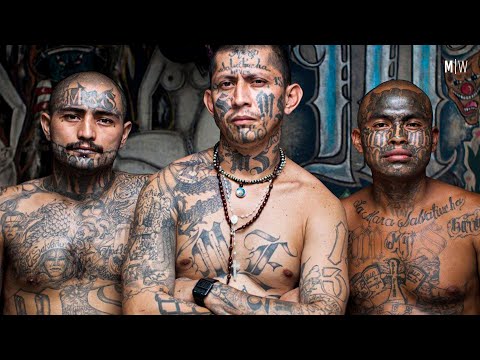
MS-13: America's Most Notorious Gang - Steven Dudley | Modern Wisdom Podcast 316
Steven Dudley (guest), Chris Williamson (host)
In this episode of Modern Wisdom, featuring Steven Dudley and Chris Williamson, MS-13: America's Most Notorious Gang - Steven Dudley | Modern Wisdom Podcast 316 explores inside MS-13: Social Family, Brutal Violence, And Failed Crackdowns Journalist Steven Dudley explains MS-13 as a loosely organized, transnational street gang born from Salvadoran refugees in 1980s Los Angeles, driven more by social cohesion than by sophisticated criminal profit. He argues that despite their fearsome reputation and gruesome violence, MS-13 are relatively poor, disorganized criminals whose primary function is as a surrogate family and local community. The conversation explores their structure, prison dynamics, recruitment, initiation, attempts to leave, and alleged political pacts in El Salvador, alongside the failures of US-exported ‘tough on crime’ policies. Dudley ends by outlining what more realistic, long-term responses might look like and warning that parts of MS-13 are now slowly “leveling up” into more sophisticated, politically savvy criminal enterprises.
Inside MS-13: Social Family, Brutal Violence, And Failed Crackdowns
Journalist Steven Dudley explains MS-13 as a loosely organized, transnational street gang born from Salvadoran refugees in 1980s Los Angeles, driven more by social cohesion than by sophisticated criminal profit. He argues that despite their fearsome reputation and gruesome violence, MS-13 are relatively poor, disorganized criminals whose primary function is as a surrogate family and local community. The conversation explores their structure, prison dynamics, recruitment, initiation, attempts to leave, and alleged political pacts in El Salvador, alongside the failures of US-exported ‘tough on crime’ policies. Dudley ends by outlining what more realistic, long-term responses might look like and warning that parts of MS-13 are now slowly “leveling up” into more sophisticated, politically savvy criminal enterprises.
Key Takeaways
MS-13 is a decentralized social community first, criminal enterprise second.
Dudley emphasizes that members primarily join for belonging, protection, identity and a surrogate family; money-making activities are fragmented, small-scale, and often poorly run compared to cartels or mafias.
Get the full analysis with uListen AI
Their extreme violence primarily builds internal cohesion, not economic control.
Group murders, machete attacks, and public brutality function as rituals of shared sacrifice and proof of commitment, rather than rational strategies to dominate lucrative criminal markets.
Get the full analysis with uListen AI
Top‑down ‘organized crime’ frameworks misread MS-13 and drive bad policy.
Law and policy copied organized-crime definitions onto a loosely knit street gang, leading to overbroad gang databases, mass incarceration, and export of flawed US tactics to Central America, which often strengthened the gangs.
Get the full analysis with uListen AI
Prisons have acted as incubators and headquarters, not solutions.
Segregating prisons by gang to reduce violence unintentionally handed groups like MS-13 and 18th Street de facto territorial control and operational hubs, mirroring the Mexican Mafia’s evolution from prison power.
Get the full analysis with uListen AI
Childhood violence and home abuse are key drivers into gang life.
Many recruits grow up amid domestic physical and sexual abuse, making the street—and the gang’s apparent protection, status, and ‘family’—more attractive than staying at home.
Get the full analysis with uListen AI
Evangelical churches function as one of the only respected exit routes.
MS-13 often allows members to fully ‘retire’ if they sincerely commit to evangelical Christianity, seeing it as a comparable higher calling with similar structure, cohesion, and time demands to gang life.
Get the full analysis with uListen AI
Parts of MS-13 are beginning to ‘level up’ into more sophisticated, political actors.
Dudley observes emerging cliques involved in larger drug trafficking, money laundering, and political bargaining, suggesting a possible long-term trajectory where some factions become less openly violent and more embedded in formal economies and politics.
Get the full analysis with uListen AI
Notable Quotes
“They are a social organization first, maybe an antisocial one, but social. It’s a community first, a criminal organization second.”
— Steven Dudley
“They’re really bad criminals… If you’re managing a very sophisticated criminal organization, why would you align yourself with them?”
— Steven Dudley
“They are victims in a certain way, and they are victimizers. They embody both of these things constantly.”
— Steven Dudley
“By throwing them in jail, you are just reinforcing this social cohesion.”
— Steven Dudley
“Maybe permitting them to act more effectively as criminals is the most expedient way to get them out of the worst types of criminality.”
— Chris Williamson
Questions Answered in This Episode
If MS-13 is fundamentally a social community, what kinds of alternative ‘communities’ could realistically compete with its pull in poor, violent neighborhoods?
Journalist Steven Dudley explains MS-13 as a loosely organized, transnational street gang born from Salvadoran refugees in 1980s Los Angeles, driven more by social cohesion than by sophisticated criminal profit. ...
Get the full analysis with uListen AI
How should laws and policing change if we stop treating MS-13 as a classic cartel-style organized crime group and instead as a loose network of violent street cliques?
Get the full analysis with uListen AI
What ethical trade-offs are involved in tacitly allowing gangs to ‘professionalize’ economically if that reduces massacres, torture, and public brutality in the short term?
Get the full analysis with uListen AI
Given that prisons often strengthen gang structures, what would a genuinely constructive, non-incubating prison policy for gang members look like?
Get the full analysis with uListen AI
How can states address the widespread domestic abuse and childhood trauma that feed gang recruitment without massively overreaching into family life?
Get the full analysis with uListen AI
Transcript Preview
That's another reason why they have never become this very sophisticated criminal organization, because they're really bad criminals.
(laughs)
You know? I mean, it's, it, it comes down to that. And like -- and if you are managing a very sophisticated criminal organization, why would you align yourself with them? They're totally visible. They, they fall on the radar of, of law enforcement non-stop. They're all tattooed up, and they're really bad at what they do, and there's so many possible leaks of information, and it just doesn't make sense on so many levels to align yourself with them. (wind blowing)
How would you describe what you do for work?
I would say I find human stories about organized crime and corruption, mostly in the Americas, where I live, and I try and tell those human stories to illustrate institutional or systematic problems that we face as societies, as countries. Um, and, you know, for me, the most exciting thing is getting to and telling those human stories. That's, that's the part that gets me up in the morning, and that's what I spend most of my time doing. So, a lot of it is kind of finding these people, getting them to talk to you, and then reconstructing their stories, hopefully in the most accurate way possible. We, as humans, are incredibly complex. Um, we are, we're gray. There's no black and white. So, that's what I aim to tell, is that gray area. I love that gray area.
That's where the interesting stuff is.
Yes, absolutely. So, I'm a specialist in the gray area.
(laughs) Yeah, I get that. You've been focused on MS-13 for quite a while now. What is MS-13?
MS-13 is a gang that was born, really, from refugees that were fleeing a civil conflict in El Salvador and other parts of Central America, eventually, in the 1980s, and they landed in spaces like Los Angeles, in the deep heart of Los Angeles, and found themselves in the midst of hundreds of street gangs, and they formed one of their own. Initially, it's a gang that is grouped together, or at least their, uh, l- their, their, their sort of common bond was initially heavy metal music, of all things. Um, so, that's, I guess, innocent enough, and, um, that evolved, uh, evolved for a lot of reasons, perhaps most of all because of the environment in which they were living, and it became this international or transnational gang over the last 40 years. It is an incredibly notorious gang, even if it's not the most violent, mostly because of these very gruesome ways in which they go after and often kill their rivals or perceived rivals. They use blunt instruments like machetes, knives, those sorts of things, and they kill in groups. Um, so they act as a group, and they often kill in numbers. So, you know, three to four victims, what would be considered sort of a massacre in international standards. You know, those sorts of things, and very often in public. So, they have this, you know, fearsome reputation. But they're really kind of a, a, a, they're a haphazard, loosely knit network. They're grouped under this umbrella, the MS-13, but they're, they're linked, they're, they're, they're more linked, more closely connected to what, what are called cliques, or their sort of personal cells, where they grew up. So, it's a very ... You know, while it's international, most of their activities are very much local. So, that's, that's where it comes from. And then the fascination around them comes from just mostly, I would say, this gruesome way in which they go after their rivals or perceived rivals.
Install uListen to search the full transcript and get AI-powered insights
Get Full TranscriptGet more from every podcast
AI summaries, searchable transcripts, and fact-checking. Free forever.
Add to Chrome