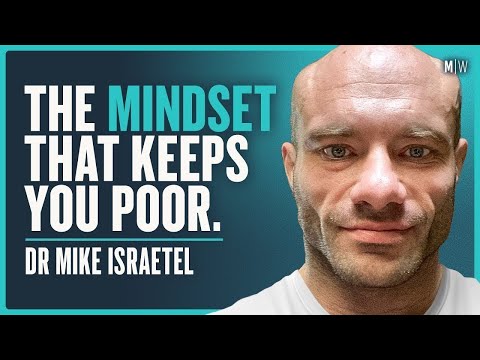
How To Create A Life Of Purpose & Achievement - Dr Mike Israetel
Mike Israetel (guest), Chris Williamson (host), Narrator
In this episode of Modern Wisdom, featuring Mike Israetel and Chris Williamson, How To Create A Life Of Purpose & Achievement - Dr Mike Israetel explores dr. Mike Israetel Dismantles Pessimism, Porn Panic, And AI Doomsaying Dr. Mike Israetel joins Chris Williamson to argue that most people are systematically too pessimistic about the state of the world, economics, and their own lives, and that a sober look at data reveals consistent long‑term progress. They challenge popular narratives about wage stagnation, cost‑of‑living, and money not buying happiness, contending that work, wealth creation, and financial security can be profound sources of meaning when approached realistically rather than cynically.
Dr. Mike Israetel Dismantles Pessimism, Porn Panic, And AI Doomsaying
Dr. Mike Israetel joins Chris Williamson to argue that most people are systematically too pessimistic about the state of the world, economics, and their own lives, and that a sober look at data reveals consistent long‑term progress. They challenge popular narratives about wage stagnation, cost‑of‑living, and money not buying happiness, contending that work, wealth creation, and financial security can be profound sources of meaning when approached realistically rather than cynically.
The conversation then critiques both left‑ and right‑wing pathologies: victimhood and vague ‘systemic’ explanations on one side, and conspiracy thinking, moral panics (especially around porn), and casual accusations (e.g., calling public figures pedophiles) on the other. They also explore how attitude toward work—taking pride versus disengaged cynicism—directly shapes career outcomes and daily wellbeing.
In the final third, they tackle AI, population collapse, and x‑risk. Israetel positions himself as a techno‑optimist, arguing that more intelligent systems tend to be more thoughtful and less destructive, that AGI is likely to arrive soon, and that fears of inevitable malevolent superintelligence are overstated compared with the upside of smarter allies and universal robotics.
Throughout, both emphasize a “realism over optimism/pessimism” stance, the dangers of worry and shame (around success, money, sex, or porn), and the importance of reframing everyday activities—especially work—as opportunities for presence, pride, and contribution rather than as prisons to escape from.
Key Takeaways
Most people radically underestimate how much the world has improved.
Israetel cites Hans Rosling and economic data to show that poverty, living standards, and time‑cost of goods have broadly improved, but cognitive biases and selective media attention make people believe everything is getting worse.
Get the full analysis with uListen AI
Pessimism feels like realism but often functions as a psychological shield.
Adopting a pessimistic stance lets people hedge their ego—if things go badly, they were ‘right’; if things go well, it’s a pleasant surprise—yet this stance becomes increasingly detached from a generally improving reality.
Get the full analysis with uListen AI
Work can be a primary source of meaning if you choose pride over cynicism.
Even in low‑status jobs, taking pride, being positive, and seeing your role as service to others improves your day‑to‑day experience and is also the most reliable path to promotion and better opportunities.
Get the full analysis with uListen AI
Money absolutely can buy happiness—especially security and generosity.
Beyond material purchases, Israetel stresses that money buys financial security (freedom from existential fear) and the ability to support loved ones or causes, which often produces deeper and more durable satisfaction.
Get the full analysis with uListen AI
Worry and shame are productivity killers, not performance boosters.
They argue that neurotic worry adds no real strategic insight; calm, attentive work in a flow state produces more success, while shame—around success, failure, or porn use—tends to create the very problems people fear.
Get the full analysis with uListen AI
Moral panics (about porn, COVID, or conspiracies) are often self‑fulfilling.
When culture tells people that porn or certain behaviors are inherently damaging, those expectations generate guilt and pathology; similarly, wild COVID or political conspiracies rarely get updated when predictions fail, eroding epistemic standards.
Get the full analysis with uListen AI
AI and advanced robotics are more likely to be transformative allies than inevitable killers.
Israetel contends that as systems become more intelligent they tend toward greater thoughtfulness, not blind destruction, and that AGI plus universal robotics will likely solve labor and loneliness problems faster than population decline can create them.
Get the full analysis with uListen AI
Notable Quotes
“A sneer is not an argument.”
— Dr. Mike Israetel (citing Steven Pinker)
“Your cynical bitch ass puts up with his bullshit. That’s why you’re cynical.”
— Dr. Mike Israetel
“We give up happiness to achieve success so that we can finally enjoy happiness when we achieve enough success.”
— Chris Williamson
“Worry is care expressed in the wrongest possible way.”
— Dr. Mike Israetel
“As systems become more intelligent, they generally become less violent and more constructive.”
— Dr. Mike Israetel
Questions Answered in This Episode
How can an individual practically audit and correct their own ‘pessimistic fallacy’ when consuming news or social media?
Dr. ...
Get the full analysis with uListen AI
What concrete steps can someone in a menial or low‑status job take this week to transform it into a source of pride and meaning rather than resentment?
The conversation then critiques both left‑ and right‑wing pathologies: victimhood and vague ‘systemic’ explanations on one side, and conspiracy thinking, moral panics (especially around porn), and casual accusations (e. ...
Get the full analysis with uListen AI
Where is the line between healthy, non‑pathological porn use and genuinely harmful behavior, and who should define it?
In the final third, they tackle AI, population collapse, and x‑risk. ...
Get the full analysis with uListen AI
If AGI and universal robotics arrive as quickly as Israetel predicts, what kinds of skills or mindsets will be most valuable for humans to cultivate?
Throughout, both emphasize a “realism over optimism/pessimism” stance, the dangers of worry and shame (around success, money, sex, or porn), and the importance of reframing everyday activities—especially work—as opportunities for presence, pride, and contribution rather than as prisons to escape from.
Get the full analysis with uListen AI
How can we balance legitimate systemic critiques (e.g., housing regulation, healthcare) with personal responsibility, without collapsing into either fatalism or denial?
Get the full analysis with uListen AI
Transcript Preview
You don't wanna really take pride in your work or try to take pride in your work 'cause your job sucks. So if you took pride in your work, what would happen? When you take pride in your work, do they pay you less? "Like, no, but I had to put up with my boss's bullshit." You have to put up with his bullshit one way or another. Your cynical ass puts up with his bullshit. That's why you're cynical. London is like my spirit place. I think London is the greatest place on Earth. And I love hearing all that Harry Potter bullshit. I fucking can't get enough. Anything in a British accent is just superior. I wish I spoke with a British accent. You sound smarter, cooler, James Bond, sex with random girls, alcoholism. You know, all the James Bond stuff.
Mike-
Um...
...my culture is not your costume, okay?
(laughs)
So I suggest that you stop putting it on and LARPing as mine, 'cause that is, uh, heavily appropriating, and it's not yours to wear.
Yeah, and actually, I was born in Russia, so I actually wholly appropriated a language of your birth nation.
Get off it.
Which is really offensive.
Right. Let's get started. Mike Israetel, welcome to the show.
Thanks f- for having me, Chris. I'm, I'm super pumped to be here, man.
What is the pessimistic fallacy?
The pessimistic fallacy is a cognitive bias that the average person shares, uh, is very, very prevalent. Not everyone has it. Most people have it to some degree. And that cognitive bias is to take any scenario, any given presentation of data, any sort of prediction of the future, uh, specifically predictions of, you know, we have this situation, how is it going to unfold? Is the situation going to stay roughly the same? Poverty, for example. Uh, how is poverty? It... How bad is it now? How has it been going? Has poverty been decreasing over time? Has it been increasing over time? Has it been roughly stable? In 10, 20, 30 years, how do you predict poverty will go? Will it get much better? Will it improve? Will it stay roughly the same? And there has been a profound amount of research done on this. Uh, Hans Rosling's book, Factfulness, is probably a really good place to go for it, a great sort of high-level summary. But, uh, without putting too fine a point on it, uh, almost everyone is insanely wrong about understanding how the world works, and that wrongness isn't, um... it's not normally distributed. It's not. Just some people overestimate, some people underestimate. Most people, not all, but most, are you would think inexplicably pessimistic. They think that things used to be better in the past, where in fact it's almost, uh, almost always not the case. They think alm- on almost any global scenario that things y- are, are very bad today. Uh, uh, to put it more technically, worse today than they really are if we examine the empirical evidence. And their predictions for the future, again, tend to be i- very pessimistically inclined, such that, uh, i- they not only think this, but, uh, uh, a sort of in-baked m- m- maybe a sort of subsidier of the fallacy is if you try to point it out to people, uh, it's an iterative loop if they apply their pessimistic fallacy to argue back to you. So they go, "Well, you're just a Pollyanna. Like, you just think it's all hunky-dory." And they just apply another layer of pessimism to your attempt to correct them. And it's tough because you end up, uh... It's very easy to caricature self when you're a pessimist as a realist, or at least you're hedging your understanding. You're like, "Look, look, if things turn out better, hey, amazing, but I think they're gonna be worse. And if, i- worst case scenario, they turn out better. Uh, uh, best case scenario, I'm right." Which other... Which either one of those worst cases, it's kind of like a hedging their bets situation. That's a common retort. So that tends to be how the pessimistic fallacy is expressed.
Install uListen to search the full transcript and get AI-powered insights
Get Full TranscriptGet more from every podcast
AI summaries, searchable transcripts, and fact-checking. Free forever.
Add to Chrome