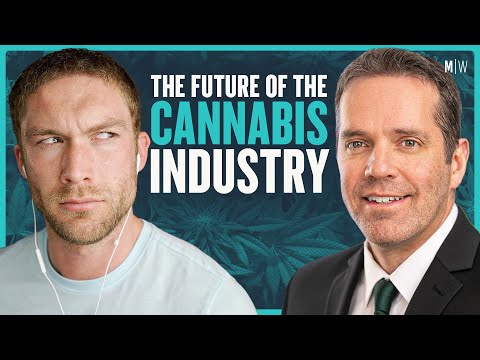
How Does The Cannabis Industry Work? - Chris Walsh | Modern Wisdom Podcast 333
Chris Walsh (guest), Chris Williamson (host)
In this episode of Modern Wisdom, featuring Chris Walsh and Chris Williamson, How Does The Cannabis Industry Work? - Chris Walsh | Modern Wisdom Podcast 333 explores inside Cannabis: From Counterculture Curiosity To Multi-Billion-Dollar Industry Chris Walsh, CEO of MJBiz, explains how the legal cannabis industry rapidly evolved from fringe counterculture to a mainstream, multi‑billion‑dollar business despite remaining federally illegal in the U.S.
Inside Cannabis: From Counterculture Curiosity To Multi-Billion-Dollar Industry
Chris Walsh, CEO of MJBiz, explains how the legal cannabis industry rapidly evolved from fringe counterculture to a mainstream, multi‑billion‑dollar business despite remaining federally illegal in the U.S.
He unpacks the bizarre legal framework where state-legal operations coexist with federal prohibition, and how that gray area, plus public support and tax revenue, allowed the industry to explode.
Walsh discusses market size, COVID’s role in accelerating sales, the growing dominance of recreational over medical, and the shift from scrappy pioneers to corporate, celebrity-backed brands.
He also touches on global trends, UK prospects, product innovation (from edibles to topicals), CBD’s uncertain ceiling, and whether cannabis companies should be leading the emerging psychedelics space.
Key Takeaways
Understand the legal patchwork before entering the cannabis business.
Every U. ...
Get the full analysis with uListen AI
Expect volatility: regulations and market dynamics change faster than in most industries.
Policy shifts, new states legalizing, and evolving public attitudes can quickly create or destroy opportunities, so operators and investors must build flexible strategies and avoid overcommitting to any one regulatory status quo.
Get the full analysis with uListen AI
Specialize instead of chasing every apparent opportunity.
Walsh stresses that companies which jump into multiple segments (new states, new product lines, even psychedelics) without a clear strategic thread, resources, or know‑how often overextend and fail despite strong market growth.
Get the full analysis with uListen AI
Trust and cultural fluency still matter more than ‘MBA speak’ in this space.
Many legacy operators and stakeholders won’t engage with outsiders who only bring corporate jargon—building relationships, understanding the culture, and respecting early participants remain critical to doing deals and operating effectively.
Get the full analysis with uListen AI
Branding and positioning must match your target consumer, not a generic ideal.
There’s no single “right” dispensary or product model; an Apple Store‑style MedMen, a wood‑paneled ‘earthy’ shop, or a Vegas spectacle like Planet 13 can all work if they’re aligned with the local market and user demographics.
Get the full analysis with uListen AI
Recreational markets quickly outgrow medical, reshaping patient behavior.
Once adult-use becomes legal, medical sales often shrink as patients opt for the convenience of recreational stores despite higher taxes, raising questions about whether a distinct medical framework will persist long term.
Get the full analysis with uListen AI
Don’t confuse total industry growth with sound company fundamentals.
Even amid booming sales, some high‑profile firms are poorly run, overcapitalized, or engaging in questionable practices—Walsh highlights Canada’s boom‑and‑bust as a warning against hype-driven investing without rigorous financial scrutiny.
Get the full analysis with uListen AI
Notable Quotes
“It is this stupid situation where you’ve got 38, I think we just had the 39th state legalizing medical, and then we have 17 with recreational… and you have all these businesses and billions of dollars being generated, but it’s federally illegal.”
— Chris Walsh
“This was a drug I couldn’t even talk about or was nervous to talk about publicly 10 years ago… and 10 years later, it’s deemed an essential business in a global pandemic.”
— Chris Walsh
“The counterculture is actually becoming smaller and smaller a piece as the suits, as the business people, come in and start running this like every other industry.”
— Chris Walsh
“If I was gonna fail, I’d say, ‘Hey, let’s go tackle this, this, and this, and this’ without a strategic thread behind them or the resources or the know‑how to do it right.”
— Chris Walsh
“There’s no one right model because the consumer base is so broad.”
— Chris Walsh
Questions Answered in This Episode
How sustainable is the current state–federal legal contradiction in the U.S., and what would realistically trigger decisive federal reform?
Chris Walsh, CEO of MJBiz, explains how the legal cannabis industry rapidly evolved from fringe counterculture to a mainstream, multi‑billion‑dollar business despite remaining federally illegal in the U.S.
Get the full analysis with uListen AI
As corporate players and celebrities increasingly dominate the space, how can policymakers and entrepreneurs protect opportunities for small, legacy, and ‘craft’ operators?
He unpacks the bizarre legal framework where state-legal operations coexist with federal prohibition, and how that gray area, plus public support and tax revenue, allowed the industry to explode.
Get the full analysis with uListen AI
What regulatory or cultural conditions would need to change for the UK to move from limited medical use toward broader legalization?
Walsh discusses market size, COVID’s role in accelerating sales, the growing dominance of recreational over medical, and the shift from scrappy pioneers to corporate, celebrity-backed brands.
Get the full analysis with uListen AI
How should investors differentiate between solid cannabis businesses and hype-driven, poorly governed companies in such a rapidly growing market?
He also touches on global trends, UK prospects, product innovation (from edibles to topicals), CBD’s uncertain ceiling, and whether cannabis companies should be leading the emerging psychedelics space.
Get the full analysis with uListen AI
To what extent should cannabis companies be the ones driving the emerging psychedelics industry, versus leaving that to healthcare and pharmaceutical actors?
Get the full analysis with uListen AI
Transcript Preview
It is a stupid situation where you've got 38 state legalizing medical, and then we have 17 with recreational, and you have all these businesses and billions of dollars being generated, but it's federally illegal. It's the dumbest situation I've ever seen-
(laughs)
... that we, we can't do anything about it. I mean, it's so, it's so ridiculous.
(wind blows) Chris Walsh, welcome to the show.
Thank you for having me on. Excited to talk cannabis.
(laughs) What is someone with an MBA doing working in the cannabis industry?
(laughs) Well, I was finishing it, uh, when I got involved back in 2011, and definitely got a lot of questions about what the hell I was doing. Um, I was, I was finishing my MBA and was... had a background in journalism, so I was a business reporter and editor at newspapers in the US and in South Korea. Uh, so what is a person with an MBA doing? You're seeing more and more of people like me come in. But it's, uh, it's a massive business opportunity, and it's, it's in the US, it's in Canada, it's in Europe, it's in South America. It's all over the world now. So, uh, I, I'm in it because first and foremost, it was a fascinating industry that I wanted to be part of. I don't come from the cannabis culture, but from a business perspective, uh, I thought there was, uh, a lot to like here and to helping develop a new industry. And, uh, also, you know, cannabis helps people in a lot of ways. So, it's not like we're making, you know, cups or whatever, you know. Like, we're, we're doing something, we're making a product, we're helping an industry that relies on a product that's actually helping people, and that's important to me personally too. So, uh, a lot of unique aspects about cannabis that lured me into it.
What makes the cannabis ind- industry so interesting?
Well, I would say that the rapid speed at which cannabis has gained support all over the place, uh, you know, this was something even when we started, uh, that was really taboo still. And so, this... again, we started in 2011, and even then, it was like, "What is my aunt who's a nun on the East Coast gonna say?" And, "What is my dad, a serious political journalist, gonna say?" Um, and so, you know, what we've seen is that the rapid acceptance of this industry has, has, has been phenomenal, um, way faster than I thought. So, there's just excitement around it. People are embracing it, they're accepting it. It's an industry that has come out of the darkness very quickly. It's existed for a long time, right? But not in a legal fashion. And, uh, and people are interested in it. It's, it's, it's fun, it's cool. And, you know, there's not a lot of industries that offer this level of excitement and opportunity. The people in it are different. There's great people. There's, um, not, uh... there, there's... in some cases, there's not a lot of business sophistication, which is changing. But what... you have this industry crop up, especially here in the US, where, you know, the average everyday person could get involved. Um, and that is changing, you know. But at em- initially, the regulations were really low, the cost to enter was low, and so you had kind of this American dream-type industry where you didn't have to, you know, have 15 years of experience or have started three other companies or have a million dollars in, in funding to get involved. So, a lot o- these are some of the aspects about it. And, um, and just the massive... you know, when you bring this up at a party that you're into, that you're at, um, no one, even over the le- 10 years I've been in it, most people are not like, "Oh, I can't believe you're doing that," or they don't like kind of turn up their nose and walk away. If anything, they're interested. Even if they don't support it, they're just interested. So, for all these reasons, I think it's, it's a really fun, exciting industry. It's challenging though. It's really hard. It's harder than anything I've ever done.
Install uListen to search the full transcript and get AI-powered insights
Get Full TranscriptGet more from every podcast
AI summaries, searchable transcripts, and fact-checking. Free forever.
Add to Chrome