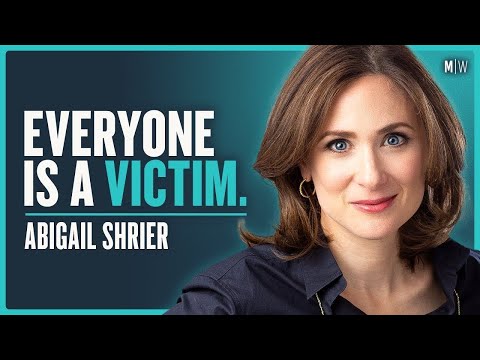
Debating Therapy Culture & Gen Z - Abigail Shrier
Chris Williamson (host), Abigail Shrier (guest)
In this episode of Modern Wisdom, featuring Chris Williamson and Abigail Shrier, Debating Therapy Culture & Gen Z - Abigail Shrier explores abigail Shrier Warns Therapy Culture Is Damaging Gen Z’s Resilience Abigail Shrier argues that modern “therapy culture” and over-medicalization are worsening, not alleviating, young people’s mental health. She claims children are being overdiagnosed, overmedicated, and saturated with school-based and social-media-driven pseudo-therapy that pathologizes normal distress, undermines agency, and alienates them from parents. Shrier distinguishes between targeted, adult-initiated therapy for serious problems versus mass, prophylactic emotional interventions imposed on kids, which she believes create dependency, rumination, and identity around diagnoses. She advocates subtracting much of the current mental health infrastructure around children and replacing it with exercise, real-world challenges, tighter family bonds, and reduced tech use.
Abigail Shrier Warns Therapy Culture Is Damaging Gen Z’s Resilience
Abigail Shrier argues that modern “therapy culture” and over-medicalization are worsening, not alleviating, young people’s mental health. She claims children are being overdiagnosed, overmedicated, and saturated with school-based and social-media-driven pseudo-therapy that pathologizes normal distress, undermines agency, and alienates them from parents. Shrier distinguishes between targeted, adult-initiated therapy for serious problems versus mass, prophylactic emotional interventions imposed on kids, which she believes create dependency, rumination, and identity around diagnoses. She advocates subtracting much of the current mental health infrastructure around children and replacing it with exercise, real-world challenges, tighter family bonds, and reduced tech use.
Key Takeaways
Pathologizing normal distress teaches kids to see themselves as sick and fragile.
Shrier argues that rebranding everyday sadness, worry, and loneliness as clinical depression, anxiety, or trauma convinces children they’re fundamentally unwell, which then leads them to behave like patients and withdraw from life challenges.
Get the full analysis with uListen AI
Mass, school-based ‘therapy’ often induces rumination and worsens symptoms.
Programs like social-emotional learning and mandatory feelings circles push kids to constantly revisit negative experiences, compare suffering, and reinterpret ordinary hurts as trauma, which research shows can increase anxiety, depression, and alienation from parents.
Get the full analysis with uListen AI
Children are uniquely vulnerable to suggestion from therapists and counselors.
Unlike adults, kids lack life experience and critical distance, so a therapist can more easily convince them they’re traumatized, have disordered identities, or that parents are toxic, leading to unnecessary diagnoses and even family estrangement.
Get the full analysis with uListen AI
Overreliance on accommodations and avoidance erodes emotional ‘muscle.’
School counselors and parents frequently remove kids from tests, challenges, or uncomfortable situations in the name of mental health, which Shrier says reinforces avoidance—the very pattern that entrenches anxiety and undermines confidence.
Get the full analysis with uListen AI
Psychiatric medications can disrupt development and conceal life problems.
Shrier is especially concerned about SSRIs and similar drugs prescribed to youth; they may blunt crucial emotional signals, affect sexuality and intimacy formation, and prevent adolescents from discovering they can handle difficult experiences without pharmacological scaffolding.
Get the full analysis with uListen AI
Therapy can help adults with real, defined problems but is risky as a blanket intervention for kids.
She differentiates targeted, time-bound therapy (e. ...
Get the full analysis with uListen AI
Building strength requires subtracting harmful inputs and adding basic life pillars.
Shrier’s proposed remedy emphasizes less tech, less diagnostic focus, and less institutional therapy, paired with more sleep, exercise (especially social forms like dancing), in-person friendships, family connection, and meaningful responsibility.
Get the full analysis with uListen AI
Notable Quotes
“We are psychopathologizing a whole generation and convincing them that they are unwell, so they are behaving like they are unwell.”
— Abigail Shrier
“Mass prophylactic therapy that's being dumped on children who didn't ask for it is not the same thing as an adult choosing to go to therapy.”
— Abigail Shrier
“If you have an unhealthy life and you feel unhappy, that’s not bad mental health—that’s your mental health operating correctly.”
— Abigail Shrier
“Nobody’s tracking side effects in therapy. Even when people were getting worse, they tended to feel purged and better after they left the therapist’s office.”
— Abigail Shrier
“Parents should stop obsessing about their child’s happiness and start asking one question: will this make my child stronger?”
— Abigail Shrier
Questions Answered in This Episode
How do we practically distinguish between a child who truly needs clinical intervention and one experiencing normal, if intense, developmental distress?
Abigail Shrier argues that modern “therapy culture” and over-medicalization are worsening, not alleviating, young people’s mental health. ...
Get the full analysis with uListen AI
What concrete criteria could schools use to decide which mental-health programs are beneficial versus iatrogenic for students?
Get the full analysis with uListen AI
How can parents give children real independence and exposure to failure without feeling negligent or unsafe in today’s environment?
Get the full analysis with uListen AI
What accountability or outcome-tracking mechanisms could be introduced into psychotherapy to better detect when it is making clients worse?
Get the full analysis with uListen AI
To what extent can we disentangle the effects of therapy culture from other major drivers of youth distress, such as family breakdown, economic anxiety, and pervasive social media use?
Get the full analysis with uListen AI
Transcript Preview
How would you categorize what is happening with modern mental health?
Oh, gosh, w- we're making it worse, with, with too much treatment, too much diagnosis, uh, and, and way too much psych meds, and convincing people who are otherwise well that they are unwell, that they have a mental health problem.
Right, yeah. Apocalyptic, apocalyptic start there. So, t- take me through, how much of this an adult problem? How much of this is a, a kid problem? Is, are there some cohorts that this is worse and better in?
Sure, so I, I, if I have a prejudice here, it's that adults mostly can handle their own lives, uh, and we can trust them too. So, if some adults have been made to feel worse by things like therapy they don't need, or psych meds they don't need, or whatnot, uh, I, I generally think an adult can say, "This is helping me," or, "It isn't," and push back, and, and make it change. But a child can't. So, the bigger problem, what I wrote my book about, is about why putting a child through a culture of therapy, through a school system that constantly treats them to various forms of what I call bad therapy, therapy that makes your symptoms worse or introduces new symptoms, why this is all so harmful. This constant feelings focus, this constant convincing children that they've... that, or young, young adults that they've experienced, uh, ch- childhood trauma.
Talk me through a typical timeline of mental health for young people. Like, do, do three-year-olds need, uh, like have mental health problems? Like, what's the onset and, and kind of what's the arc of this?
Uh, sure. So as of 2016, the CDC, which is the Centers of Disease Control and Prevention, uh, came out with a report. This is 2016. One in six American children between the ages of two and eight already had a mental health or behavioral diagnosis. Okay, and that-
What, just dig into that for a second for me. What does that mean? What would that look like?
Um, w- so what mental health diagnoses do they usually have?
Yeah, yeah. What does that, but what does that mean? Yeah, mental health diagnoses.
That means every, uh, that means a shocking number of little boys have been diagnosed with ADHD or oppositional defiance disorder. If they can't sit in their seat or they're yel- yelling back at a teacher, they have oppositional defiance disorder. Uh, a shocking number of girls now have an ADHD diagnosis. Uh, they're diagnosing all kinds of kids as on the spectrum, or having anxiety, or having d- Now, do, some of these kids are... there's, there's no question a lot of these kids are sad, and a lot of them are lonely, and a lot of them are anxious. But we are psychopathologizing a whole generation and convincing them that they are unwell, so they are behaving like they are unwell.
Install uListen to search the full transcript and get AI-powered insights
Get Full TranscriptGet more from every podcast
AI summaries, searchable transcripts, and fact-checking. Free forever.
Add to Chrome