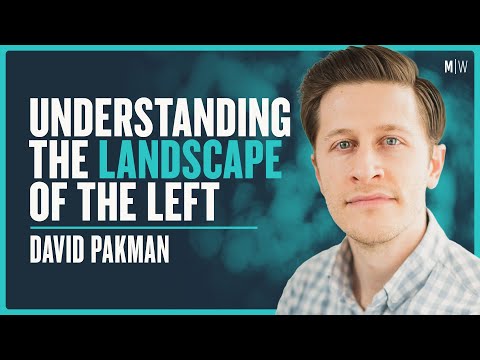
Understanding The Landscape Of The Left - David Pakman | Modern Wisdom Podcast 388
David Pakman (guest), Chris Williamson (host)
In this episode of Modern Wisdom, featuring David Pakman and Chris Williamson, Understanding The Landscape Of The Left - David Pakman | Modern Wisdom Podcast 388 explores david Pakman Maps Today’s Left, Media Distortions, And Rightward Radicalization David Pakman and Chris Williamson examine how the online portrayal of the left—obsessed with identity politics—differs sharply from what actually drives most left-leaning voters: economic, environmental, and bread‑and‑butter policy issues.
David Pakman Maps Today’s Left, Media Distortions, And Rightward Radicalization
David Pakman and Chris Williamson examine how the online portrayal of the left—obsessed with identity politics—differs sharply from what actually drives most left-leaning voters: economic, environmental, and bread‑and‑butter policy issues.
Pakman argues that a relatively small but loud identity-focused contingent and social media amplification have distorted perceptions, while the American right has moved in a dystopian, authoritarian, and identity‑driven direction, especially post‑Trump and during COVID.
They discuss asymmetries in media coverage, the incentives of reaction-based content, and how both sides cherry‑pick extreme anecdotes that don’t represent broader reality, making sense‑making and cross‑partisan dialogue harder.
The conversation closes with concerns about vaccine hesitancy, epistemic breakdown (what counts as a ‘fact’), and the need to distinguish neutrality from objectivity and to prioritize “better” over “perfect” within the left.
Key Takeaways
Identity politics are loud online but not central to most of the left.
Pakman contends that while a vocal minority and academic circles emphasize identity politics, the bulk of left-leaning voters prioritize economics, healthcare, wages, and regulation; social media massively overrepresents the identity‑obsessed fringe.
Get the full analysis with uListen AI
The American right has abandoned stated principles when inconvenient.
Using pandemic business mandates as an example, Pakman shows how ‘pro‑business, pro‑market’ conservatives quickly supported laws restricting private companies’ vaccine requirements, revealing that principles are often secondary to desired outcomes.
Get the full analysis with uListen AI
Both sides weaponize extreme anecdotes, distorting public understanding.
Right‑wing outlets highlight the most outrageous cases of campus wokeness or COVID enforcement, while left content often reacts to the wildest right‑wing clips; this selective magnification makes fringe behavior seem mainstream and blocks nuanced policy discussion.
Get the full analysis with uListen AI
Identity matters for perspective, but not as a license to silence others.
Pakman’s model: lived experience (e. ...
Get the full analysis with uListen AI
Vaccine mandates are framed as choice structures, not forced injections.
He distinguishes between bodily autonomy in abortion (where the state can outright ban a procedure) and COVID policies, where people typically can choose vaccination, frequent testing, or different employment; he sees no true “forced vaccination” in most contexts.
Get the full analysis with uListen AI
Intra-left purism often blocks progress on shared goals.
Pakman criticizes left factions that refuse to cooperate unless there is agreement on every issue, arguing this lets “the perfect be the enemy of the better” and cedes ground to the right even where broad left consensus exists (e. ...
Get the full analysis with uListen AI
Neutrality and objectivity are not the same—and confusing them is dangerous.
Presenting climate science and climate denial as two equal ‘sides’ is neutral in format but not objective relative to evidence; Pakman urges audiences to value alignment with facts over a superficial balance of perspectives.
Get the full analysis with uListen AI
Notable Quotes
“There’s a contingent of the left that was never about identity politics; it was always about economics, environment, and sensible regulation.”
— David Pakman
“What’s happening with the American right wing is dystopianly horrible… even many Republicans don’t recognize it anymore.”
— David Pakman
“I think where it goes too far is if I use my identity to silence the other nine people and say their opinions don’t matter.”
— David Pakman
“The right cares about principles only insofar as they justify the policy they already want. When the principle contradicts the policy, they abandon the principle.”
— David Pakman
“Neutrality and objectivity are two very different things… Sometimes the facts are just on one side, and being neutral is not objective in any way.”
— David Pakman
Questions Answered in This Episode
How can an average viewer practically distinguish between fringe anecdotes and representative trends when consuming political content online?
David Pakman and Chris Williamson examine how the online portrayal of the left—obsessed with identity politics—differs sharply from what actually drives most left-leaning voters: economic, environmental, and bread‑and‑butter policy issues.
Get the full analysis with uListen AI
If most of the left isn’t driven by identity politics, what concrete steps could left-leaning leaders take to re-center public perception on economic and policy priorities?
Pakman argues that a relatively small but loud identity-focused contingent and social media amplification have distorted perceptions, while the American right has moved in a dystopian, authoritarian, and identity‑driven direction, especially post‑Trump and during COVID.
Get the full analysis with uListen AI
Given the epistemic breakdown around facts and expertise, what models of journalism or content creation might rebuild trust across political lines?
They discuss asymmetries in media coverage, the incentives of reaction-based content, and how both sides cherry‑pick extreme anecdotes that don’t represent broader reality, making sense‑making and cross‑partisan dialogue harder.
Get the full analysis with uListen AI
How should platforms and hosts balance ‘responsible platforming’ with openness to controversial or heterodox voices without amplifying misinformation?
The conversation closes with concerns about vaccine hesitancy, epistemic breakdown (what counts as a ‘fact’), and the need to distinguish neutrality from objectivity and to prioritize “better” over “perfect” within the left.
Get the full analysis with uListen AI
What realistic strategies exist to reduce intra-left purity tests so that broad agreement on issues like healthcare and wages isn’t derailed by narrower disagreements?
Get the full analysis with uListen AI
Transcript Preview
It seems reasonable to me that my experiences with antisemitism as a Jewish person would be relevant to the conversation. It would be hard to argue that they're not, particularly if nobody else really has any personal experience to add. That seems very reasonable to me. I think where it goes too far, and where I've been critical of it, is if I use my identity to silence the other nine people, to say that their opinions don't matter, shouldn't be considered, or are fundamentally flawed, and to suppress others on the basis of asserting my identity. That's what I think is destructive about identity politics.
David Pakman, welcome to the show.
Thank you.
I wanted to bring you on to kind of try and get an idea of the landscape between left and right at the moment, and get an understanding of sort of the internal situation on the left. I know you're someone who talks across the aisle quite a bit, so I figured you'd be a, uh, a good candidate to try and help me work out what's going on.
Sure, uh, I mean, uh, I guess it would be good to know maybe a little more specifically which, which aspects of it. Um, I know that even what is considered to be the landscape of the left would differ depending on one's perspective as to what's part of the left and what are the goals and priorities.
Yeah. So my understanding is that there's a movement on the left away from a focus on identity and some left-leaning thinkers are sort of grappling and working through the challenges that are associated with that. Do you have any sense of this?
I think that the idea that it's a move away from it is maybe not the right framing. I think that there's been, um, a contingent of the left that, that I think is actually really the bulk of it, um, of which I consider myself a part, that has never been about identity politics, et cetera, right? There's this kind of package that, that follows. Um, I think that the voices that were in favor of focusing on things like identity politics and oppression Olympics, et cetera, and I understand that's a pejorative term but I think we all sort of understand what I mean. Um, I think they were overrepresented for a period and appeared to be far bigger than they were. Um, reasonable people can disagree, for sure. I know that whenever I make a commentary like this, there will be people from the right who say, "You're completely wrong. The left has been completely taken over by that." And I say, "No, no. You think that because of what I'm describing." Um, but I think that particularly, I think the 2020 primary on the Democratic Party in the US was actually a really important signal to a lot of people that looking at Twitter and looking at Reddit certainly would make one believe that that wing is far bigger and far more powerful than it actually is. And, um, for all of the great things that I've said about Bernie Sanders for a long time and supported him in primaries, uh, I was suspecting that his level of support was much higher, uh, online than in reality. I think the 2020 primary really showed that. It was not by a little bit that Joe Biden won. And for a lot of people on the left, that started to, um, open their eyes to the fact that the left is a little bit different than what it seems when you look at Reddit and Twitter.
Install uListen to search the full transcript and get AI-powered insights
Get Full TranscriptGet more from every podcast
AI summaries, searchable transcripts, and fact-checking. Free forever.
Add to Chrome