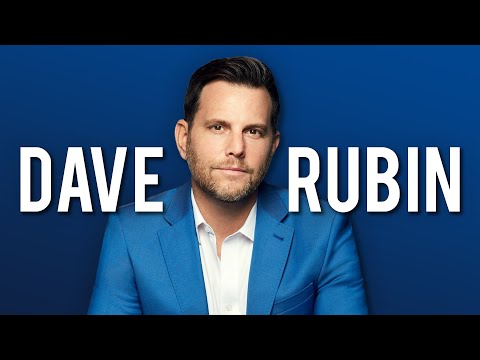
DAVE RUBIN | Going From Woke To Awake | Modern Wisdom Podcast 164
Dave Rubin (guest), Chris Williamson (host)
In this episode of Modern Wisdom, featuring Dave Rubin and Chris Williamson, DAVE RUBIN | Going From Woke To Awake | Modern Wisdom Podcast 164 explores dave Rubin Explains Leaving the Left, Liberalism, and Fake News Dave Rubin joins Chris Williamson to discuss his political evolution from progressive to classical liberal, using moments like Ben Affleck’s clash with Sam Harris and Larry Elder’s on-air fact-check as key inflection points.
Dave Rubin Explains Leaving the Left, Liberalism, and Fake News
Dave Rubin joins Chris Williamson to discuss his political evolution from progressive to classical liberal, using moments like Ben Affleck’s clash with Sam Harris and Larry Elder’s on-air fact-check as key inflection points.
He outlines the differences between classical liberalism, libertarianism, conservatism, and progressivism, arguing for individual rights, limited government, and the virtue of nationalism and borders.
Rubin describes how media, cultural 'factory settings,' and ideological echo chambers shape perceptions (e.g., ‘Democrat good, Republican bad’) and explains why many moderates feel trapped on the left.
They also explore fake news (including stories media refuse to cover), the convergence of traditional and online media, and how crises like COVID-19 temporarily suppress identity politics and force value realignments.
Key Takeaways
Separate criticism of ideas from bigotry toward people.
Rubin argues that a healthy society must allow robust criticism of ideologies (religious, political, cultural) without equating that criticism with hatred of individuals who hold those ideas; collapsing the two, as in the Affleck–Harris exchange, shuts down debate.
Get the full analysis with uListen AI
Recognize and override your ‘factory settings.’
Messages like ‘Democrat good, Republican bad’ are presented as defaults through media, education, and culture; Rubin says it’s each person’s responsibility to consciously adjust their ‘settings’—their beliefs and assumptions—based on reason, not conditioning.
Get the full analysis with uListen AI
Understand the core of classical liberalism: individual rights and limited government.
Rubin defines classical liberalism as equal rights under the law plus largely free markets and a light-touch state, contrasting it with progressivism’s preference for expansive government control and top-down solutions.
Get the full analysis with uListen AI
Expect social penalties when breaking with ideological tribes—and speak anyway.
He stresses that leaving the left (or any tight-knit ideological group) can invite slurs, professional risk, and media hit pieces, but argues that in a free society refusing to voice your real views ultimately surrenders your agency.
Get the full analysis with uListen AI
Spot fake news not only by what’s said, but by what’s ignored.
Beyond misleading headlines or distorted quotes, Rubin highlights ‘fake news by omission’—major outlets simply refusing to cover stories (e. ...
Get the full analysis with uListen AI
Nationalism, properly understood, is about self-governing nation-states, not xenophobia.
Drawing on Yoram Hazony, Rubin contends that it’s legitimate—and classically liberal—for nations to define and protect their borders and laws, and that equating this with racism is a rhetorical tactic, not an argument.
Get the full analysis with uListen AI
Cultivate curiosity and ego-detachment in debate.
Rubin and Williamson both emphasize that being willing to be ‘beaten by facts,’ as Rubin was by Larry Elder, and treating that as a learning opportunity rather than an ego threat, is crucial for genuine intellectual growth.
Get the full analysis with uListen AI
Notable Quotes
“Acting as if you’re morally outraged has replaced thinking.”
— Dave Rubin
“This is just factory setting thinking… Democrat good, Republican bad.”
— Dave Rubin
“If you are a free person living in a free society and you refuse to stand up for what you believe in, you deserve whatever’s coming to you.”
— Dave Rubin
“One type of fake news is the stories that they won’t cover because it doesn’t fit their narrative.”
— Dave Rubin
“In an absence of a real crisis, we create our own, and in the presence of one, we reset our values.”
— Chris Williamson
Questions Answered in This Episode
Where do my own ‘factory settings’ about politics and morality come from, and which of them might not survive serious scrutiny?
Dave Rubin joins Chris Williamson to discuss his political evolution from progressive to classical liberal, using moments like Ben Affleck’s clash with Sam Harris and Larry Elder’s on-air fact-check as key inflection points.
Get the full analysis with uListen AI
How can I better distinguish between legitimate moral concern and performative outrage—both in others and in myself?
He outlines the differences between classical liberalism, libertarianism, conservatism, and progressivism, arguing for individual rights, limited government, and the virtue of nationalism and borders.
Get the full analysis with uListen AI
What practical steps could I take to challenge my ideological echo chamber without losing relationships or my livelihood?
Rubin describes how media, cultural 'factory settings,' and ideological echo chambers shape perceptions (e. ...
Get the full analysis with uListen AI
In what ways do my preferred news sources engage in ‘fake news by omission,’ and how might that be distorting my view of events?
They also explore fake news (including stories media refuse to cover), the convergence of traditional and online media, and how crises like COVID-19 temporarily suppress identity politics and force value realignments.
Get the full analysis with uListen AI
How should we balance the legitimate desire for strong national borders and sovereignty with the ethical imperative to treat outsiders humanely?
Get the full analysis with uListen AI
Transcript Preview
This is just factory setting thinking. This is just stuff that you get from the media, you get from culture. It's like, Democrat good, Republican bad, Democrats care about poor people, Republicans care about money. There's a million of these nonsensical things, and all that is is factory settings, that through culture, through state education, through all these things, that is where we all sort of baseline start. It's your job to modify your system to something that you like, and that's w- that's what the way you behave with the world should be as well. (wind blows)
I'm joined by Dave Rubin, host of The Rubin Report and author of Don't Burn This Book. Dave, welcome to the show.
Chris, it's good to be with you. We are doing this across the pond over these digital waves that everybody is now stuck on.
It's all right.
We thought, we thought we were too online before this thing, then corona comes and this is the only way we can do anything.
Actually, I wanna be more online now, yeah. First, first things first, Dave, why is your book dedicated to Ben Affleck?
(laughs)
(laughs)
Uh, this is either gonna go down as a, as a brilliant marketing ploy or Affleck and the Affleck empire will have me destroyed. We should know the answer in the next couple of days. Uh, but I devoted the book to Ben Affleck because I tell the story in the book about how Affleck actually, believe it or not, was, was a key piece to my political awakening because you may remember Ben Affleck was on Real Time with Bill Maher when Sam Harris, the, the neuroscientist and, uh, really mindful, uh, thinker, uh, was on to talk about his book, Waking Up: A, A Guide to Spirituality Without Religion, and they started talking about how you have to separate ideas from people, meaning we should be able to criticize ideas and that doesn't mean that you should be bigoted towards people. And they were talking about it in a religious context, so in this case, you should be able to criticize, uh, the set of ideas that is Islam, but what you wouldn't want to do is be bigoted towards Muslim people. And by the way, of course you should be able to criticize any set of ideas, whether it's the set of ideas that make up a religion, Judaism, Christianity, whatever it is, or the set of rules that make up a political party or a set of rules that make up, you know, uh, uh, uh, basketball's rules, anything like that. Uh, Sam calmly laid this out and Bill Maher sort of backed him on this, and next thing you know, Affleck was huffing and puffing and screaming, and in effect he called Bill Maher and Sam Harris gross and racist. And this is about five years now, five years ago, and in that very moment I saw exactly what I had been thinking was wrong with the left, exactly what I had been thinking was wrong with the progressives in, in stark daylight. I had had these thoughts for a while, you know, where you're just calling everybody racist, you're calling everybody a bigot, you're always morally right and that with this indignation and anger, but suddenly to see it turned on this mild-mannered neuroscientist who I, I didn't even know who he was at the time, and then Bill Maher, who really was the standard-bearer of the left, at least in an American context. He's been our basically our biggest, most outspoken lefty. The guy gave Obama a million bucks for his re-election. I mean, he has fought every progressive issue, you know what I mean? And constantly rallying against Republicans, and then Affleck says, "You're gross and racist," and then the next level of it was watching the media just parrot that. Because Affleck said something, just 'cause a Hollywood star said something, next thing you know, Vox and Buzzfeed and HuffPo and all the usual suspects are suddenly saying that Bill Maher and, and this Sam Harris guy, that they're racist, and, and that was really one of the, the... I lay out three key points of waking up, going from say woke to awake in my book, and that was one of them. So, I feel that I owe Ben Affleck even though we've never met.
Install uListen to search the full transcript and get AI-powered insights
Get Full TranscriptGet more from every podcast
AI summaries, searchable transcripts, and fact-checking. Free forever.
Add to Chrome