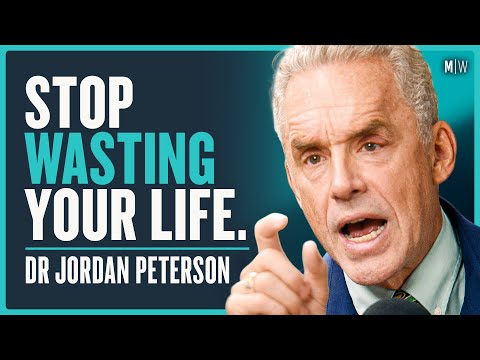
How to Break Out of Old Psychological Patterns - Jordan Peterson
Chris Williamson (host), Jordan Peterson (guest)
In this episode of Modern Wisdom, featuring Chris Williamson and Jordan Peterson, How to Break Out of Old Psychological Patterns - Jordan Peterson explores jordan Peterson Dissects Cynicism, Truth, and Escaping Self-Destruction Jordan Peterson and Chris Williamson explore why individuals have a moral obligation to strive toward their highest potential, arguing that failing to do so breeds bitterness, resentment, and ultimately self-destruction.
Jordan Peterson Dissects Cynicism, Truth, and Escaping Self-Destruction
Jordan Peterson and Chris Williamson explore why individuals have a moral obligation to strive toward their highest potential, arguing that failing to do so breeds bitterness, resentment, and ultimately self-destruction.
They chart a psychological path from naivety through cynicism to courage and wisdom, emphasizing truth-telling, responsibility, and sacrificial commitment as antidotes to meaninglessness and anxiety.
The conversation critiques performative virtue, pickup artistry, hyper-casual sex, and identity politics, contrasting them with earned competence, long-term relationships, and faith in a higher good.
Peterson also reflects on fame, demoralized young adults, the crisis in universities, and his upcoming book ‘We Who Wrestle With God,’ which aims to redefine belief in God as commitment to the highest good.
Key Takeaways
Treat striving toward your highest potential as a moral duty.
Peterson argues that if you don’t give life your full effort, you become embittered and resentful; that bitterness then turns you into a ‘force for darkness’ who not only fails to contribute but actively undermines others.
Get the full analysis with uListen AI
Tell the truth and relinquish control of the consequences.
Crafting words to manipulate outcomes may bring short-term gains, but it corrupts your perception and instincts; committing to say what you believe to be true invites uncertainty but also real adventure and alignment with reality.
Get the full analysis with uListen AI
Move beyond cynicism by replacing naivety with courage.
Cynicism is an improvement over naive optimism because it acknowledges malevolence, but staying there is ‘another form of hell’; the way forward is to question even your own cynicism and adopt courage and faith as active stances toward an uncertain future.
Get the full analysis with uListen AI
Differentiate between fantasy, aspiration, and delusion.
You must imagine a future (a ‘map’) and make sacrifices toward it, but it becomes delusion when you ignore evidence and your own errors to maintain a pleasant story without paying the real price of improvement.
Get the full analysis with uListen AI
Lower the ideal to actionable steps, then scale up.
If your vision of who you ‘should’ be paralyzes you, shrink the initial goals until they are small enough that you’re willing to move toward them; progress compounds geometrically over time, so even ‘shamefully small’ starts are worthwhile.
Get the full analysis with uListen AI
Compare yourself to who you were yesterday, not to elites.
Using top performers (e. ...
Get the full analysis with uListen AI
Pursue responsibility and long-term commitments to cure anxiety and meaninglessness.
Peterson links mental health to embedding yourself in stable roles—spouse, parent, community member—arguing that isolated hedonism, porn use, and identity built only on momentary feelings inevitably produce aimlessness and despair.
Get the full analysis with uListen AI
Notable Quotes
“If you hide and don’t bring into the world what you could bring, you’ll become cynical and bitter, and you’ll start doing very dark things.”
— Jordan Peterson
“Cynics aren’t cynical enough about their own cynicism.”
— Jordan Peterson
“You can’t orient yourself by the facts. There are too many facts. You organize facts in a hierarchy of value.”
— Jordan Peterson
“You don’t want to lie because you program yourself falsely, and then you automatically see what isn’t there.”
— Jordan Peterson
“The heaviest things in life aren’t iron and gold, but unmade decisions.”
— Chris Williamson (quoting a friend, Alex)
Questions Answered in This Episode
How can someone practically transition from a cynical worldview to one grounded in courage and faith without reverting to naivety?
Jordan Peterson and Chris Williamson explore why individuals have a moral obligation to strive toward their highest potential, arguing that failing to do so breeds bitterness, resentment, and ultimately self-destruction.
Get the full analysis with uListen AI
In daily life, what are concrete indicators that you are pursuing truthful sacrifice versus sliding into self-serving delusion?
They chart a psychological path from naivety through cynicism to courage and wisdom, emphasizing truth-telling, responsibility, and sacrificial commitment as antidotes to meaninglessness and anxiety.
Get the full analysis with uListen AI
How should a person reorient their identity if they recognize that it has been built around short-term pleasure, performative virtue, or external validation?
The conversation critiques performative virtue, pickup artistry, hyper-casual sex, and identity politics, contrasting them with earned competence, long-term relationships, and faith in a higher good.
Get the full analysis with uListen AI
What are the risks and benefits of public personas when your private self lags behind, and how can you realign the two without collapsing your life?
Peterson also reflects on fame, demoralized young adults, the crisis in universities, and his upcoming book ‘We Who Wrestle With God,’ which aims to redefine belief in God as commitment to the highest good.
Get the full analysis with uListen AI
If ‘God’ is understood as the highest good, what does it actually look like, moment to moment, to live as if that were true?
Get the full analysis with uListen AI
Transcript Preview
You say, "You are morally obligated to do remarkable things."
Mm-hmm.
Why?
Well, I think partly because life is so difficult and challenging that unless you give it everything you have, the chances are very high that it will embitter you and then you'll be a force for darkness and not good. And so, you know, the f- the fact that life is short and can be brutal, can terrify you into hiding and avoiding, but it- it can also... You can flip that on its head and understand that since you're all in anyways, you might as well take- take the risks that are adventurous, and that's a very good thing to understand. And what is also useful to understand in that manner is that there isn't anything more adventurous than the truth. This is something that took me a long time to figure out. Well, you can craft your words to get what you want, you know, and people do that all the time. They craft their words so they can avoid taking responsibility for things they should take responsibility for, or they can craft the words to gain an advantage that they really don't deserve. That's what you do when you manipulate. And the problem with that, you might say, "Well, why not do that if I can get what I want?" And the answer to that is, you aren't necessarily the best judge of what you need and it's easy to be deluded in what you want, and that's the sort of delusions that people chase if they chase power. If you decide instead that you're going to just say what you believe to be true, you have to let go of the consequences. And you might think, "Well, I don't wanna let go of the consequences because I wanna control what's going on," but what you miss then is adventure, because if you don't control what's going on, you don't know what the hell's going to happen, and maybe that's exciting. And actually, there's no doubt about it. And then you have the additional advantage if you're attempting to say what you believe to be true and attempting to act in the manner that you think is most appropriate, that's genuinely you and you have the force of reality behind you. Obviously, that's what you have if you're trying to, say, live in the truth, is you have the force of reality behind you. That seems like a good deal. Then you have the reality and the adventure. So why is that a moral obligation? Well, if you hide and you don't let what's inside of you out and you don't bring into the world what you could bring and you become cynical and bitter, you will start doing very dark things. So you'll start ins- in... Not only will you not add to the world what you could add, but you'll start being jealous of people who are competent and doing well and work to destroy them. So, that's the pathway to hell, really. So...
Install uListen to search the full transcript and get AI-powered insights
Get Full TranscriptGet more from every podcast
AI summaries, searchable transcripts, and fact-checking. Free forever.
Add to Chrome